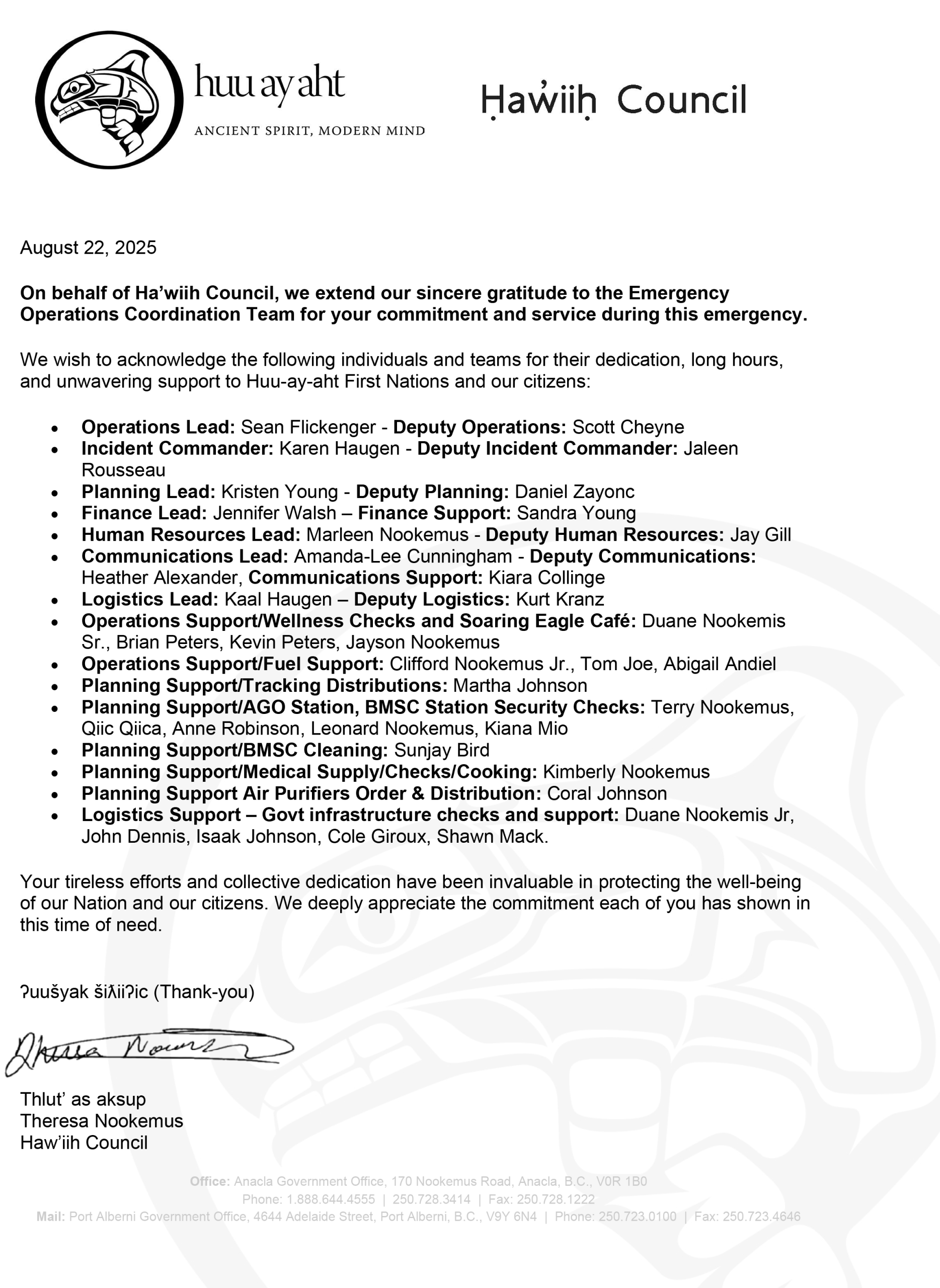
For official press release, click here: Modern Treaty and Self-Governing First Nations Bring a Plan for Shared Prosperity to First Ministers
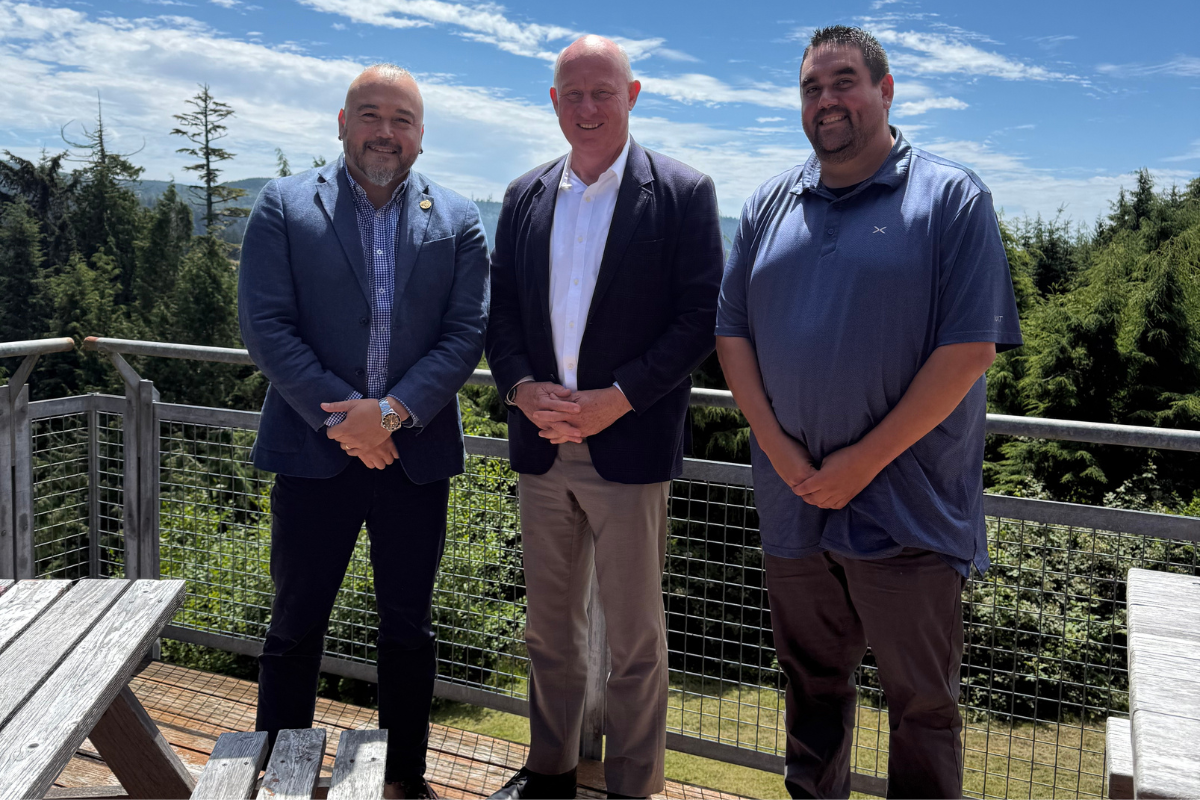
Following the completion of a landmark $49-million upgrade to the Bamfield Road in 2023 and the increase in travellers to the region, Huu-ay-aht First Nations is now calling on the Province of British Columbia to take the next critical step: officially redesignating Bamfield Main Road to recognize its regional and provincial significance. On Tuesday, July 14, 2026, Huu-ay-aht Executive Councillors ƛicitatḥ, Edward R. Johnson, and Wiiheyakchikk, Brad Johnson, met directly with Minister of Transportation and Transit Mike Farnworth to discuss the proposed redesignation and long-term vision for the road.
The four-year collaborative infrastructure project, funded jointly by the Huu-ay-aht First Nations, the Province of British Columbia, and key partners, transformed the once-treacherous logging route into a safer link between Port Alberni and Anacla (Bamfield, B.C.). The initiative gained urgency after numerous tragedies along the road, including the 2019 bus crash that claimed the lives of two University of Victoria students, as well as the loss of two residents near Sarita.
Following construction, Huu-ay-aht submitted a comprehensive Bamfield Main Road Completion Report and maintenance assessment to the Ministry of Transportation and Infrastructure. Data collected in 2024 highlights the route’s vital role in regional travel, recording average daily traffic counts of 554 vehicles in the summer and 185 vehicles in the winter, with passenger vehicles accounting for 89% of all traffic year-round.
Redesignating the route as provincially significant would secure dedicated funding to protect safety gains and drive economic development across tourism, forestry in the area, and marine research at the Bamfield Marine Sciences Centre.
“The investments made through reconciliation have demonstrated what is possible,” Executive Councillor Edward R. Johnson shared. “Now is the time to build on that success, protect the gains already achieved, and establish a long-term pathway for safe, reliable access and sustainable economic growth.”’
To ensure coordinated oversight following their meeting with Minister Farnworth, Executive Councillors Edward R. Johnson and Brad Johnson recommended re-establishing the Bamfield Main Road Working Group. This body would bring together the Province, First Nations leadership, local governments, and forestry industry partners to manage ongoing safety priorities, such as maintenance at Mt. Underwood and Sarita.
Huu-ay-aht has requested that the Ministry initiate formal discussions on both redesignation and reconvening the working group in the coming months to ensure the long-term sustainability of the Bamfield Main Road.
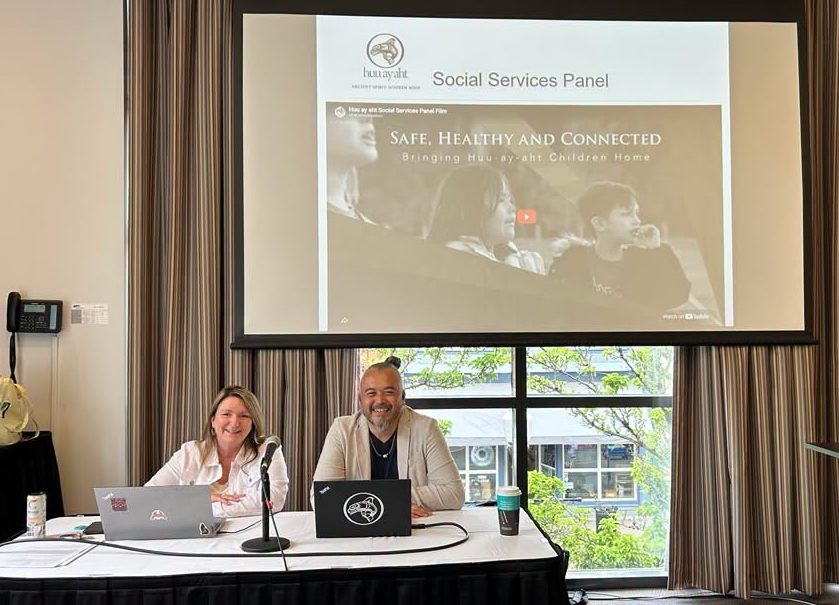
On a pathway to jurisdiction over our children and families, Huu-ay-aht First Nations Child and Family Wellness department recently wrapped up a vital series of community engagements spanning from Anacla to Vancouver.
Held during the final week of June, the five distinct engagement sessions provided Huu-ay-aht families and citizens with critical updates on the nation’s independent legislative path and milestones achieved alongside federal and provincial partners. The focus was on the Yaaʔak̕ap (to embrace) Child and Family Wellness Act, Huu-ay-aht’s own foundational child welfare legislation, as well as the historic yaaʔak̓apʷin (we are embracing) shared interest agreement.
A Proven Model: “Bring Our Children Home”
These recent community updates represent a journey that began nearly a decade ago. In 2016, after years of systemic challenges under federal and provincial family services, Huu-ay-aht’s Executive Council appointed an independent Social Services Panel. The panel’s 2017 report outlined 30 comprehensive recommendations aimed at prevention, healing, and keeping families together instead of separating them.
In 2018, the Nation declared a public health emergency due to the high number of children in provincial care. Following this, it secured essential funding from both Canada and British Columbia to implement its practice framework developed from the 30 recommendations.
The shift from a reactive child protection model to the Huu-ay-aht community-driven, life-span prevention approach has shown remarkable results. With the specialized “Bring Our Children Home” model, 72% of Huu-ay-aht First Nations children in care have been successfully reunited with their families and community. This achievement has been further supported by the opening of the ʔumʔiiqsu Centre and Childcare Centre in Port Alberni in 2025. This innovation was based on recommendation 26 out of the 30 recommendations made in 2017. The Indigenous-led residential and childcare facility is designed to provide comprehensive support, allowing families to thrive and heal together.
The yaaʔak̓apʷin Agreement and Provincial Education Tour
A significant milestone on the path to sovereignty was achieved on December 16, 2025, when the Huu-ay-aht First Nations and the British Columbia Ministry of Children and Family Development (MCFD) signed the yaaʔak̓apʷin agreement. This agreement officially came into effect on March 16, 2026, and ensures that the Nation has a greater role and genuine involvement in child welfare planning and decision-making.
Following its implementation in March, Huu-ay-aht First Nations launched an extensive educational campaign, delivering nearly 10 presentations between March and June to MCFD Directors of Child Wellness Operations and frontline social workers across the province. Designed to educate the ministry on best government-to-government practices and define exactly how to work with Huu-ay-aht children and families, the presentations saw immense engagement, with the largest session drawing over 130 attendees.
With this crucial educational phase successfully completed, MCFD and Huu-ay-aht leadership have officially returned to the negotiating table to map out Phase 2 of the agreement. This next phase aims to further align operations and structural planning, with completion projected by the end of summer 2026.
Activating the Yaaʔak̕ap Act: Concurrency and Accountability
As Huu-ay-aht navigates these provincial alignments, the Nation is preparing to fully activate its own legal framework. While passed by the Huu-ay-aht Legislature in May 2023 under then-Chief Councillor Robert Dennis, the Yaaʔak̕ap Child and Family Wellness Act includes a specific activation protocol: it is not formally in force until the Executive Council passes a resolution bringing it into effect. To prepare for this operational transition, the government enacted the Huu-ay-aht General Legislation Amendment Act, 2026, on March 31, 2026, signed by Chief Councillor John Jack and ḥaw̓iiḥ Councillor Theresa Nookemus.
Once fully brought into force, the Yaaʔak̕ap Act will operate concurrently with provincial and federal child welfare laws throughout British Columbia, applying to Huu-ay-aht children both on and off treaty lands. To support this wide-reaching implementation and permanently resolve existing geographic limitations, the Nation is actively pursuing key treaty amendments with Canada and British Columbia. All service providers, including provincial social workers, will then be legally bound to comply with the Act’s strict provisions.
A central priority of the legislation is shifting authority away from sudden apprehensions toward strict court-ordered accountability. Except in situations of immediate danger, provincial agencies must secure a court order before removing a child from their home, providing the Huu-ay-aht government with advance notice and a formal legal right to intervene, respond, and offer family support services first.
Furthermore, the Act sets strict standards for cultural continuity. Huu-ay-aht children in care will have legally protected rights to access traditional foods and cultural community events. Non-Huu-ay-aht foster families and social workers will be required to demonstrate verified cultural competency and knowledge of Huu-ay-aht values, with the Nation retaining the legal right to petition the courts to change a child’s placement if these cultural standards are not met. To ensure institutional accountability, the Act establishes an independent, non-administrative Child Services Officer who will provide oversight and report directly to the Executive Council.
Navigating the Next Five Years
The June community engagements mark an important milestone for Huu-ay-aht as it embarks on the next significant phase of self-determination. Leadership and staff are currently collaborating with Indigenous Services Canada (ISC) on a comprehensive five-year federal legislative review of Bill C-92, which is titled “An Act respecting First Nations, Inuit, and Métis children, youth, and families.” This bill, passed in 2019, affirmed the inherent jurisdiction of Indigenous communities over child welfare.
Ensuring that citizens are well-informed through these conversations allows community voices to influence upcoming relationships directly, coordination table agreements, and the broader prevention strategy for 2026–2031 by grounding modern legislative pathways in ancient sacred principles, ʔiisaak (greater respect), ʔuʔaałuk (taking care of), and Hišukma c̕awak (everything is one). Huu-ay-aht citizens and staff continue to build a sovereign system of care. This system aims to provide a safe and healthy environment for the next generation, fostering a deep connection to their culture.
Timeline of Key Milestones:
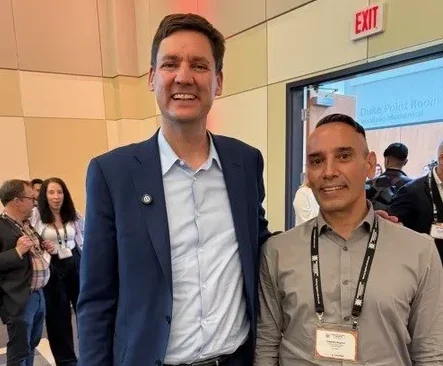
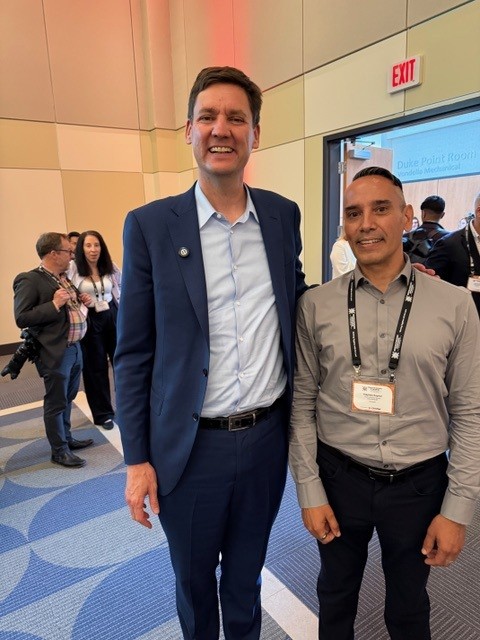
Executive Councillor n̓aasquʔisʔatḥ, Stephen Rayner, brought the opportunities of Huu-ay-aht nism̓a (traditional land) to the forefront at the Indigenous Resources Opportunities Conference (IROC) alongside Premier David Eby, MLA A’Aliyah Warbus, and leaders from across the sector.
The Indigenous Resource Opportunities Conference (IROC) is a significant, Indigenous-led event that promotes Indigenous economic participation in British Columbia’s natural resource sector. Now in its 10th year, IROC 2026 brought together First Nations leaders, government representatives, resource developers, and industry partners for three days of keynotes, panel discussions, and opportunities for relationship-building.
Together, these leaders are committed to fostering respectful collaboration and creating a strong future through responsible development
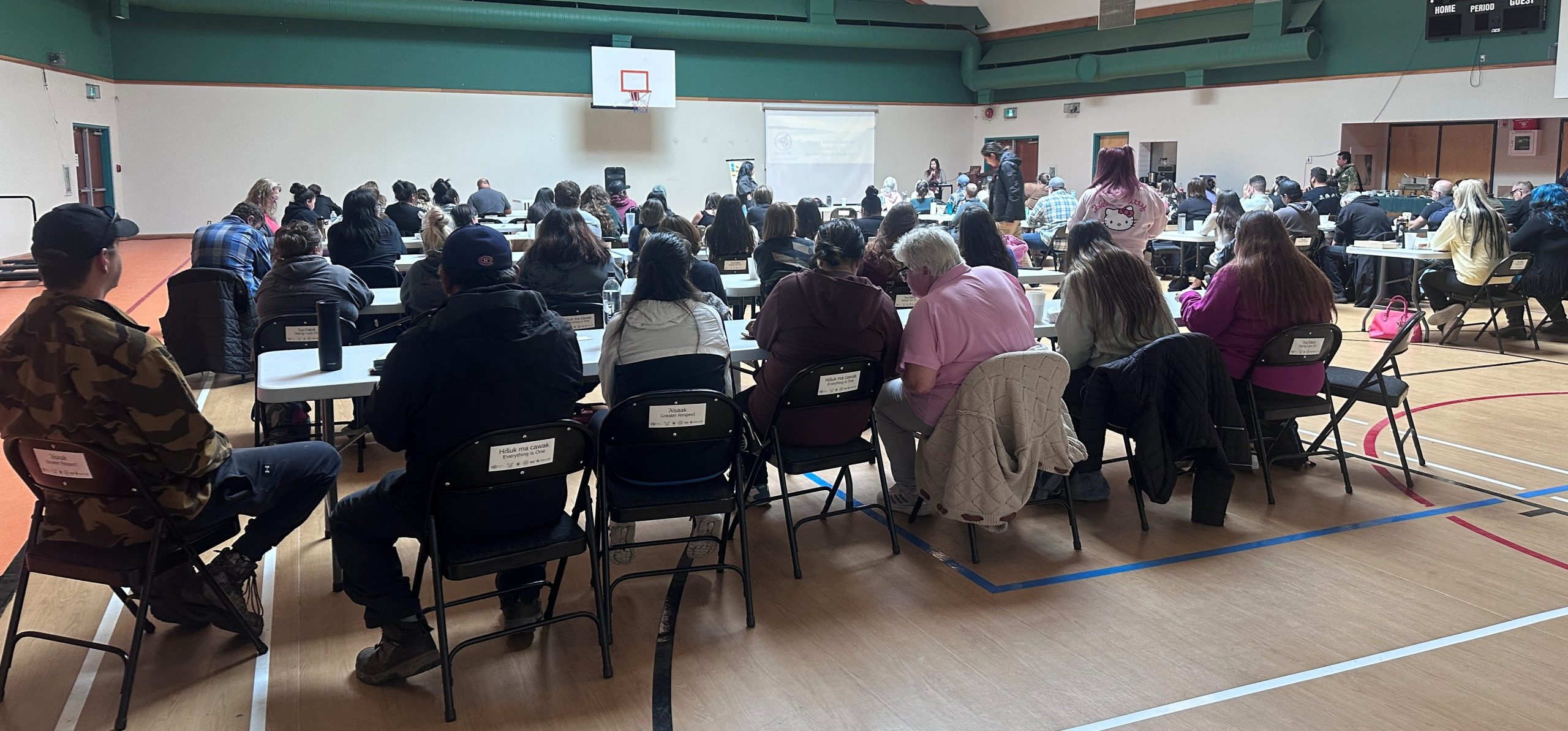
On Wednesday, June 10, Huu-ay-aht First Nations (HFN) Government staff from Port Alberni and Anacla gathered at the House of Huu-ay-aht to learn about the Nation’s journey to Treaty.
‘Treaty 101’ was prepared and presented by Huu-ay-aht citizens, speaker, and BC Treaty Commissioner, Angela Wesley. Angela shared valuable information about how HFN became the self-governing Nation we know today, outlining the core motivations behind the historic decision and the foundational goals that continue to guide the community.
During the presentation, Angela highlighted that the path to a modern-day treaty was a deliberate choice by Huu-ay-aht citizens. While legal battles and court cases yielded some victories over the years, the litigation process ultimately proved too costly in time and money.
Recognizing that HFN could not fully achieve its long-term goals under the restrictions of the Indian Act, the Nation was already preparing to govern itself. The Treaty was voted on by citizens as the logical next legal step toward true independence, aimed at improving the lives of all Huu-ay-aht People, no matter where they live, while protecting and stewarding HFN lands and natural resources for years to come.
The presentation also highlighted historic growth and autonomy Huu-ay-aht achieved since the Treaty was officially implemented. Angela shared several remarkable milestones that underscore the power of self-governance:
These milestones reflect the strict criteria the Treaty had to meet to serve the Nation effectively. It needed to:
On behalf of Huu-ay-aht First Nations Government and all the staff in attendance, we send a sincere thank you to Angela for taking the time to present and for so generously sharing her knowledge, history, and insight. Sessions like ‘Treaty 101’ play a vital role in ensuring that staff remain deeply connected to the Nation’s mission, grounded in its history, and fully equipped to support Huu-ay-aht citizens as the journey of self-governance continues to unfold.
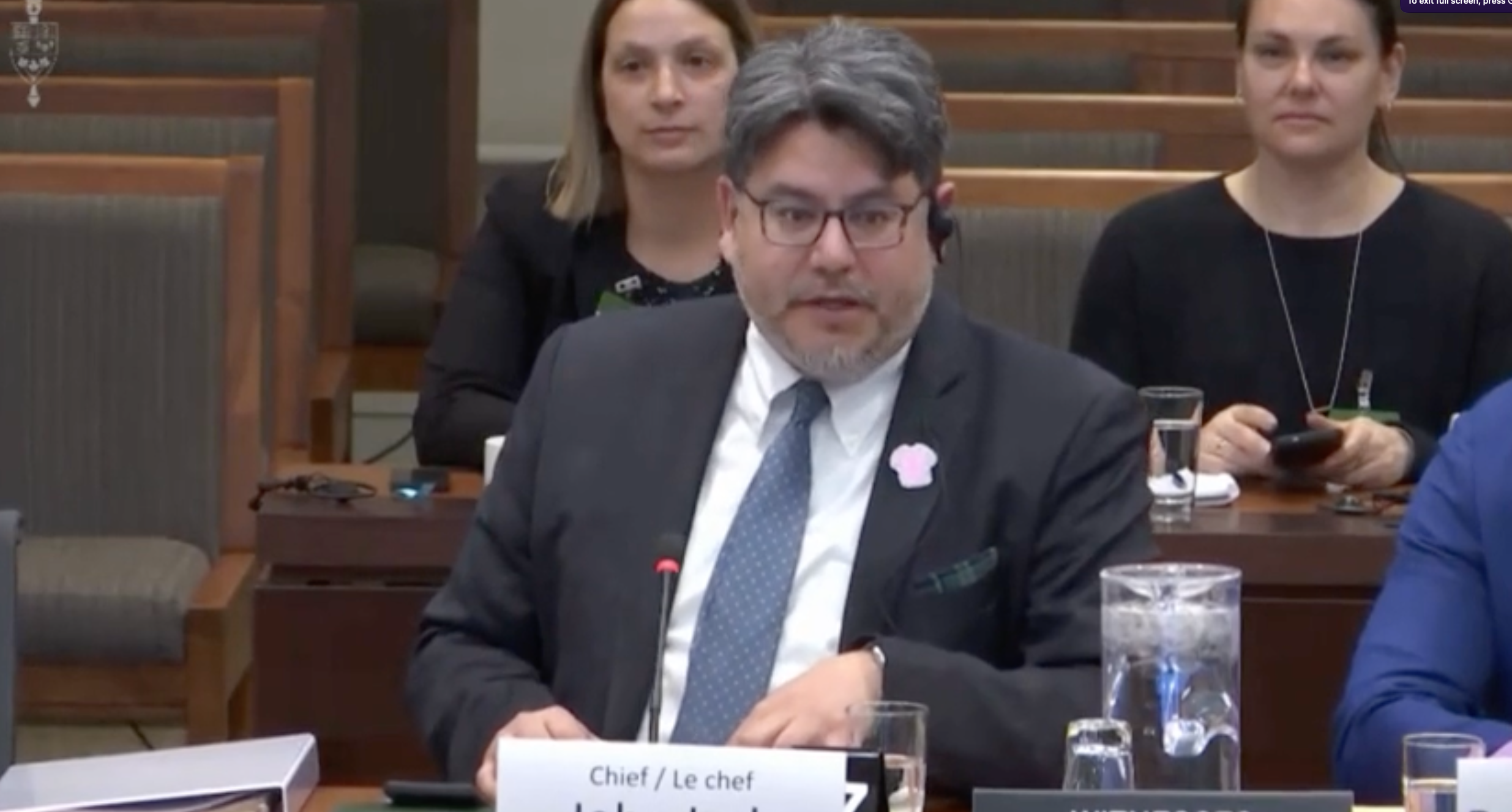
Today, Thursday, February 26, Elected Chief Councillor Sayaač̓atḥ, John Alan Jack, addressed the Parliamentary Committee on Indigenous and Northern Affairs. His message was clear: it’s time for a Modern Treaty Commissioner (Bill C-10).
After 15 years of the Maa-nulth Final Agreement, federal implementation remains inconsistent. By implementing a Modern Treaty Commissioner, we hope to provide impartial oversight across the whole federal government. Bill C-10 ensures that the thousands of obligations in the Maa-nulth Final Agreement are met.
“Together, we can deliver the results that modern treaties were meant to enable and ennoble.” — Chief Councillor Sayaač̓atḥ, John Alan Jack.
To view the full session, please visit: https://parlvu.parl.gc.ca/Harmony/en/PowerBrowser/PowerBrowserV2/20260226/-1/44501
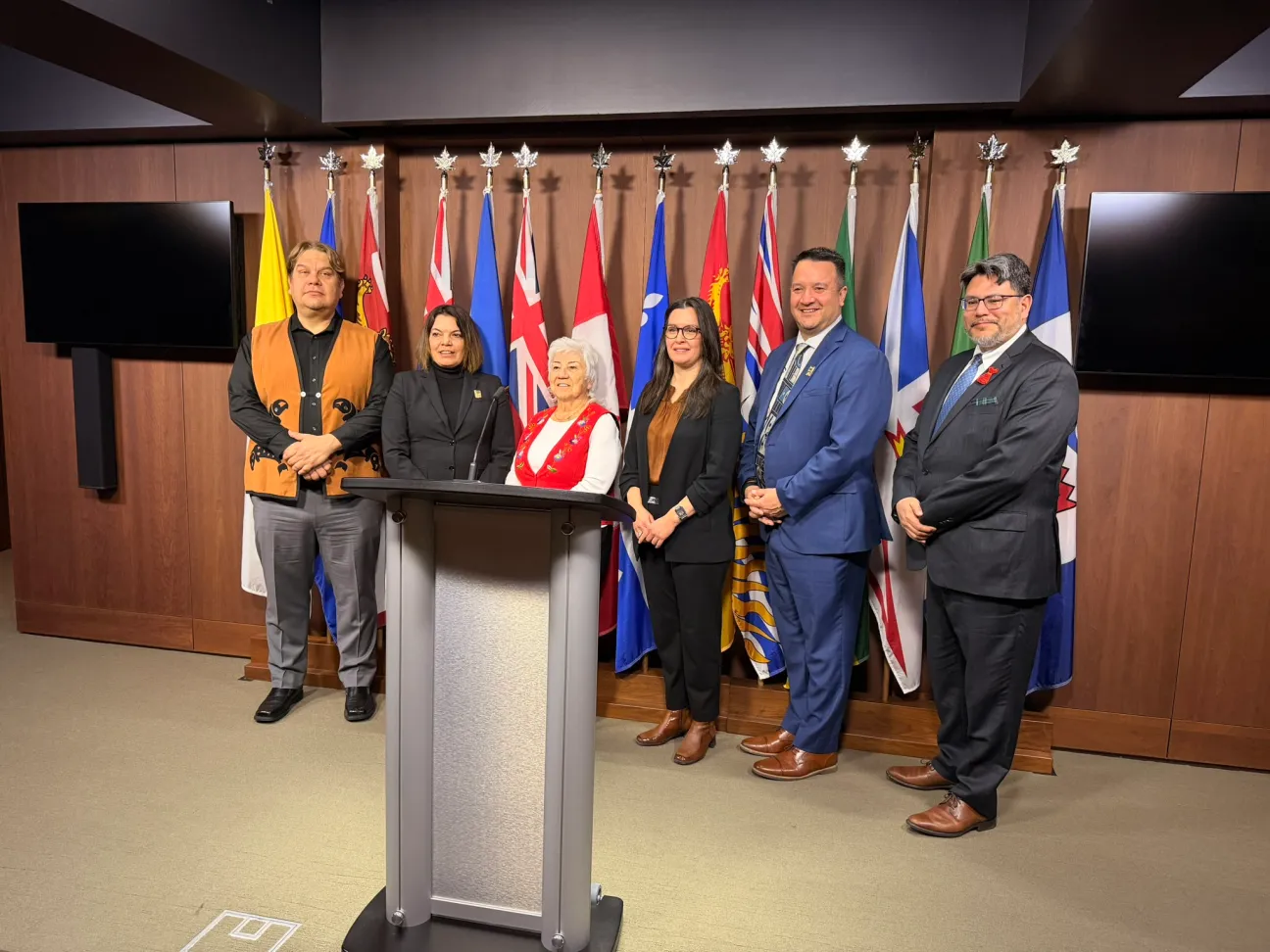
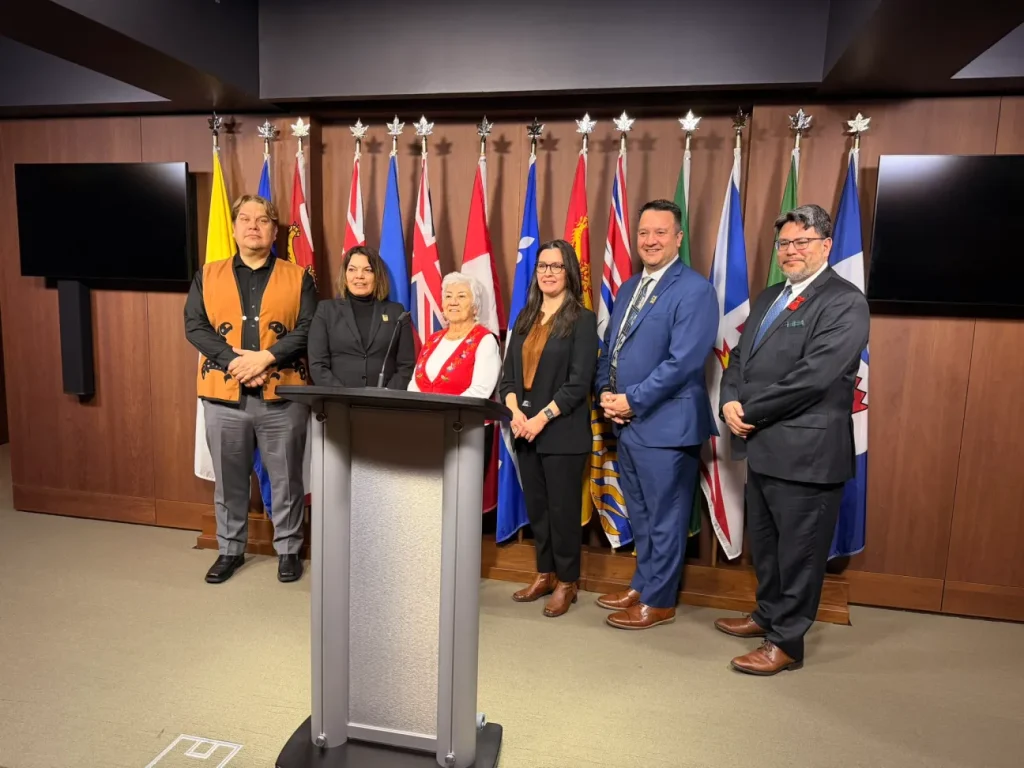
On Monday, February 9, 2026 at a news conference in Ottawa, members of the Land Claims Agreements Coalition call on all political parties to support Bill C-10, the government’s bill to establish a commissioner for modern treaty implementation. The legislation, which was co-developed with Indigenous treaty partners, is currently at second reading in the House of Commons. Among the press conference, participants were Debra Febril (Executive Chairperson, Nisga’a Lisims Government), John Jack (Chief Councillor, Huu-ay-aht First Nations), Wilfred Cootes (Chief Councillor, Uchucklesaht Tribe government), Ruth Massie (Chief, Ta’an Kwäch’än Council), and Kilikvak Kabloona (CEO, Nunavut Tunngavik Inc.).
See recording or live press conference here: click here
See Press Release here: click here
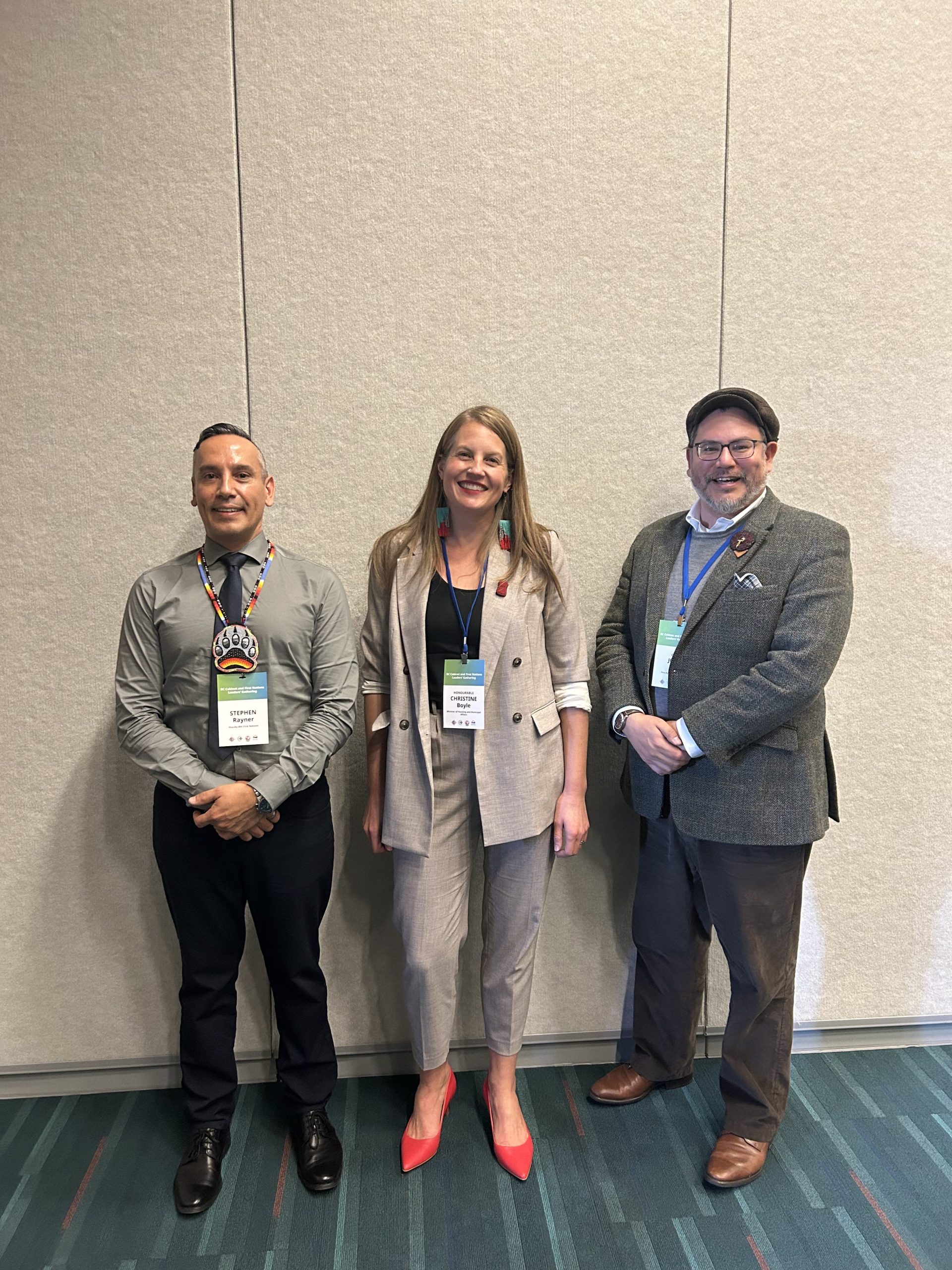
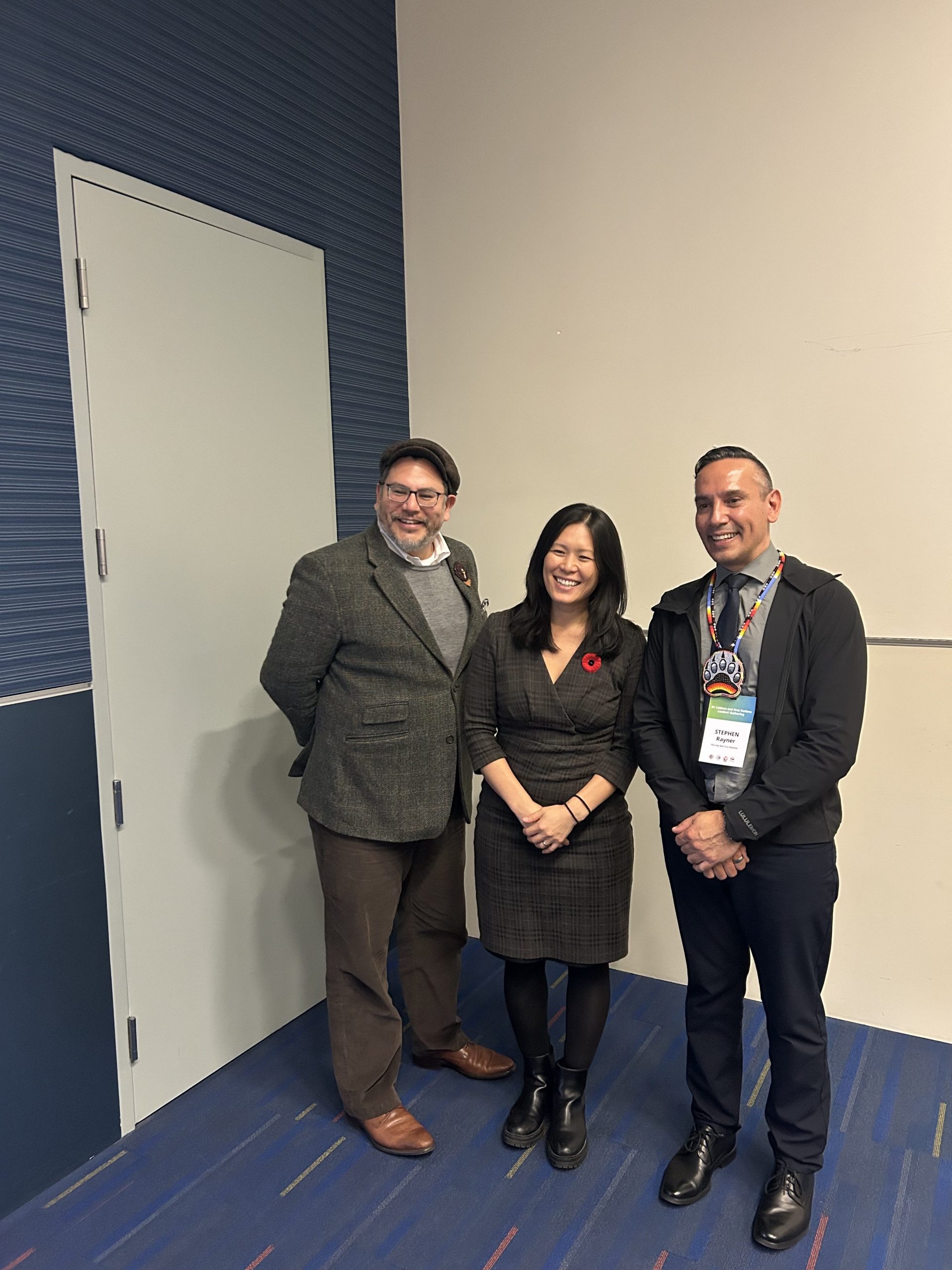
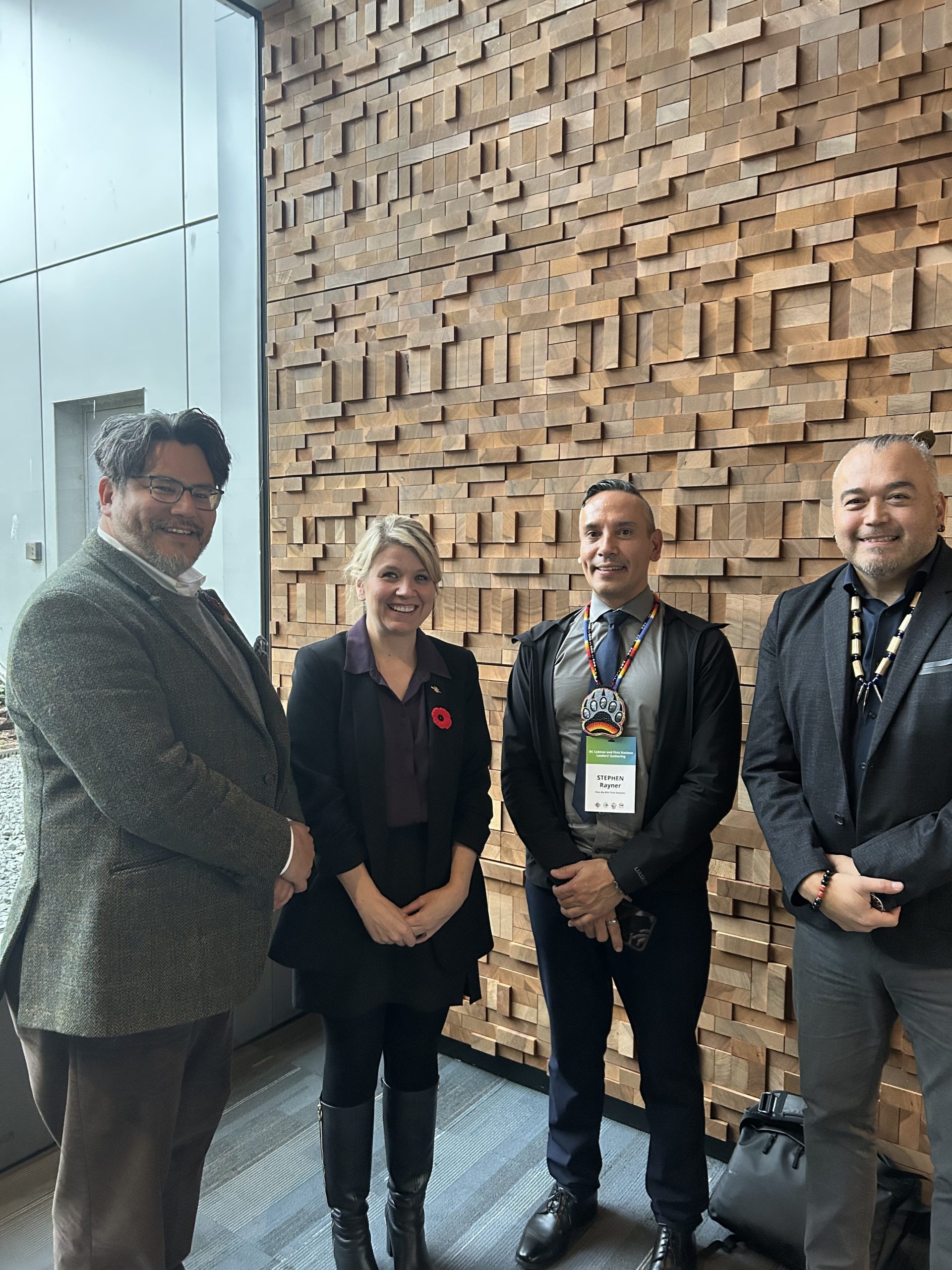
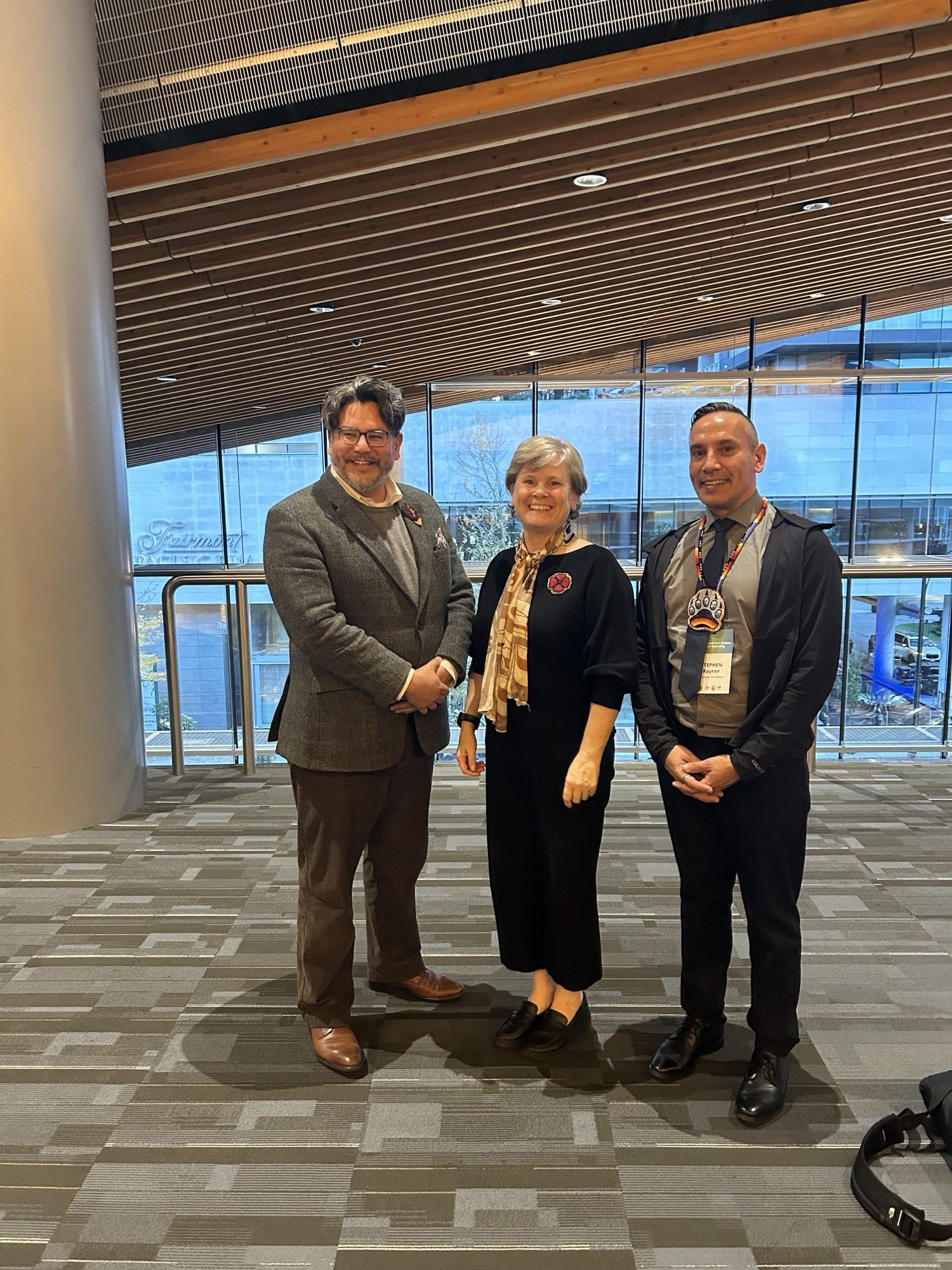
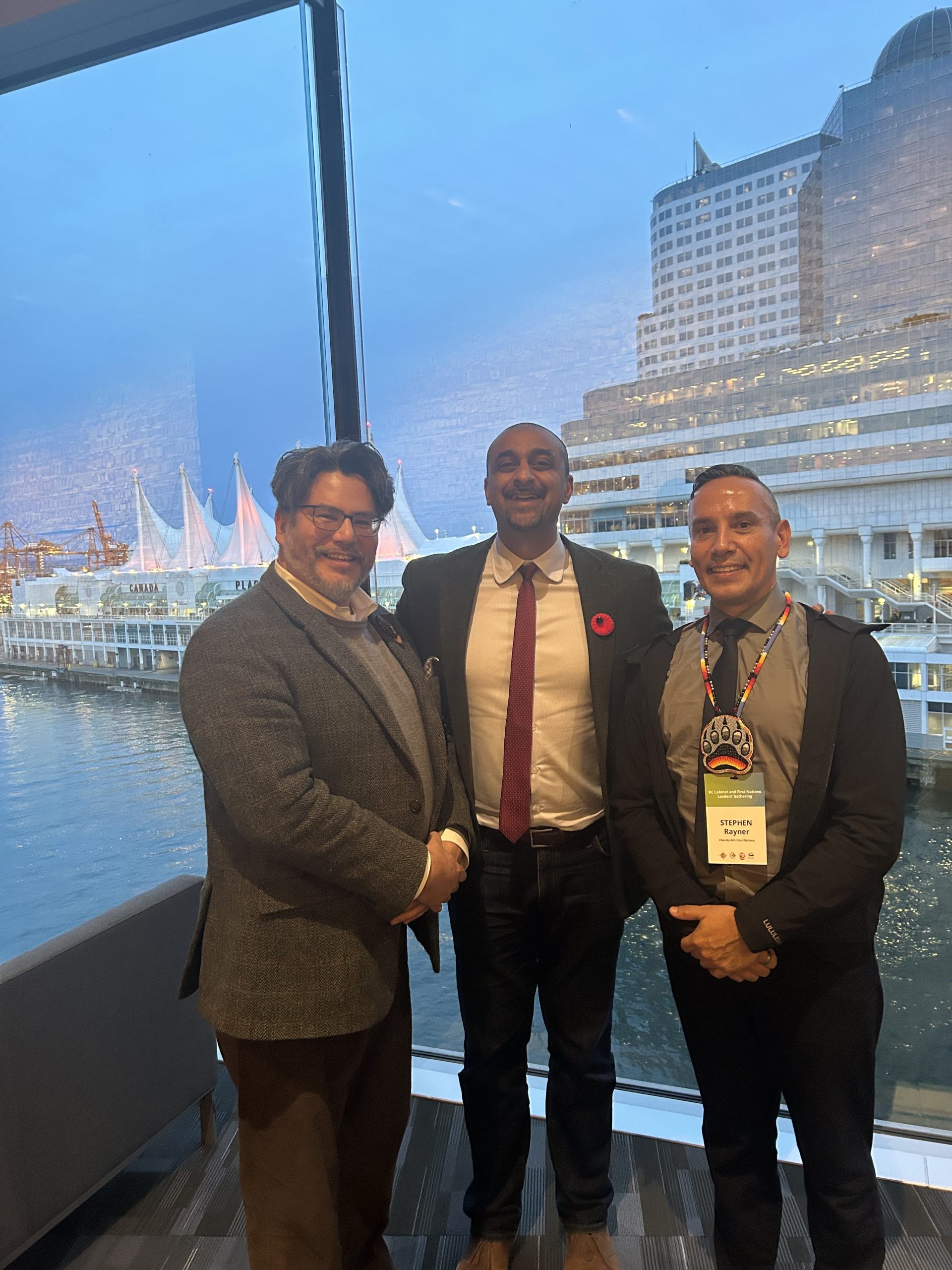
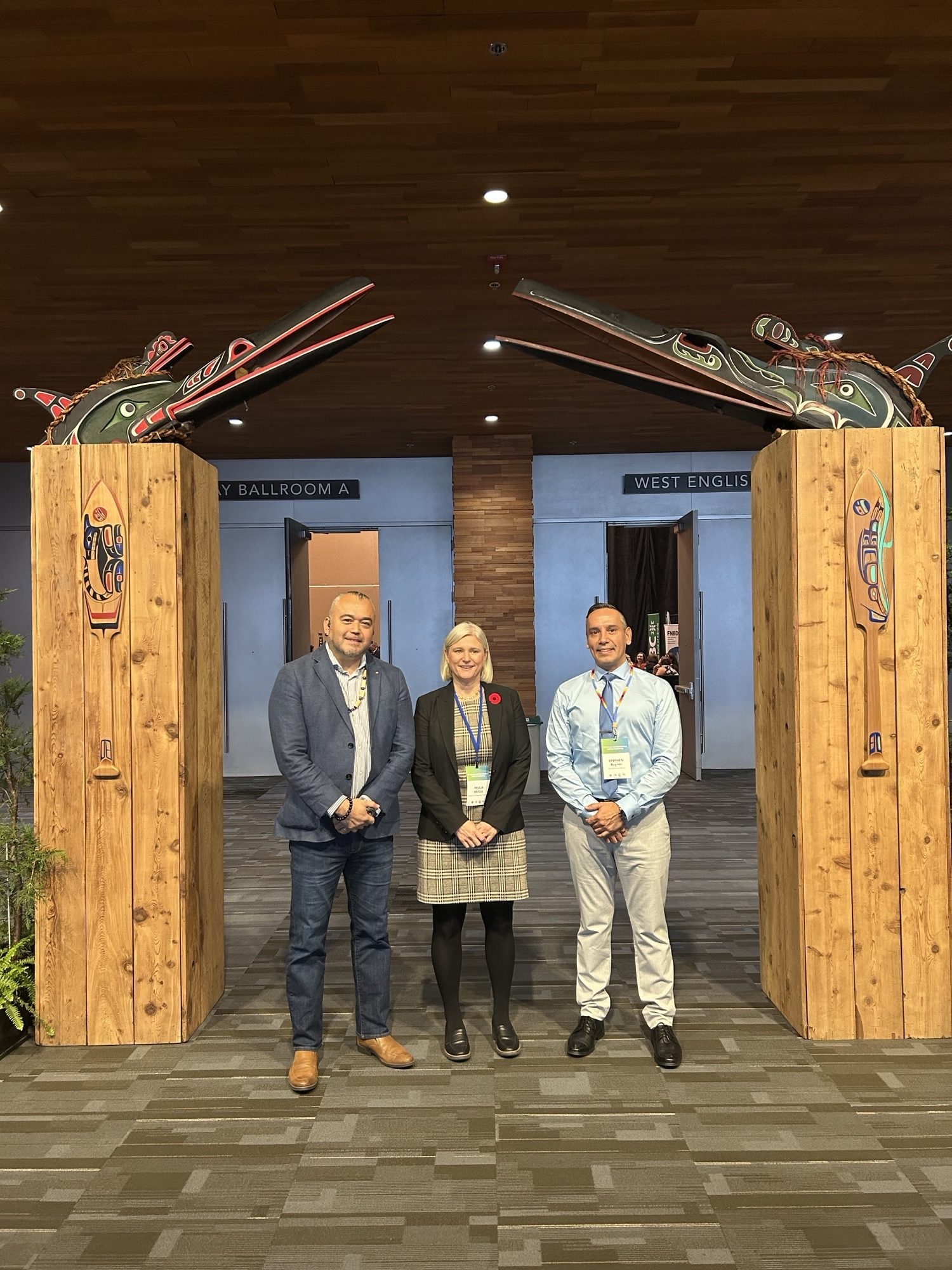
Members of Huu-ay-aht First Nations Executive Council attended the B.C. Cabinet & First Nations Leaders’ Gathering in Vancouver this week.
Chief Councillor Sayaač̓atḥ, John Jack, Councillor n̓aasquʔisʔatḥ, Stephen Rayner, and Councillor ƛicitatḥ, Edward R. Johnson met with members of the BC Cabinet as they continue to advocate for the long-term health and well-being of Huu-ay-aht.
Productive conversations were held with the Minister of Infrastructure Bowinn Ma, the Minister of Children and Family Development Jodie Wickens, the Minister of Jobs and Economic Growth Ravi Kahlon, the Minister of Forests Mackenzie Leine, the Minister of Public Safety and Solicitor General Nina Kreiger and many more.
ʔuuʔałuk (Taking care of)
BC Corrections and Huu-ay-aht First Nations (HFN) met at the Port Alberni Government office on Friday, July 18, 2025, to share a meal, exchange gifts, and join in partnership with the signing of a Memorandum of Understanding (MOU) for Supported Community Integration.
The purpose of the MOU is to establish a collaboration between BC Corrections and HFN to support release planning, reintegration and/or case management of BC Corrections Clients who are registered citizens of the HFN, or are currently residing in, or intending to reside in the HFN community.
This initiative intends to provide BC Corrections and HFN citizens a better understanding of the significant role that a community can play when individuals who are involved with BC Corrections desire to have representatives from their community support their reintegration efforts.
The MOU was signed by HFN Chief Councillor Sayaač̓atḥ, John Jack and Assistant Deputy Minister, BC Corrections, Erin Gunnarson. Also in attendance were HFN Executive Councillors n̓aasiismisʔaksup, Stella Peters (the portfolio holder), ƛicitatḥ, Edward R. Johnson, n̓aasquʔisʔatḥ, Stephen Rayner, and from the ḥaw̓iiḥ Council, Sherri Cook (Yaalthuuaa-uks) and Theresa Nookemus (Thlut’ as aksup).
Gifts were exchanged between BC Corrections and the Huu-ay-aht First Nations: the Huu-ay-aht gave a wood-carved Eagle feather and cedar roses. BC Corrections presented a wooden box and blanket made by inmates at a BC Corrections facility who are taking part in the woodworking and Tailor Shop Programs.
Other First Nations have also participated in this initiative; the Tsleil-Waututh First Nation signed a similar MOU in 2019, and five Nicola Valley Indian Bands – the Coldwater Indian Band, Lower Nicola Indian Band, Nooaitch Indian Band, Shackan Indian Band and Upper Nicola Indian Band in 2021.