The 2026 Fisheries and Oceans Canada research report on the West Coast of Vancouver Island’s natural-origin Chinook salmon highlights a direct partnership with the Huu-ay-aht First Nation.
Through the dedicated monitoring and assessment efforts of the Huu-ay-aht team since 2017, the Sarita River Chinook has emerged as a vital ecological indicator for understanding natural-origin juvenile Chinook production and population dynamics within the Stock Management Unit.
The team has conducted comprehensive assessments of juvenile salmon out-migration and return migration in the Sarita River, employing active management and mark-selective fisheries to improve the stock’s proportional natural influence.
This collaborative research, supported by Huu-ay-aht fisheries management, provides critical insights into smolt survival rates and life-cycle bottlenecks that are essential for shaping future conservation and rebuilding strategies for the region
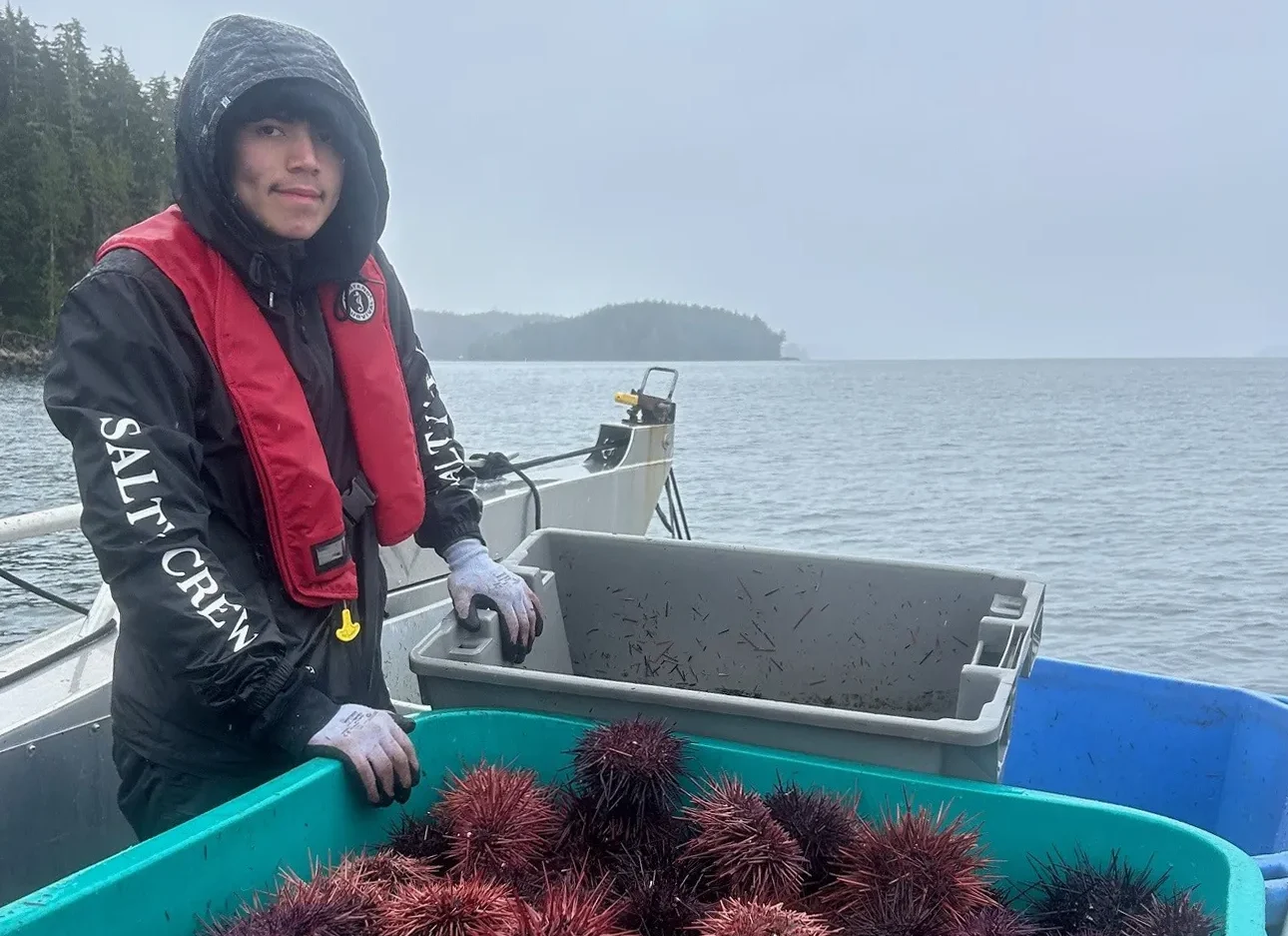
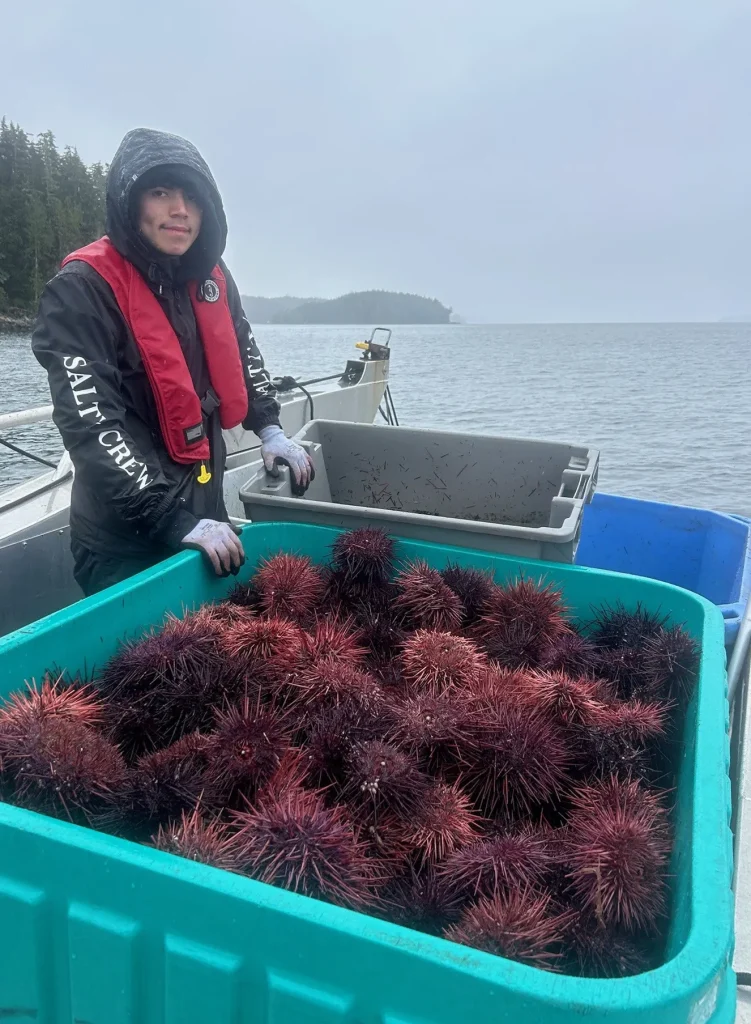
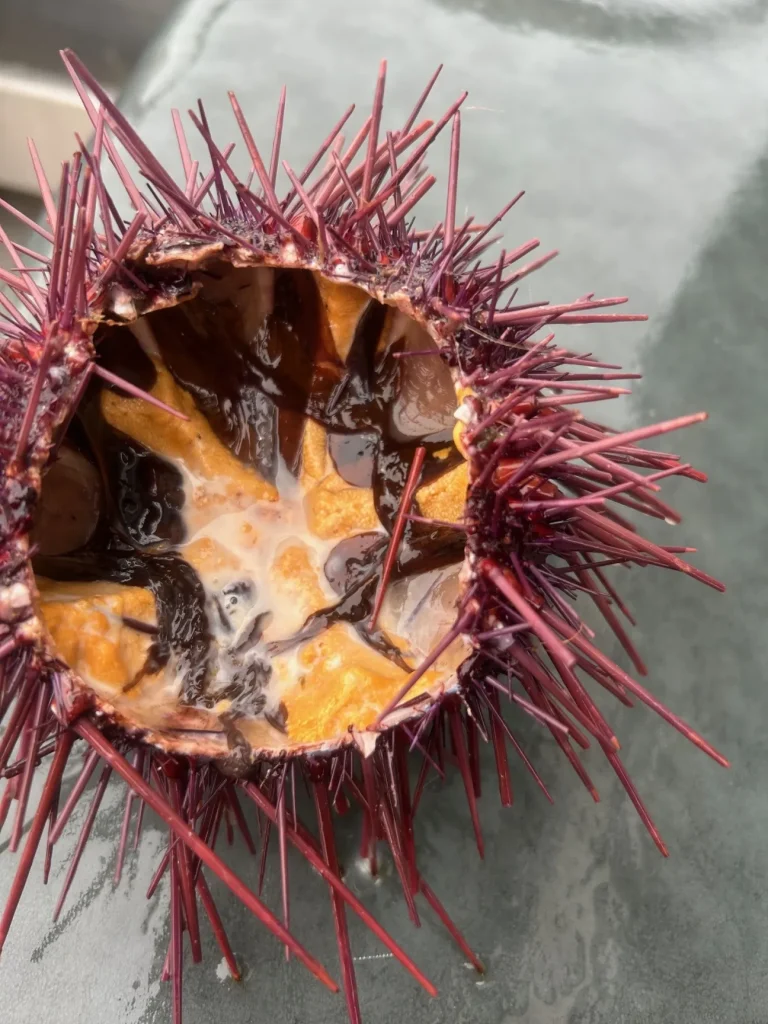
On Wednesday, March 11, 2026, the Huu-ay-aht First Nations Land and Natural Resource team collaborated with The Kelp Rescue Initiative and the Ka:’yu:’k’t’h’ / Che:k’tles7et’h’ (Kyuquot / Checleseht) First Nations to harvest a total of 1,449 t̓uc̓up (sea urchins). The harvesting had two main goals; first, to remove urchins from five sites around Barkley Sound to reduce grazing pressure and support the planting of young kelp, as part of ongoing kelp forest restoration efforts; and second to provide t̓uc̓up as food for Huu-ay-aht and Kyuquot / Checleseht First Nations.
On board the Huu-ay-aht vessel were Stephen Smith and Nolan Nookemus. The SCUBA diving team included Duncan Jackson, Matt Bakken, Jasmin Schuster, Hannah Schriber, and Ben Holland, whose efforts were essential to the harvest. Anacla citizens received their distribution the day of the harvest. Representatives from the Kyuquot / Checleseht First Nations Lands and Natural Resources department, Paul Vincent and Josh Orwin travelled to Bamfield to collect the t̓uc̓up to distribute to their citizens. Learn more about Kelp restoration efforts in Barkley Sound please visit The Kelp Rescue Initiative at www. kelprescue.org/
Nolan Nookemus on the Huu-ay-aht vessel.t̓uc̓up (sea urchins) ready to eat!
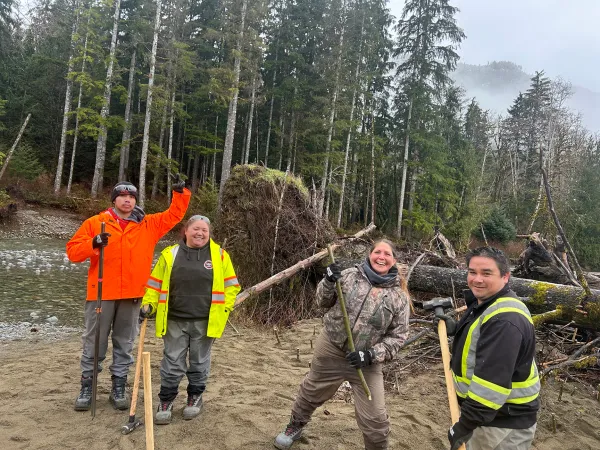
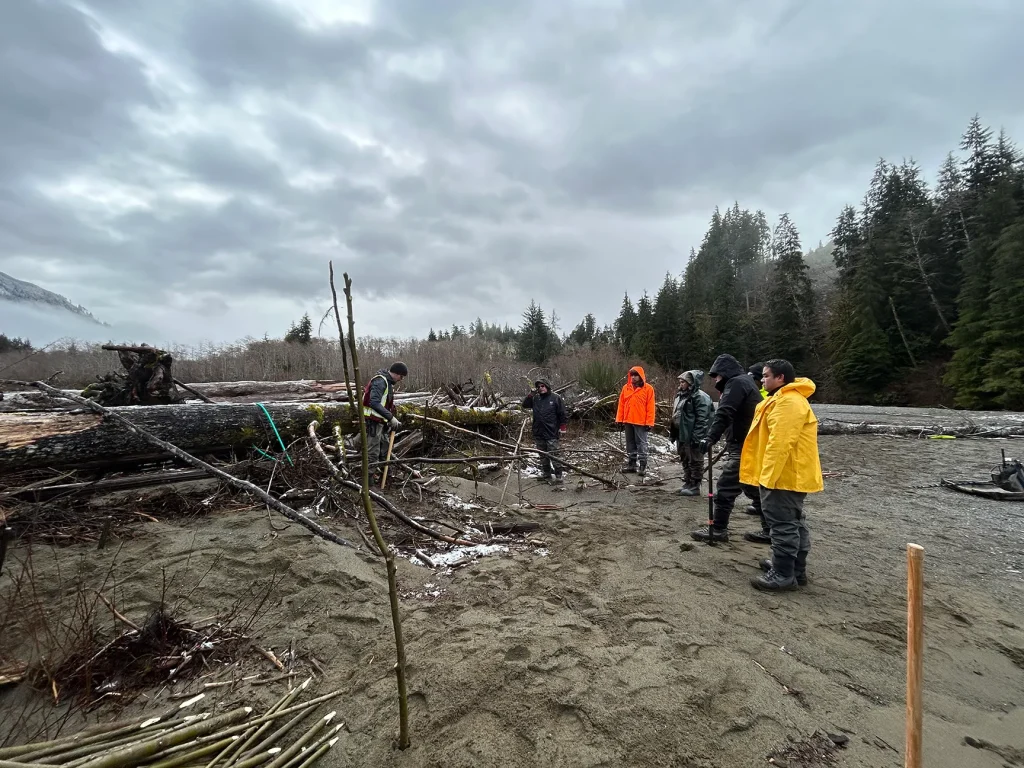
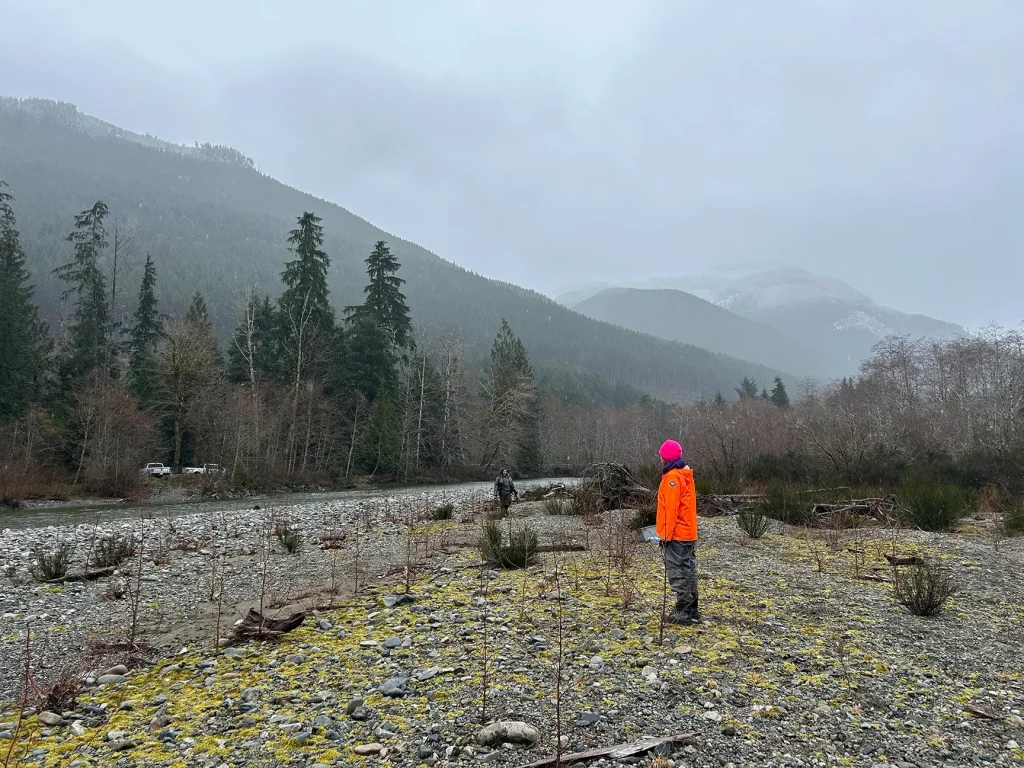
On March 10 and 11, 2026, as part of the Huu-ay-aht Watershed Renewal Program, the Lands and Natural Resources department participated in riverbank stabilization work along the South Sarita River. This effort involved willow live staking and alder transplanting to support riparian restoration.
The Sarita River, known as “The Heart of the People”, is one of the most important rivers in the Huu-ay-aht ḥaḥuułi. It has historically been the home to numerous villages, and several families continue to reside nearby today. However, extensive logging in the 1950s – 1960s left much of the watershed with little to no intact riparian habitat. In addition, a critically aggraded section of the streambed – where sediment buildup has raised the riverbed elevation – now blocks the passage of returning Chinook Salmon spawners up the South Sarita River.
Although some natural re-vegetation has occurred over time, bioengineering techniques such as ‘live staking’ can accelerate channel stabilization. These methods help reduce streamflow velocity, allowing for the deposition of organic materials and sediment. Over time, this process contributes to soil formation and supports the establishment of healthy riparian vegetation.
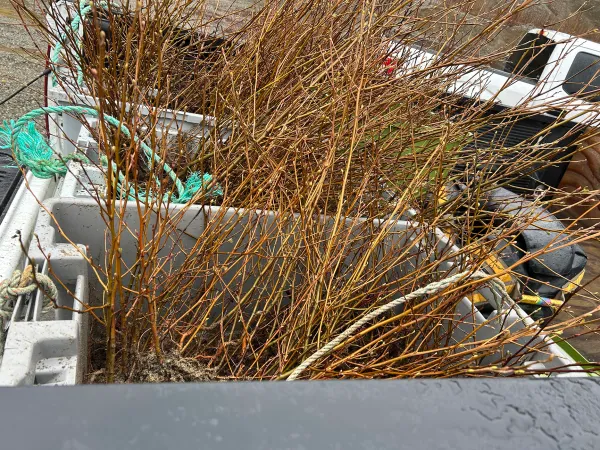
Working alongside LGL Environmental Consulting, the Huu-ay-aht Lands and Natural Resources team gained hands-on experience installing live willow stakes in sensitive areas to stabilize the riverbank. The team learned to identify plant species, prepare willow cuttings, and apply both hand- and excavator-based planting techniques. Alder saplings were also transplanted into a higher-elevation gravel bar within the South Sarita River to monitor the success of this restoration approach.
The goal of this project is to build knowledge and capacity in stream restoration techniques and to put them into practice. In the long term, these efforts aim to enhance riparian vegetation along the Sarita River and create deeper, cooler channels that better support the return of salmon.
Left to right: Jared Nookemus, Justine Mack, Louella Dennis, and Conrad Young.Learning to life stake willow stalks.Jared Nookemus at South Sarita River.Alder saplings ready for transplanting.
Photos by A. Andiel.
PROJECT PROPOSAL SUMMARY
This project is the culmination of 7 years of investment under the Huu-ay-aht Watershed Renewal Program. The program revealed a critically aggraded area of that blocks the passage up the Sarita River of returning Chinook Salmon spawners. Work proposed elsewhere will produce restoration designs to improve fish passage. Concurrently, we propose initiating live stake planting of upstream of the impediment to the stabilize the substrate, slow sediment transport, retain debris and aid in soil formation. Harvesting and planting live stakes will be part of future restoration designs. This project will provide the requisite initial trainings to HFN Natural Resources staff.
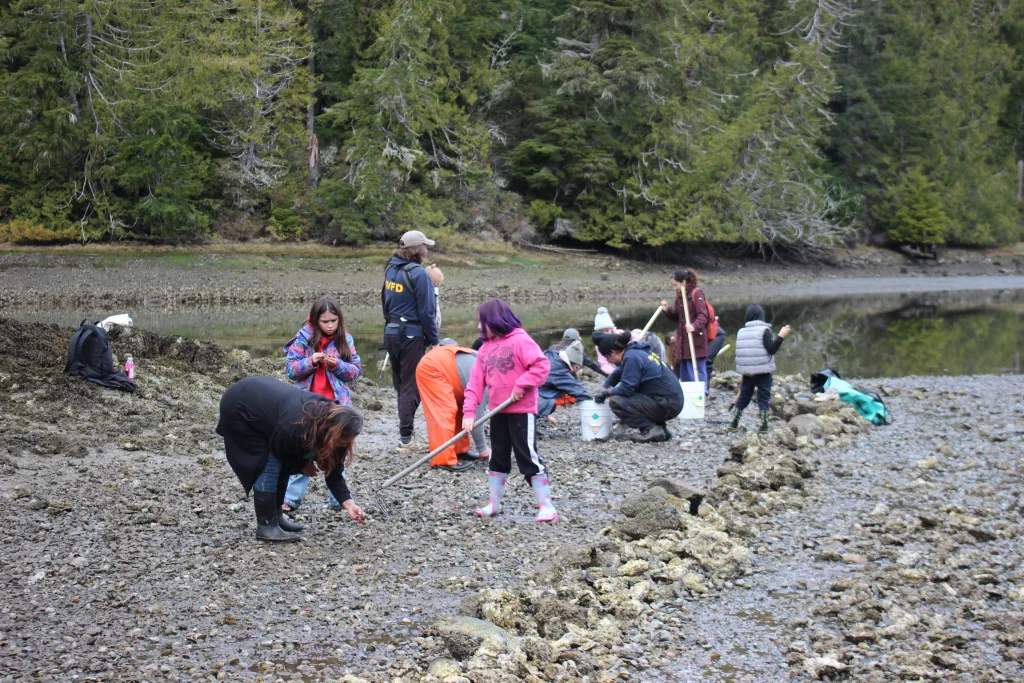
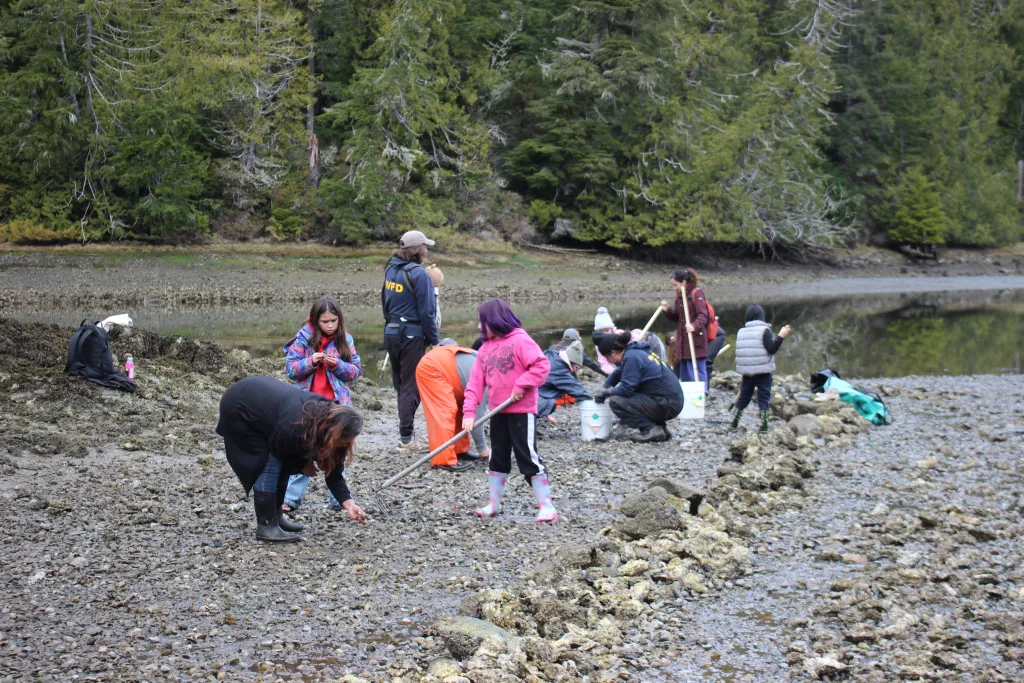
Youth digging for clams, with clam garden rock wall in the foreground.
Longer daylight hours and low tides combined to create ideal conditions for an intertidal clam digging experience at the food beach at Sarita Bay. The event was led by the Huu-ay-aht Lands and Natural Resources Team—Tommy Joe, Abigail Andiel, and Stephen Smith.
Joining the harvest were Huu-ay-aht youth Vanessa Young and Issiah Dennis. Jacquie Dennis also brought a van load of youngsters from Paawats. Staff members from Nova Harvest participated as well, making it a lively and collaborative outing.
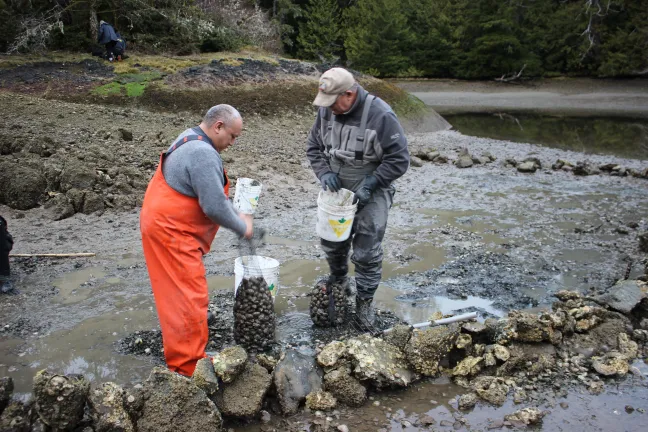
Participants enjoyed digging up clams and discovering many other intertidal organisms in the mucky clam garden. Tommy Joe, a true clam-digging machine, worked continuously and filled two buckets—the equivalent of about 100 pounds of clams. In total, 150 pounds of clams were harvested during this “introduction to clam digging” event.
The use of the food beach at Sarita Bay encourages its ongoing productivity and celebrates the construction of the clam garden, a project completed through the Huu-ay-aht Warriors program. Clam gardens are a prehistoric practice used to increase the production of culturally significant foods. Rock walls built in the lower intertidal zone filter sediment and create a shallow, sloped terrace—ideal conditions for clams to grow and spawn.
You can read more about clam gardens here: https://hashilthsa.com/news/2023-08-24/nuu-chah-nulth-youth-restore-clam-gardens-future-generations
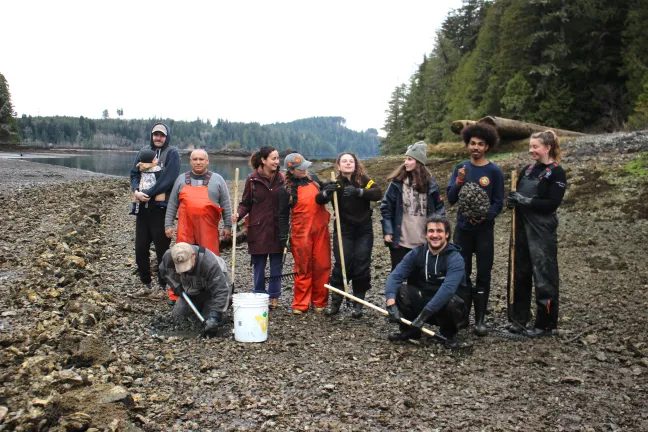
Stephen Smith and Tommy Joe bagging up clams. Photo, (left to right: Sean Flickinger, Stephen Smith, Tommy Joe (still digging!), three Nova Harvest staff, Savanna Lincez, Ilan, Issiah Dennis and Abigail Andiel, with clam garden wall built by Huu-ay-aht Warriors to the left.
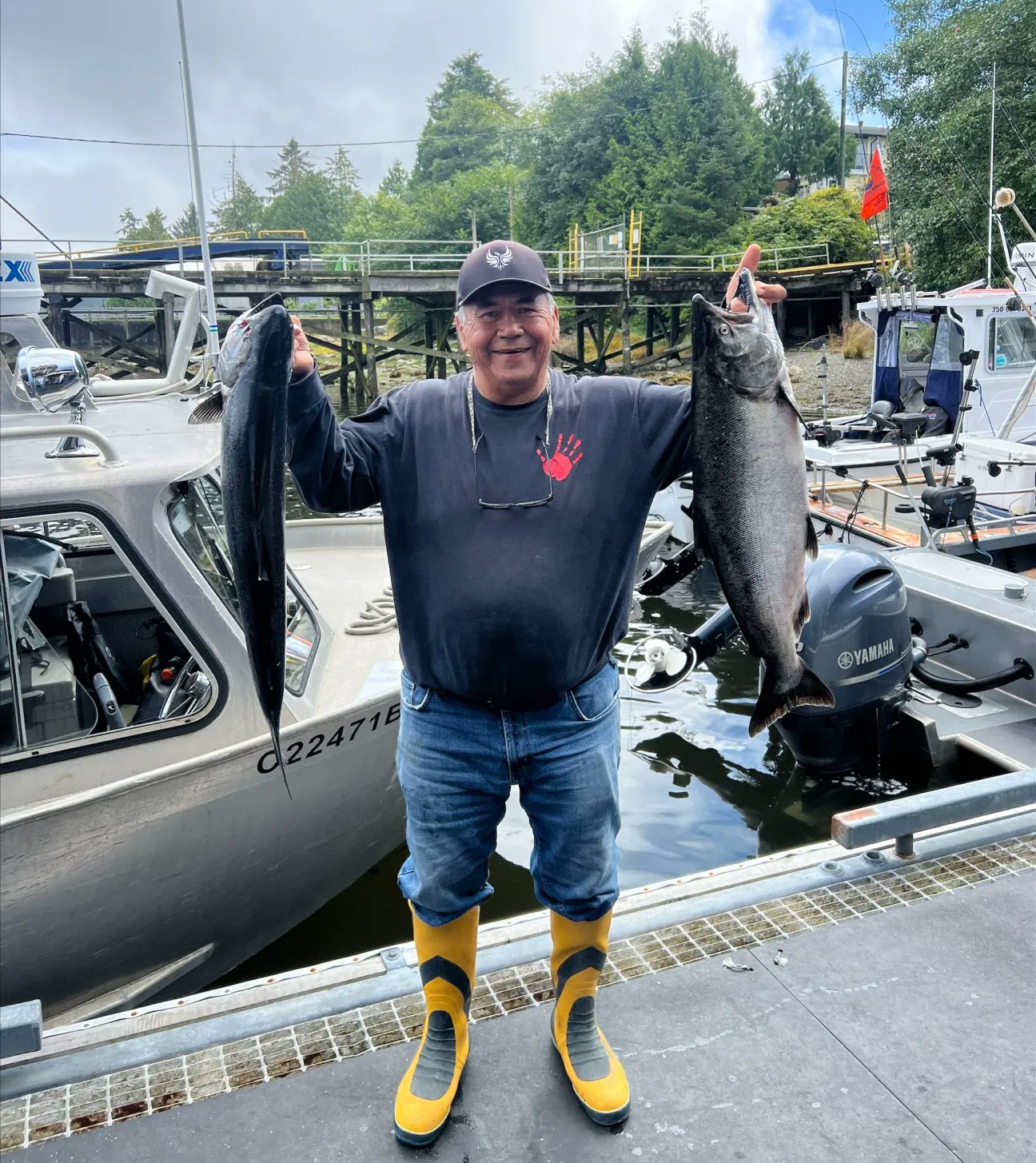
Attention Huu-ay-aht & Maa-nulth-aht Fishers: The ICEF Economic Winter Chinook Me Too Fishery starts January 9, 2026 and is open until March 15, 2026, or until the quota catch is met.
Larry Johnson with Chinook, August 2025.
Requirements:
Registered vessel which meets marine safety requirements.
Inshore or offshore fishing is allowed [The fishing area is PFMAs 123-127 and portions of PFMAs 23-27].
Any gear type is permitted – use of plugs is not required.
No gill net or seine net permitted.
Non-retention of Fraser Pink Salmon.
The fishery will close March 15, 2026 or when the allocation has been reached, whichever comes first.
Fishers must obtain license and documentation from HFN Natural Resources Manager before fishing commences.
For more information or to sign up and get your license please contact: Amelia Vos – Natural Resources Manager. 250-728-3414 or amelia.v@huuayaht.org
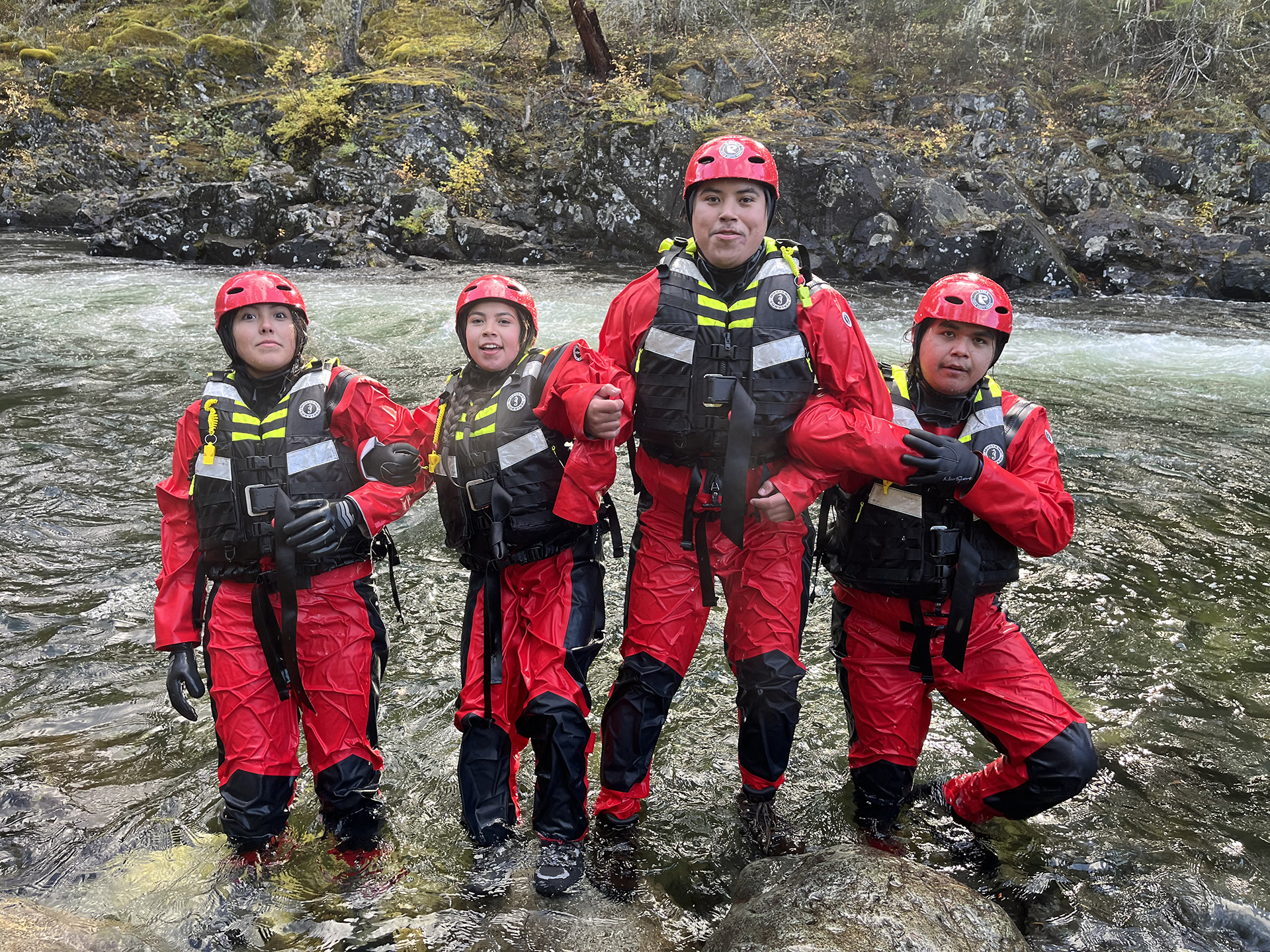
Swiftwater Training for Huu-ay-aht Youth provided valuable field skills and work experience, and the training has benefited several initiatives of the Huu-ay-aht First Nations (HFN) Fisheries program.
(Left to right) Victoria Williams, Vanessa Young, Zyliss Dick, and Seth Nookemus in Swiftwater training gear. Photo by Daniel Zayonc.
The Huu-ay-aht First Nations and the Association of Wetland Stewards for Clayoquot & Barkley Sounds, locally known as “SPLAT” have been working together to protect the Frederick Lake Western Toad population since 2018.
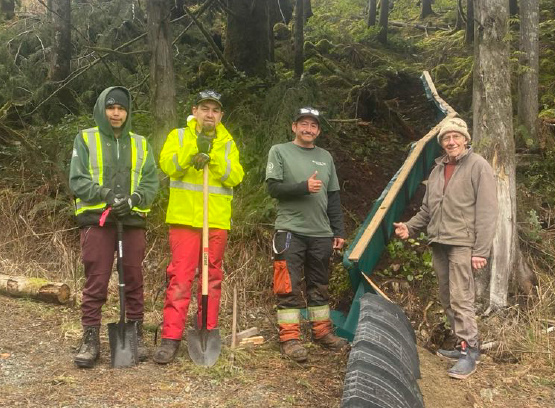
Left to right: Huu-ay-aht Guardians Jayson Nookemus, Brian Peters, and Kevin Peters, and SPLAT team member, Gerry Schreiber, after extending fences designed to keep toads off the Bamfield Road.
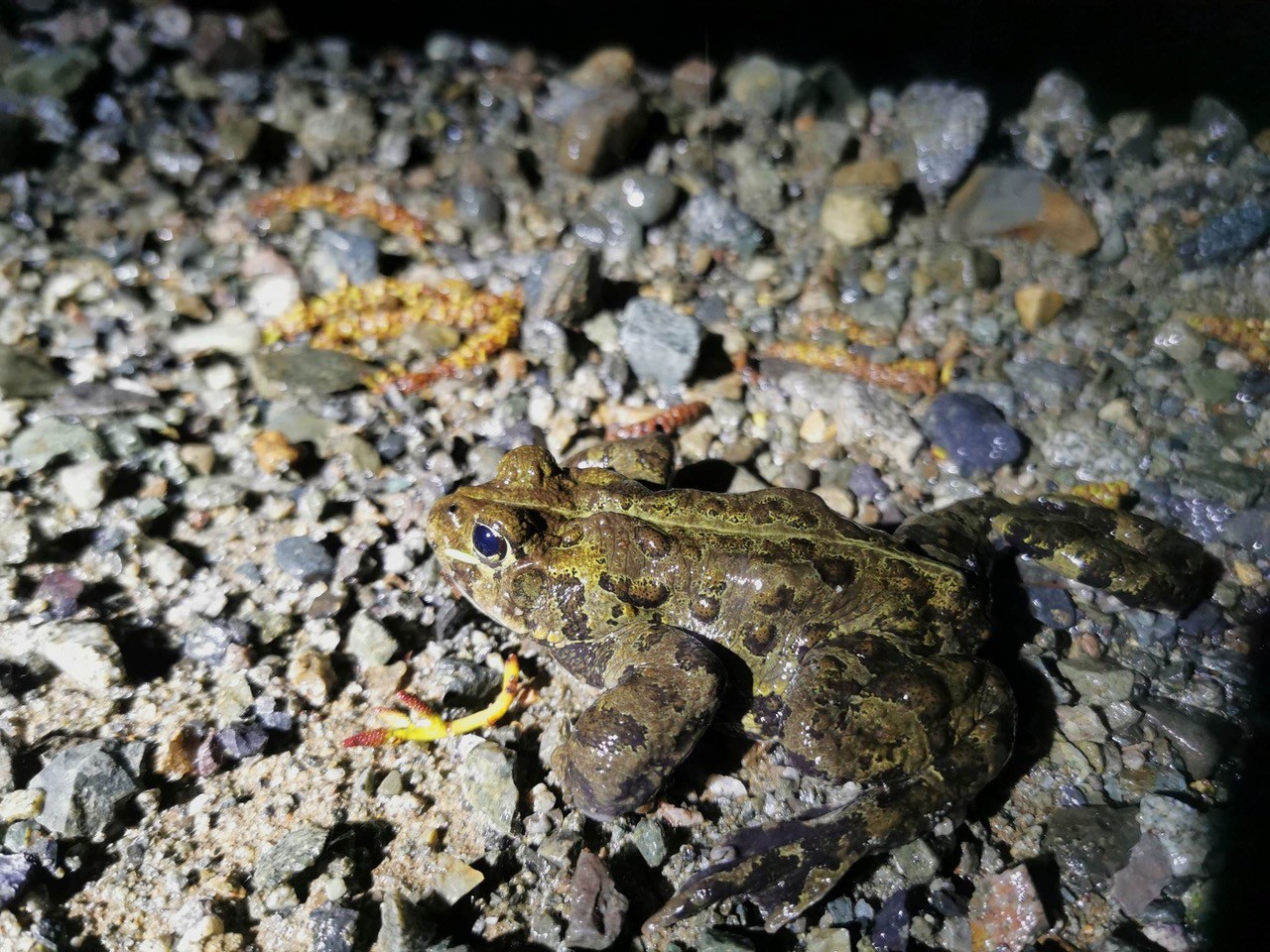
Adult Western Toad. Photo by Katie Turner
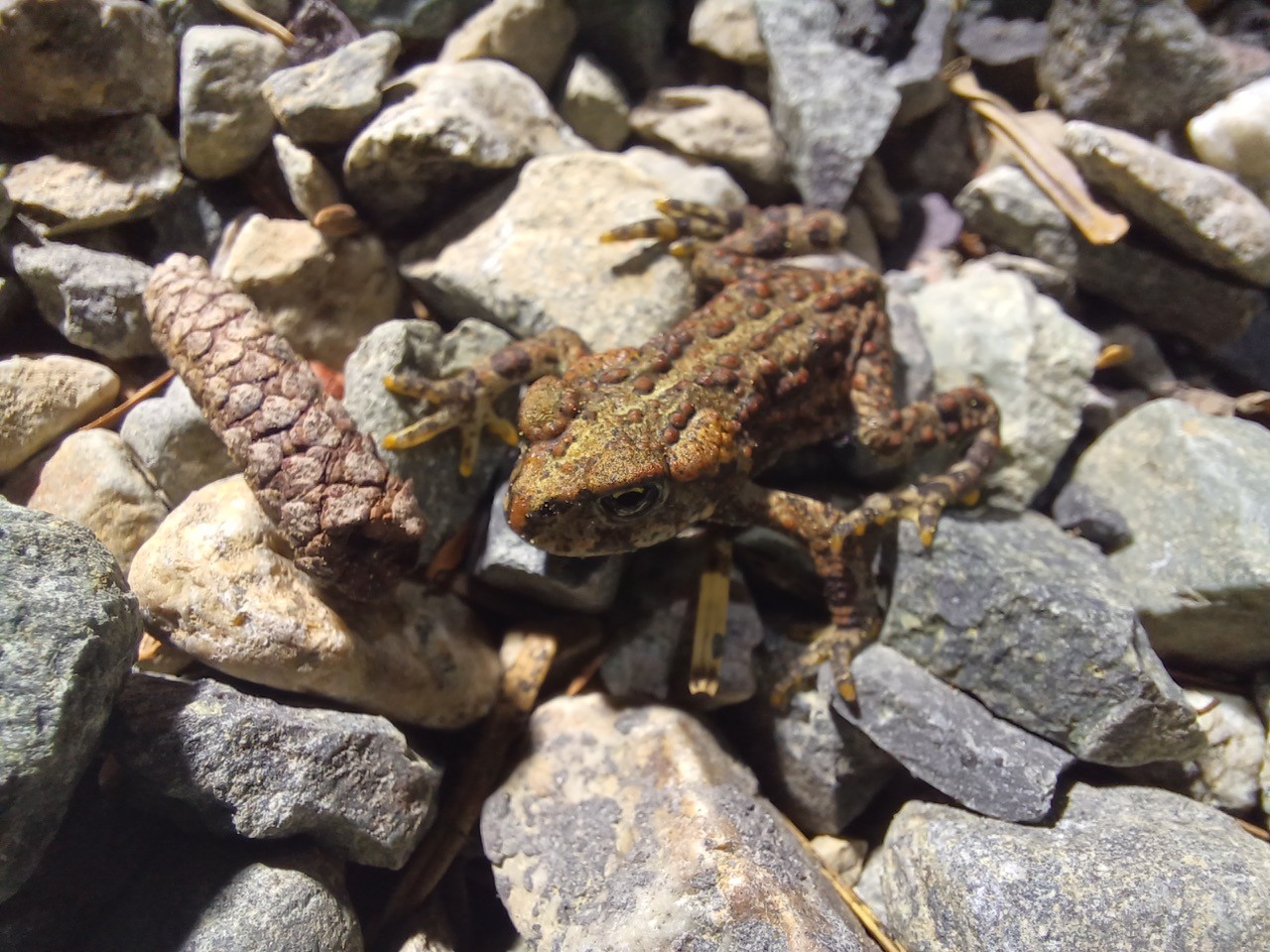
Juvenile Western Toad (toadlet). Photo by Jess McGregor
Frederick Lake is home to a breeding population of Western Toads, a species that is protected under the Species at Risk Act in Canada.
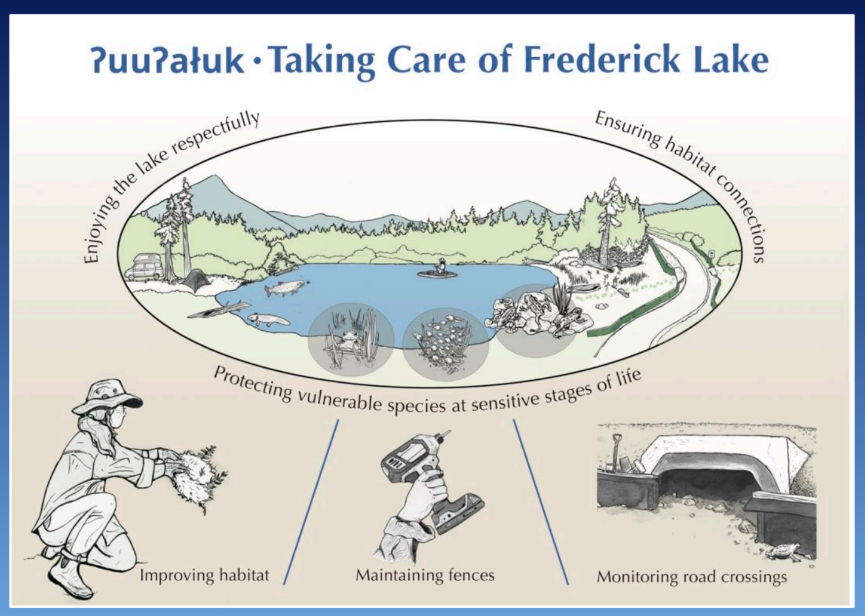
To access the lake to breed in the spring, Western Toads must migrate across the road bordering Frederick Lake, where they mate and lay eggs in shallow waters along the shore. Breeding adults then migrate back across the road into the forest after laying eggs. Once eggs hatch into tadpoles and grow into toadlets, the toadlets must also cross the road to migrate into the forest, which takes place in July and August.
In the spring of 2021, with the announcement of the resurfacing of the Bamfield Road and the expectation of increased vehicle traffic, SPLAT approached the Huu-ay-aht First Nations and the Government of BC to install toad underpasses. During the spring and fall of 2021 and spring of 2022, the Huu-ay-aht Watershed Renewal Technicians assisted the SPLAT team to survey the number of toads crossing the road. Two culverts were installed as well as over 300 meters of fencing to guide toads to the culverts were constructed. In 2023 and 2024 more fencing was added, and surveys conducted to find the peak crossing locations and used wildlife cameras to photograph toads using the culverts.
Huu-ay-aht Guardians, along with SPLAT crew, played a key role in night-time toad surveys, extending fences to keep toads off the Bamfield Road, and building a temporary fence extension to be in place during peak toadlet migration.
Infographic about how SPLAT protect the habitat of Western Toads and other amphibians at Frederick Lake near Bamfield, in collaboration with the Huu-ay-aht First Nations.
The Association of Wetland Stewards for Clayoquot & Barkley Sounds is a non-profit charity, locally known as “SPLAT” – “Society for the Prevention of Little Amphibian Tragedies” or “Scientific Protocols for Locating Amphibians in Transit”. The main project funder is Environment and Climate Change Canada, through Indigenous Partnerships for Species at Risk.
This long-term project began with surveys on Highway 4 between Tofino and Ucluelet to learn where frogs and salamanders were crossing and being squashed by vehicle traffic.
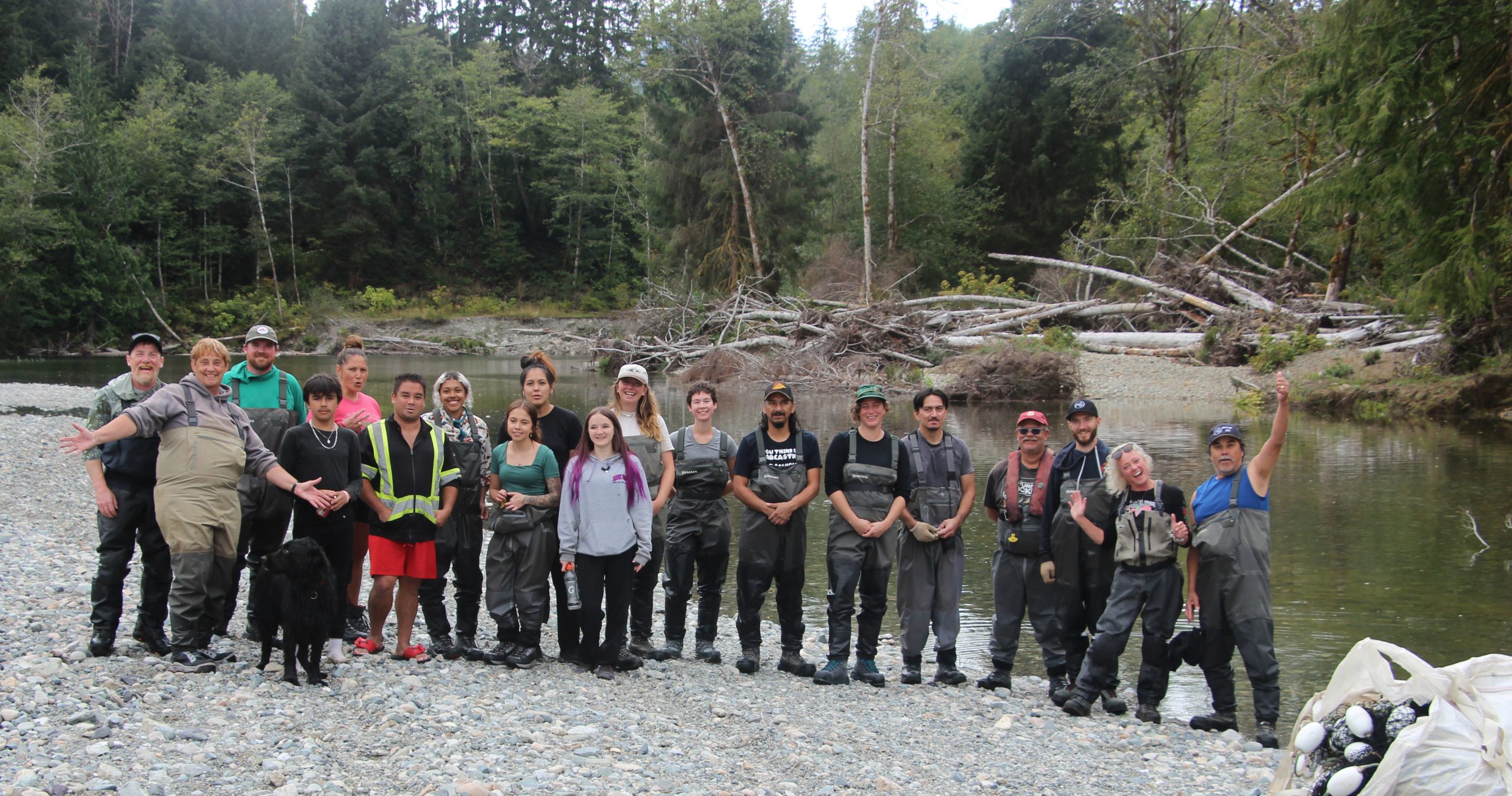
It was a fun filled though labour-intensive day on September 11, 2025, when Huu-ay-aht First Nations (HFN) citizens, staff, and Nitinaht River Hatchery crew participated in the 2025 Sarita River Economic Fishery, broodstock collection destined for Nitinaht River Hatchery, and sampling for scientific analyses.
The crew from the Nitinaht River Hatchery met the Huu-ay-aht First Nations team at the Sarita River with a small boat, large seine net, and bags to transport live Chinook destined for broodstock. From the sandbar the team waded down the river, floating totes for the food fish. Wild Chinook were collected for brood stock and hatchery fish were collected for scientific sampling and food fish.
The 2025 Economic Fishery took place over 5 days, with a total of 7846 lbs of hatchery Chinook harvested for food fish, and approximately 50 wild Chinook were transported to Nitinaht Hatchery for Sarita River broodstock.
PORT ALBERNI, BC – This morning, after much deliberation, BC Supreme Court Justice Amy Francis granted the application for an interim injunction in favour of Tsawak-qin Forestry LP (“Tsawak-qin”) which prohibits anyone from interfering with, or blocking access to, the permitted harvest area and any road within the injunction area.
For several weeks, a group of outside agitators have descended upon the territory of Pacheedaht First Nation and set up blockades to prevent Tsawak-qin and its contractors from engaging in First Nations supported, lawful forestry activities.
We, the Huu-ay-aht First Nations, have called upon these unwelcomed individuals to leave the Pacheedaht territory and allow for the First Nations supported, lawful forestry operations to continue. We hope that these individuals will realize that Pacheedaht’s right to self-determination is of paramount importance here, and they will in turn leave the territory peacefully and promptly.
The blockade has undermined the right of Pacheedaht to assert its Inherent Rights and authority over all activities within its territory. The Pacheedaht are the rightful stewards of its land, waters, and natural resources. The disrespect shown by the blockaders not only harms Pacheedaht in the immediate term, but it harms the continued path towards reconciliation.
Continuing to allow these blockaders to undermine Pacheedaht sovereignty would have set a dangerous precedent for First Nations across BC and all of Canada, and we are encouraged by the news that the interim injunction was granted against these unwelcome individuals today. We are hopeful that they will leave Pacheedaht territory expeditiously following the interim injunction being granted today.