News Categories: Culture

  • Winter Solstice

    Letter from qiic̓qiic̓a

    tikʷat̓iʕas (Ti-kwa-ti-us) Winter solstice literally means when the sun sits ever so briefly. The shortest day. From here on, all we can do is grow with the growing days. A spiritual time for the Huu-ay-aht people. Traditionally the time when potlatch belongs. 

    Potlatch is a Chinook Jargon word (that means “to give”) and it derives from the nuučaan̓uł language it is a winter ceremony and the spirit of giving in this time transcends cultures throughout the world. Huu-ay-aht was no exception it was this time when our Ancient Spirit thrived the most.  

    What does it mean to be Huu-ay-aht? It means we’re literally the people of resilience. In our existence over the millennia’s, we have shown resiliency in the face of natural disasters such as earthquake and tsunami. We have shown resiliency in the face of hunger and famine often the aftermath of said disasters. We have shown resiliency in the face of even war and conquest. 

    Our next great story is going be one of the Huu-ay-aht showing resiliency in the face of colonialism. In this season of giving reflect on the principles of ʔuuʔaałuk, ʔiisaak, and hišukma c̓awaak. Reflect on all that we’ve overcome to be where we’re at today. Be thankful, be kind and be generous those are foundations of potlatch, integral in maintaining The Ancient Spirit of the Huu-ay-aht. 

    Culture is more than song, dance, and ceremony. It’s also in our valued principles be cultured. Happy Solstice.

  • RCMP, Conservation Officer, and DFO Visit Huu-ay-aht Territory to experience Huu-ay-aht Culture

    RCMP, Conservation Officer, and DFO Visit Huu-ay-aht Territory to experience Huu-ay-aht Culture

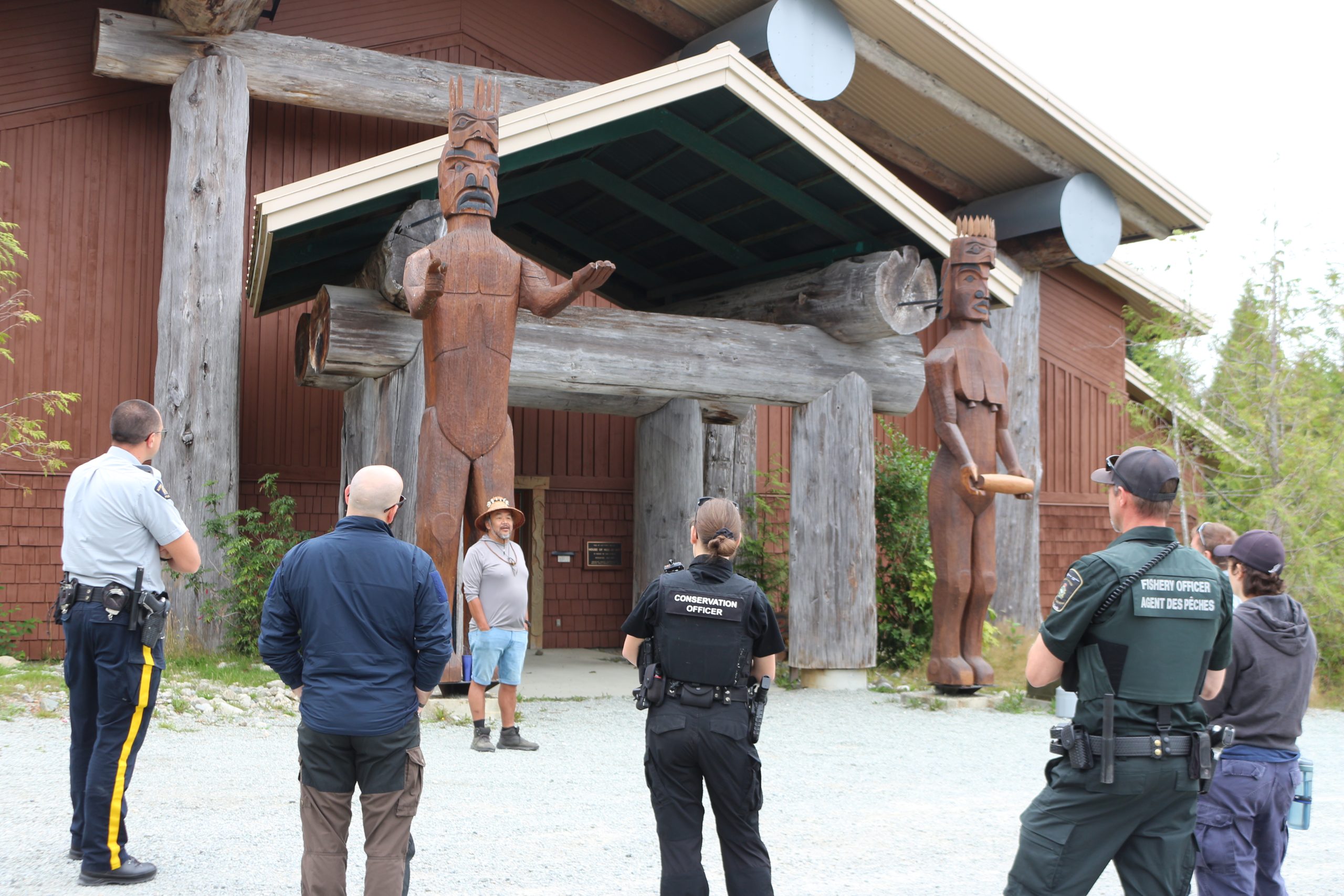
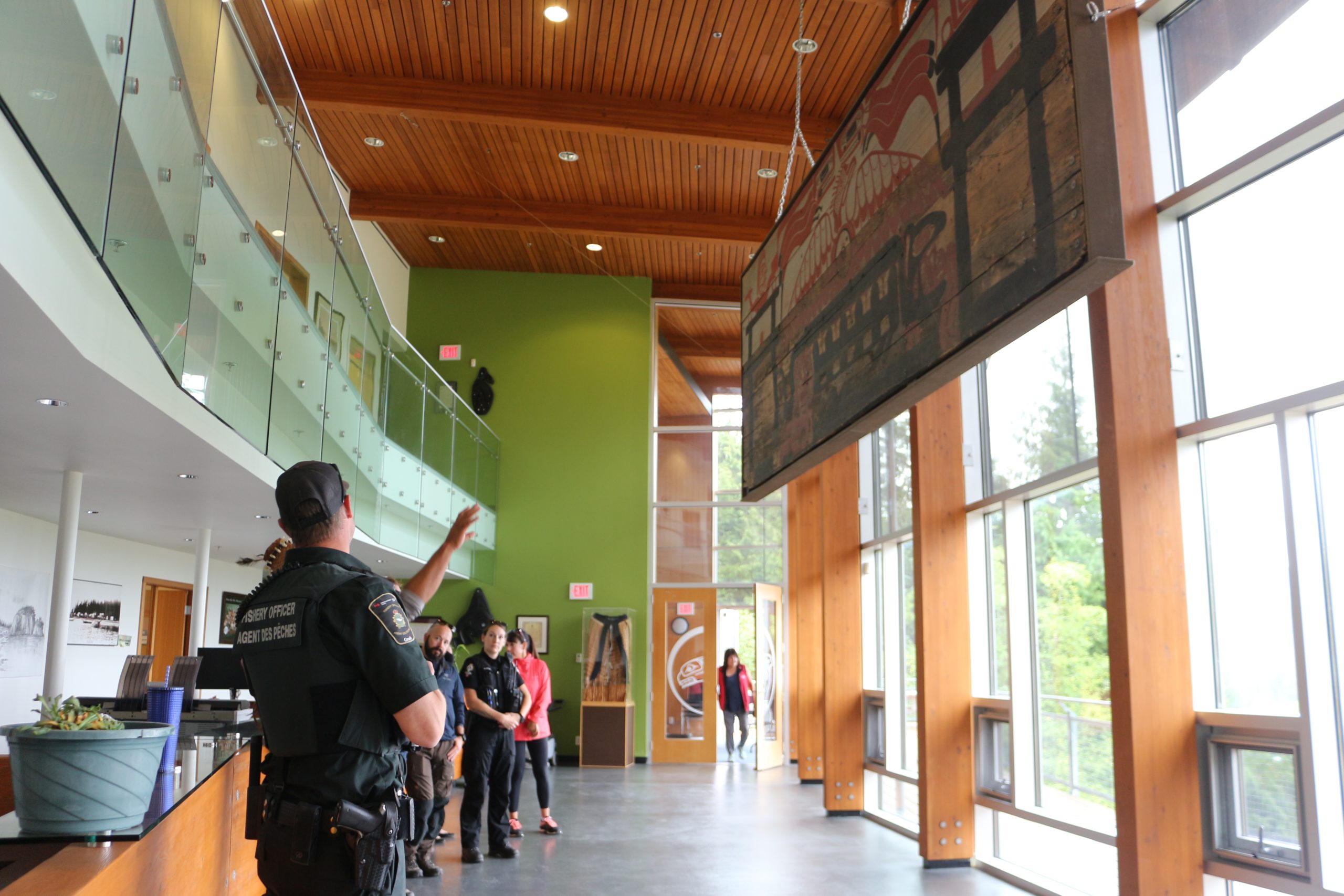
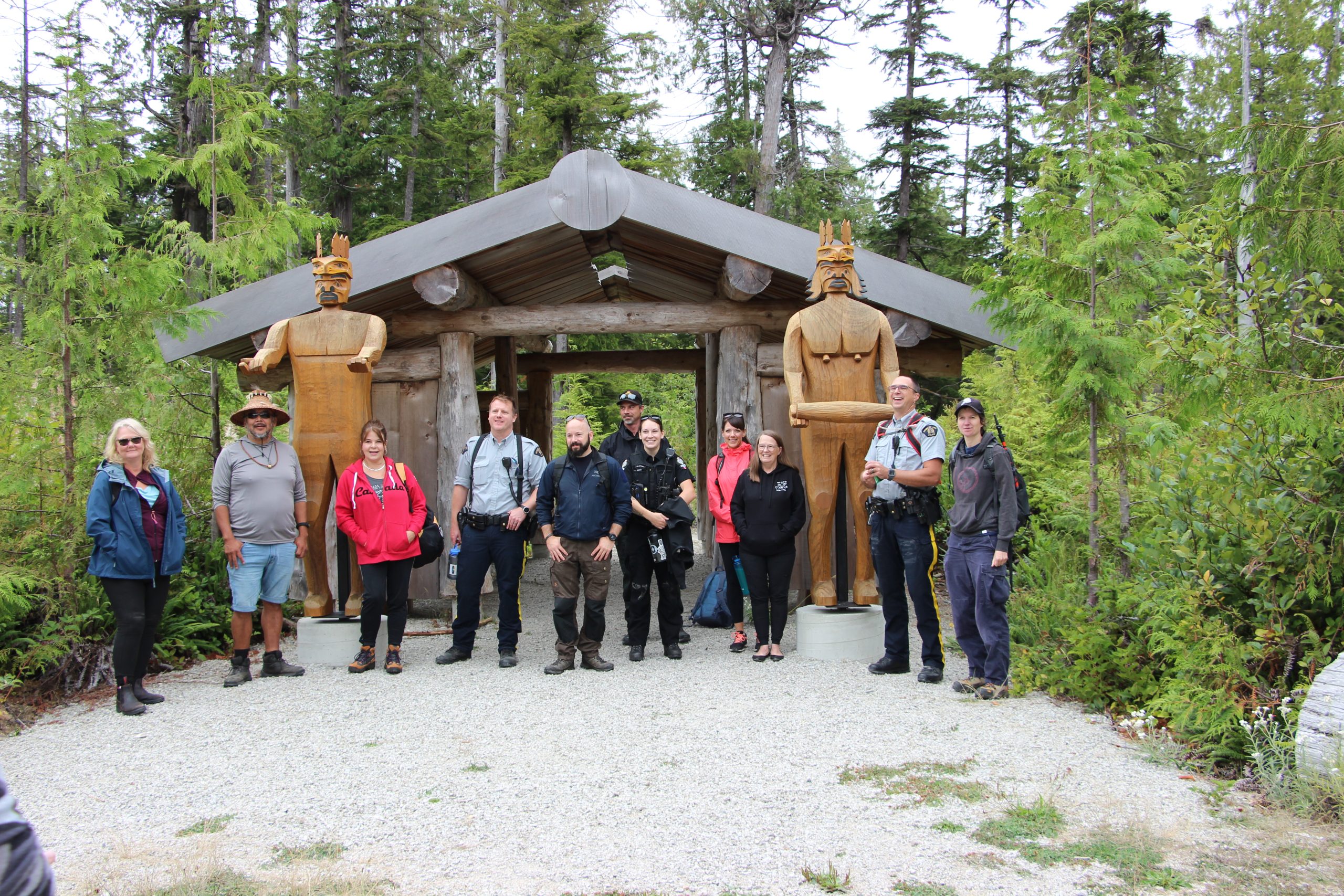
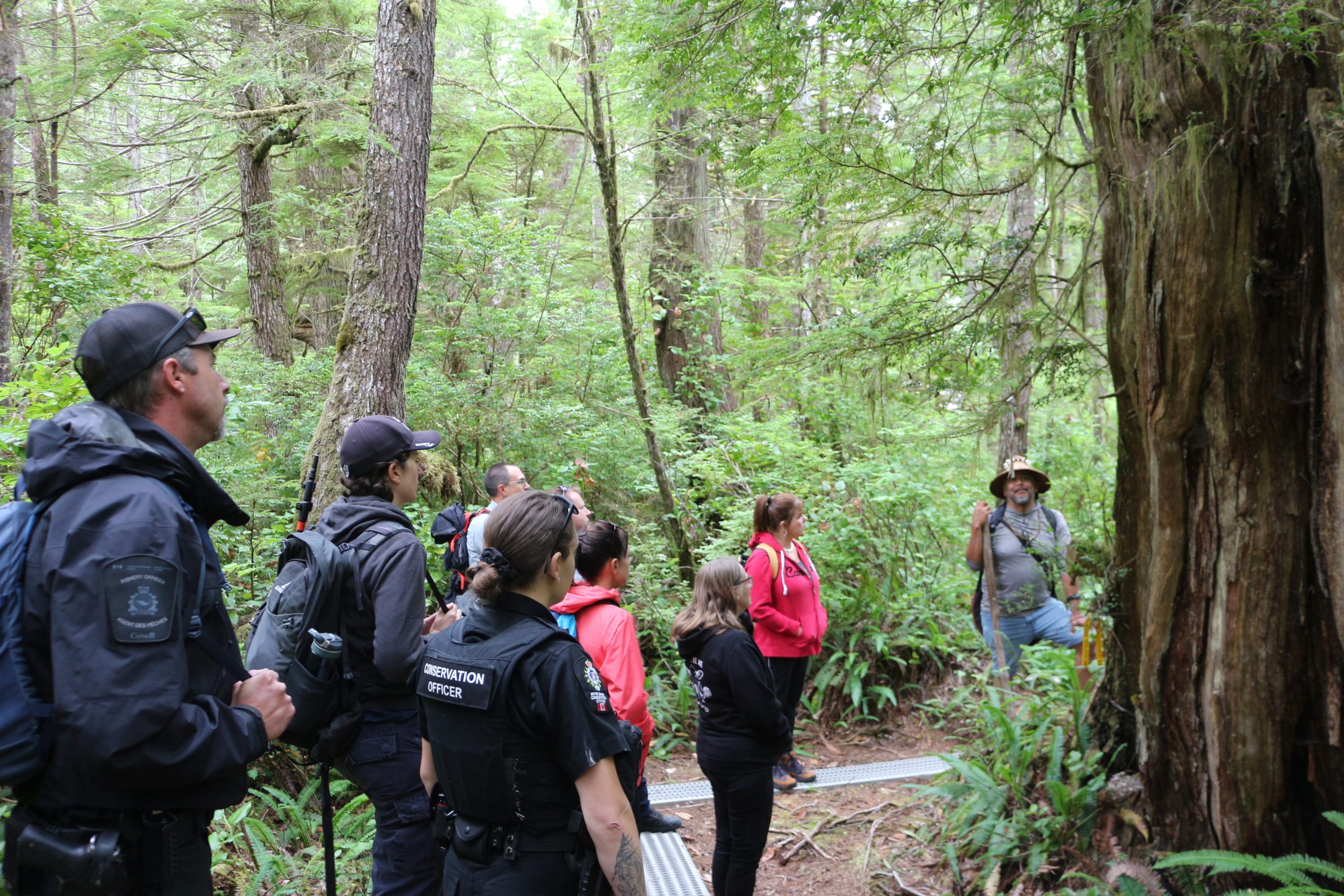
    On Wednesday, August 30, 2023, members of the RCMP, Conservation Officers, Fisheries and Oceans Canada (DFO), and Huu-ay-aht took a walk with our ancestors on the Kiix̣in Tours.

    The Tour began at the Anacla Government Office, where Qiic Qiica (formerly known as Wishkey) guided the group through Huu-ay-aht History, speaking on artifacts displayed throughout the building, about the House of Huu-ay-aht and welcome figures, followed by the Kiix̣in Tours.

    The day ended with a traditional meal at the House of Huu-ay-aht with Executive Council members, Executive Director, and staff.

    Community safety is one of Huu-ay-aht’s main priorities. For community safety in the Anacla area, Huu-ay-aht, and the RCMP are working together, through the Indigenous Policing Service (IPS). IPS offers policing services in rural indigenous communities, with three RCMP members visiting Anacla weekly.

    As portfolio holder for public safety, Stella Peters (n̓aasiismisʔaksup) will be leading community safety in Anacla.

    “I feel that the work we are tasked to do to ensure community safety in a healthy way requires us to collaborate with other  levels of Authority who can work with us in partnership to achieve those common goals” – Executive Council Member, Stella Peters (n̓aasiismisʔaksup)

    Wrongdoings and criminal behaviors must be reported to the RCMP. To do so, please contact:
    Non-emergency Line: 250-723-2424
    Emergencies: 9-1-1

    By making reports, it helps Huu-ay-aht and the RCMP identify the amount of services that are needed in community.

  • Huu-ay-aht Youth Workshop – Make Your Own Drum

    Huu-ay-aht Youth Workshop – Make Your Own Drum

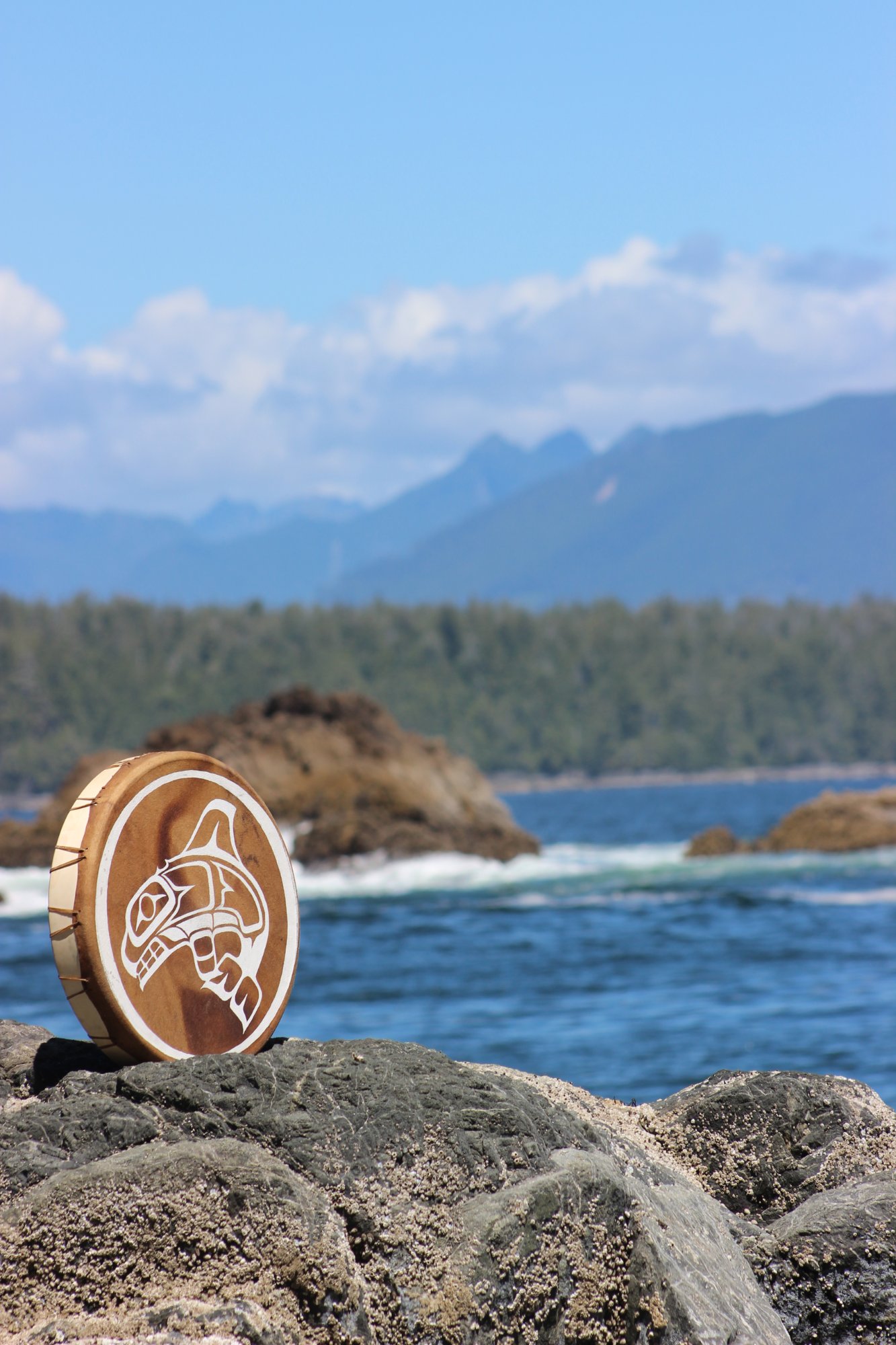
    drum with waves

    Nuu-chah-nulth Tribal Council (NTC) and Huu-ay-aht Health Departments are hosting together a Youth Workshop to give the opportunity for youth to make their own drum.

    Workshop details:

    Date: Wednesday, February 15, 2023
    Where: House of Huu-ay-aht
    Time: 4 – 8 p.m.

    This workshop is for youth living in Anacla and is limited to 20 spots.

    Please fill out the registration form and submit to molly.lucas@nuuchahnulth.org or kristen.y@huuayaht.org

  • Respected Elder Receives Lifetime Achievement AWARD

    Respected Elder Receives Lifetime Achievement AWARD

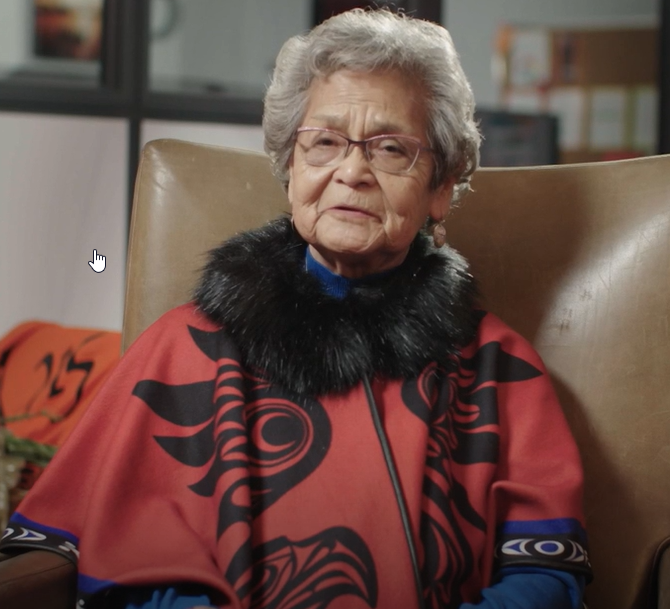
    Photo of Marjorie White

    In recognition of her lifetime of service to Indigenous peoples, proud Huu-ay-aht elder, Marjorie White, was the 2022 recipient of the Lifetime Achievement Award from Indspire. The Indspire Awards honours Inuit, Métis, and First Nations peoples across Canada who are inspiring change and progress in their communities.

    Born in Port Alberni in 1936, Marjorie spent her early days with her mother, Alice Peters, and family in Dodger’s Cove and Sarita. She also spent her days with her grandmother, Nina Peters [nee Jack/Shewish], on the Somass River in Tseshaht territory.

    Marjorie explained she has always been immensely proud to be closely connected to the Barclay Sound Ḥaw̓iiḥ from Huu-ay-aht, Yuułuʔiłʔatḥ, Tseshaht, Toquaht, and Hupacasath. It is that connection that always ‘tied her canoe at home’ and kept her heart close to her people and her homelands. Family connections and her role in it is extremely important to her. Marjorie has held three potlatches in her lifetime. The last potlatch she held was in 2010 with her siblings. She wanted to ensure that all their descendants had traditional names to keep them connected to their homelands.

    From 1944 to 1956, Marjorie attended the Alberni Residential School. Although residential school took her away from her home and her family, she was fortunate to always maintain strong connections with family and culture. After losing her mother to tuberculosis when she was 14, Marjorie spent summers and school breaks with her Uncle Art and Aunt Aggie in the Bamfield area. She also spent time with her grandmother at her home on the Somass River. They would travel and work together in the hop and berry fields in Washington state.

    Marjorie’s career goal has always been to provide a safe, secure environment for the enhancement and promotion of healthy living for Indigenous people. It was after leaving her community in 1956 to pursue a career as a nurse in Vancouver that she realized there was no place in the city for First Nations people, who were migrating to urban centres, to get support and access resources.

    “It was such a culture shock coming from the residential school and a small, remote community on Vancouver Island. I experienced loneliness.” Marjorie said in the 2022 Indspire Awards interview. “My distance between my grandmother and me was a reality. That’s really what prompted me to do something to change the situation of our young people that were coming into the city for education or jobs.”

    Her work in those early years in Vancouver led to the formal establishment of the then Vancouver Indian Centre, the first Friendship Centre in BC in 1963. The ‘Friendship Centre Movement’ quickly expanded within the province and across Canada. In 1972, Marjorie was among the founding members of both the national and provincial Friendship Centre Associations. Because of Marjorie’s determination and beliefs, you can now find 25 Friendship Centres in British Columbia and 125 across Canada.

    Marjorie was also the very first Indigenous person to be appointed as a Citizenship Court Judge in 1976, as well as the first woman and Indigenous person ever appointed to the Vancouver Police Commission in 1974.

    “When I was Citizenship Court Judge I sometimes spoke about the kinds of things that Canadian citizens enjoy and that as first peoples of this land, that we weren’t guaranteed those same rights and privileges that they were getting as new citizens,” said Marjorie. “And so, education is really one thing that I believe in, letting people know where we are and who we are.”

    Marjorie is also recognized for starting other organizations in Vancouver, such as the Circle of Eagles Lodge Society, of which she was recently awarded for 50 years of service, Naa-na-himyis Brothers Healing Lodge (Naa-na-himyis – her traditional name meaning “going from community to community distributing”), and Anderson Healing Centre for Women, along with many others. Marjorie has filled her life and career helping people and it has not gone unnoticed.

    She has received a tremendous number of awards, which include:

    • Order of Canada
    • Order of British Columbia
    • Queen’s Diamond Jubilee Medal (60th anniversary)
    • Queen’s Golden Jubilee Medal (50th anniversary)
    • Queen’s Silver Jubilee Medal (25th anniversary)
    • Huu-ay-aht Citizen of the year
    • International Year of the Volunteer Award – Correctional Services Canada
    • Marjorie White Apartment Complex (L’uma Native Housing)
    • Gold Feather Award – Professional Native Women’s Association
    • Surrey Women’s Centre recognition for lifetime community involvement
    • And many community awards from local organizations.

    Read the full Article in Issue 67 of Uyaqḥmis

  • Tommy Happynook Receives His PhD

    Tommy Happynook Receives His PhD

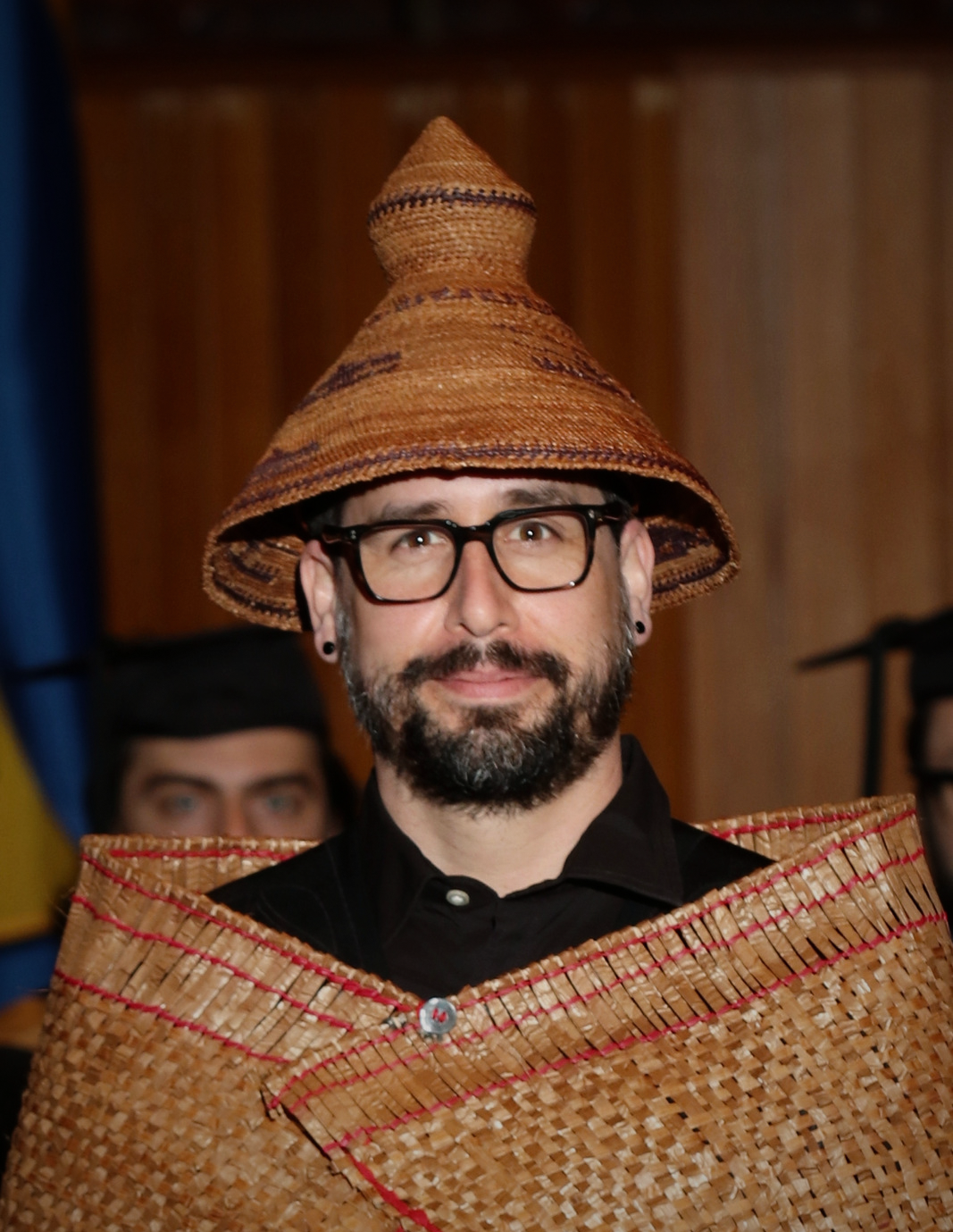
    Submitted by Tommy Happynook

    Tommy-Happynook-Edited

    I have always had an interest in anthropology and right out of high school started working towards an undergraduate degree. My post-secondary journey was full of starts and stops.

    I attended Camosun College for one term before stopping to work as a roofer for about a year before returning to Camosun for another two years.

    I was able to complete the first two years of my undergraduate degree at Camosun and decided to accept an offer to work in the forest industry.

    I worked in forestry for about two and a half years before I decided to go back and finish my undergraduate degree at the University of Victoria. Two years later, I graduated with a Bachelor of Arts degree in Anthropology.

    That same year, I was accepted into, and started my graduate degree, in anthropology at UVic. After two and half years, I graduated with a Master of Arts degree in Anthropology. At this point, I needed a break and was hired to work at Camosun College.

    I worked for Indigenous Education at Camosun College for about 10 years as a community liaison, advisor, and instructor. In 2017, I applied to UVic’s anthropology doctoral program. In 2020, I was hired by the UVic’s Anthropology Department and have been working there since June 2021. I completed my doctoral program in April 2022 and now have a Doctor of Philosophy degree in Anthropology.

    My research documents the reclamation of knowledge, teachings, culture, language, responsibilities, and identity through my personal (re)connection to my family’s ḥ aḥ uułi and hereditary home, čaačaac̓iiʕas. In specific and intentional ways my research, fieldwork, and dissertation are part of a story of reconciliation between myself and čaačaac̓iiʕas, the ḥ aḥ uułi that my family was dispossessed from because of the impacts of colonization.

    Despite the near severing of our relationship with čaačaac̓iiʕas and the near destruction of our ḥ aḥ uułi, čaačaac̓iiʕas is thriving, and now is the time to pick up my responsibilities and begin to re-establish a relationship with the natural and spiritual worlds found there. In my research the lands, waters, skies, and natural world are not a place and/or object of inquiry, they are non-human knowledge holders and teachers.

    My research draws upon a diverse set of ethnographic, anthropological, and Indigenous literatures. Emphasis is placed upon the use of nuučaan̓uł scholarship, theory, and methodologies including muułmuumps (being rooted to the land), ceremony, language, song, and interviews. The research builds on four kinds of knowledge that are expressed as: 1) known knowledge; 2) incomplete knowledge; 3) unaccounted for and/or unknown knowledge; and, 4) ethnographic/anthropological knowledge.

    Through this theoretical platform, I explore tangible and intangible cultural and hereditary forms of knowledge production. Importantly, I highlight the role of song and sound as critical vehicles through which contemporary Indigenous peoples can connect to historical places and times.

    I place equal emphasis on the production of sound through song as I do through the reception of song and sound through a methodology of deep listening. Song and sound play a crucial role in my research and form the basis of knowledge transfer between myself, čaačaac̓iiʕas, and my yakʷiimit kʷiyiis nananiiqsu (ancestors).

    Furthermore, the songs I received during my research are the analysis of my data and how I am choosing to disseminate that data. I argue that these connections provide ways for future agendas and aspirations for cultural resurgence and governance to emerge.

  • Parks Canada and Huu-ay-aht honour Kiix̣in as a National Historic Site

    Parks Canada and Huu-ay-aht honour Kiix̣in as a National Historic Site

    Kiixin-web-unveiling
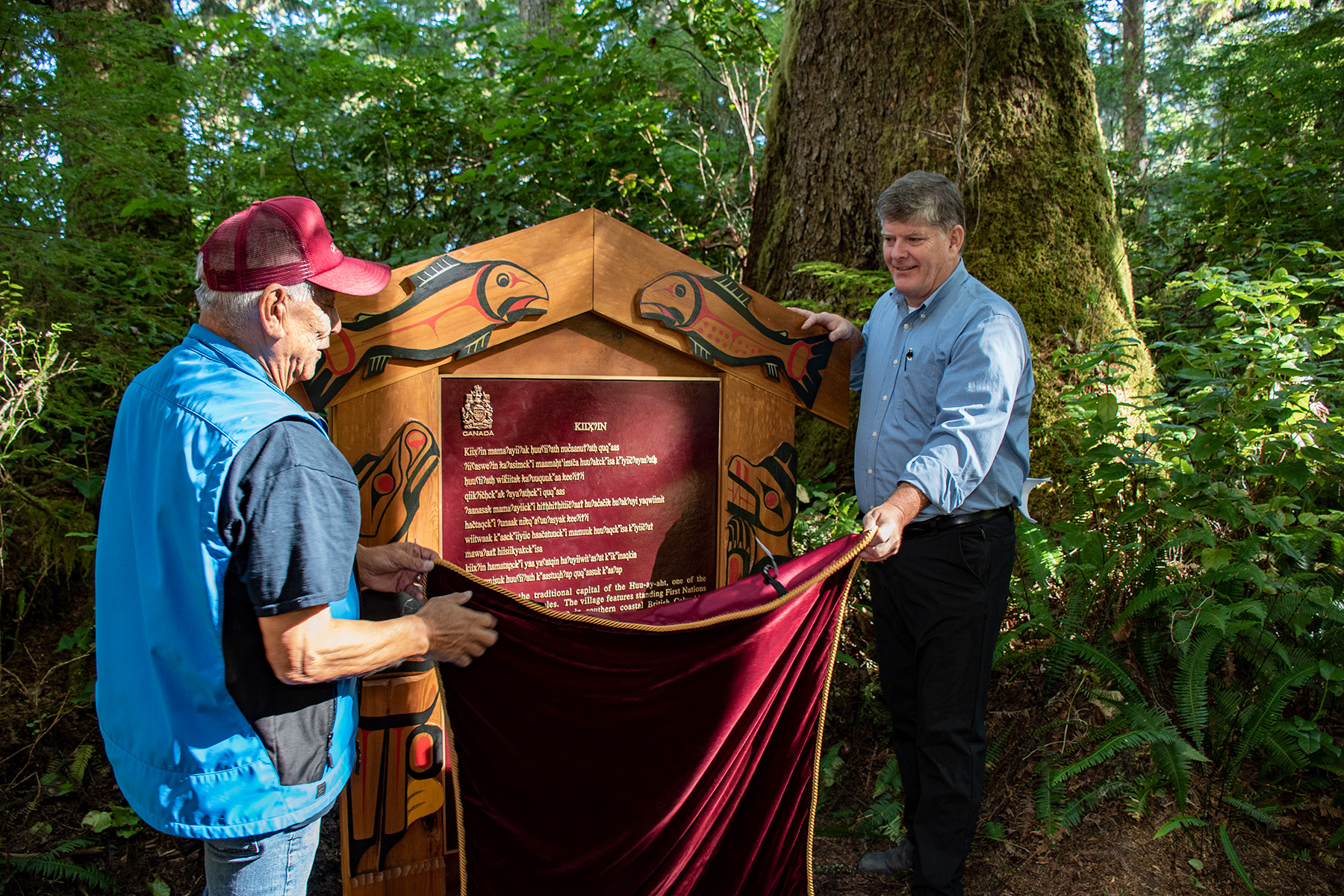
    Caption: Huu-ay-aht Chief Councillor Robert J. Dennis Sr. and Parks Canada President and CEO Ron Hallman unveil the commemorative plaque on a beautifully carved cedar frame at Kiix̣in Village and Fortress National Historic Site at Anacla, British Columbia on September 20, 2022.
    Credit: Parks Canada

    September 20, 2022 – Anacla, British Columbia – Parks Canada Agency

    Today, Huu-ay-aht First Nations and Parks Canada celebrated the installation of a plaque at Huu-ay‑aht First Nations’ Kiix̣in Village and Fortress (Kiix̣in) to officially commemorate the designation of Kiix̣in as a National Historic Site of Canada.

    Located on the west coast of Vancouver Island, Kiix̣in is the site of a 19th-century village and fortress that exhibits evidence of continuous occupation of the area for almost 3,000 years, dating back to 1000 BCE. It is also the only known traditional First Nation’s village of more than 100 villages on the southern British Columbia coast that still features significant, standing traditional architecture. The site’s natural features made it an ideal location for occupation and defense. It is characteristic of Nuu-chah-nulth defensive sites and warfare patterns, resource extraction and commercial practices, and illustrates changing Nuu-chah-nulth political and economic patterns in the 18th and 19th centuries. To this day, it remains a sacred site to Huu-ay-aht First Nations people.

    In 1999, the Government of Canada designated Kiix̣in as a national historic site, with the official recognition referring to four distinct archaeological sites, which include the main village and fortress and two related archaeological sites. In 2002, a commemorative plaque was presented to Huu-ay-aht First Nations by Parks Canada, and today, both parties came together to reveal the plaque which has now been installed on a beautifully carved cedar frame at the Kiix̣in Village and Fortress for visitors and locals to enjoy.

    Huu-ay-aht First Nations has three Sacred Principles: ʔiisaak (Greater Respect), Hišuk ma c̓awak (Everything is One), and ʔuuʔałuk (Taking Care Of). Since declaring Kiix̣in a national historic site in 1999, these sacred principles, as they pertain to the land, Huu-ay-aht’s Ḥahuułi (traditional territory), have been upheld, protected and valued, and efforts will be made to continue honouring these principles for years to come.

    Huu-ay-aht First Nations offers guided tours of Kiix̣in, with traditional knowledge holders, to enrich and teach all who are interested in learning about the history, culture, and traditions of the first peoples of this land. Tours take place between May and September. More information about Kiix̣in and the tours can be found at kiixin.ca.

    Quotes

    “Today, Parks Canada is honoured to join with Huu-ay-aht First Nations in commemorating Kiix̣in Fortress National Historic Site. National historic designations are the most significant form of historical recognition that is bestowed by the Government of Canada. Parks Canada has enjoyed a positive relationship with the Huu-ay-aht and this designation would not be possible, nor as meaningful, without this Nation’s commitment to preserving and sharing its knowledge and history.”

    Ron Hallman,

    Parks Canada President and CEO

    “This official installation of the plaque signifies the importance of Kiix̣in and the rich history it tells. Kiix̣in is the main attraction of Huu-ay-aht’s cultural tourism as it offers a truly unique cultural experience for guests who come and visit Huu-ay-aht’s Ḥahuułi (traditional territory). Now, when visitors come to Kiix̣in, they will hear our stories, see our culture and understand the great Canadian national historical site designation it holds.”

    Robert J. Dennis Sr.

    Chief Councillor, Huu-ay-aht First Nations

    For full press release, please click here

  • Community gathers to mark National Day for Truth and Reconciliation with message of togetherness and hope for the future

    On September 30, 2021, Huu-ay-aht First Nations joined hundreds of other nations across Canada to mark the inaugural National Day for Truth and Reconciliation.

    Together with the community of Bamfield and special guests, the Nation unveiled a totem that will soon be raised in Bamfield. Close to 150 people dressed in orange gathered to hear people share their stories, honour the survivors of residential schools and their families, and share language, culture, and a meal.

    Tayii Ḥaw̓ił ƛiišin welcomed everyone and spoke on the significance of the day, pointing out that he father always told him it was important that the two communities work together.

    “I am proud that we are one community,” he said.

    He said the totem is significant as it will stand as a symbol of strength, like the old-growth tree it came from once did in the forest.

    “This will unite us and make us stronger,” he said.

    Previously known as Orange Shirt Day, the National Day for Truth and Reconciliation is a direct response to the calls for acting from the Truth and Reconciliation Commission’s report. The report outlined 94 calls to action. Creating a federal statutory day of commemoration was Call to Action 80. According to the federal government, “the day honours the lost children and survivors of residential schools, their families, and communities. Public commemoration of the tragic and painful history and ongoing impacts of residential schools is a vital component of the reconciliation process.”

    Chief Councillor Robert J. Dennis Sr. reminded the sea of orange how far we have come. He said governments put in place policy that tried to eliminate First Nations in the form of the Indian Act. The goal was to “take the Indian out of the child” through the residential school system.

    “We were removed from our home, our land, our culture and language, and our resources. Now they call it cultural genocide,” he explained. “They tried for 13 years to take the Indian out of me, but I’m proud to say they failed.”

    He said the pole represents growth for Huu-ay-aht First Nations and the steps the Nation must take to get where they want to be. He said the Nation is at the bottom of the pole right now but climbing.

    “We have a long way to go from where we were,” he said. “We are one community, and we can make it back there together.”

    ACRD Director for the area Bob Beckett said Thursday was a day to reflect on the past and learn more about it and the journey forward. He said we must consider how we will move forward. It is important to acknowledge the atrocities that happened in the past and find a way to learn and grow. He closed by saying the pole raising speaks to the amazing leadership of Huu-ay-aht First Nations and their neighbours in Bamfield and the strength they must have to keep growing together.

    Olivia Peters (Huupaalthus – daughter of the moon), daughter of Huu-ay-aht’s Tayii Ḥaw̓ił ƛiišin and Irene Peters, showed great strength as she addressed the large crowd.

    “This is the first step in trying to bridge the gap between First Nations people and Canadians – to tell the truth and to be open and learn, educate, and listen to the stories of what happened to the First Nations people that have resided in this country since time immemorial,” she said. “Not only to hear the truths, but to put solutions and actions in place to be part of the change.”  

    She said it is time to remove the stereotype of who Indian people are and that we all have a story to tell and to work together on reconciliation.

    “Even though I am a second generation, it still really hurts to think about many of the people in our tribe who have gone through these schools and suffered pain,” she said. “It really hurts to think of the young children who were ripped out of their homes, to bring them to these schools. So have openness and compassion and kindness in your heart as we all move forward to reconciliation, as we are all one – Hišuk ma c̕awak.”

    To recognize and honour the survivors of residential schools, Huu-ay-aht First Nations blanketed the ones in attendance. Members of their family came forward to participate in the moving. The crowd cheered for them, showing their support and love.

    Wišqii asked for prayers for the survivors as well as the ones who did not make it home. He said, “we are all survivors in one way or another.” He said together “our people will help with the healing process and lead the way.”

    Brian Butler from the United Steelworkers and Dallyn Willis from Western Forest Products also spoke at the event. Butler said USW believes in meaningful reconciliation, and that he was honoured to attend the important event and recognize the atrocities suffered by so many. These must not be forgotten, he said, and we must move forward promoting empathy and change, and travel an honourable path in the future. Willis said the work he has done with Huu-ay-aht First Nations is the most rewarding part of his career, and he was honoured to attend and participate in such an important day. He said reconciliation is something we must do every day to build a path together.

    Wišqii reminded the crowd gathered that Huu-ay-aht is a resilient nation and it is getting stronger every day.

    “We will not only survive – we will thrive,” he said. “The next story is yet to be written.”
  • 2021 Kiix̣in Tour Season a Success

    Despite the COVID-19 pandemic, Kiix̣in tours have had a successful 2021 tour season. Tours have been running through the summer since July and will be concluding on September 12. The ongoing COVID-19 pandemic has limited the capacity of the tours in half to only ten participants. Despite these challenges, however the tour team is now able to offer sunset tours of Kiix̣in which are available on Friday and Saturday evenings. The tours have seen over 300 participants this year who have come to observe and take in Huu-ay-aht history and culture. Full-time tour guides Wišqii and Stella Peters were fortunate to have Olivia Peters join the team as a youth tour guide. Closing out the season the remaining tours for 2021 are almost fully booked. If you have not had a chance to see Kiix̣in and would still like to please visit https://kiixin.ca/ and book your tour today! 

  • Pacheedaht, Ditidaht, and Huu-ay-aht celebrate relationship on National Indigenous People’s Day

    On June 21, 2021, Pacheedaht, Ditidaht, and Huu-ay-aht First Nations gathered to celebrate their shared culture. It was an opportunity demonstrate the strength of the relationship the three nations outlined when they signed the Hišuk ma c̕awak Declaration earlier this month.

    Pacheedaht Chief Councillor Jeff Jones welcomed everyone to the territory, “Thank you for travelling here today to celebrate in unity. Our three nations have signed a declaration recently, saying we are taking over our authority of our territory and that the three nations will be deciding by themselves how the resources of our territories will be managed. That was a historical moment, and it’s a great pleasure that we now stand together as one moving forward.”

    The event included an official recognition of their Hereditary Chief Frank Queesto Jones by Huu-ay-aht Tayii Ḥaw̓ił ƛiišin (Derek Peters). Wišqii spoke on behalf of ƛiišin, thanking Queesto for welcoming his Nation to their territory and recognizing the significance of having both hereditary chiefs present on Monday.

    Huu-ay-aht Chief Councillor Robert J. Dennis Sr. spoke passionately about the need to move forward from the mistakes of the past and with the Nations deciding the path.

    “This territory belongs to Queesto. The reconciliation I would like to see is that Queesto and his people decide how their lands are managed,” Chief Councillor Dennis explained. “That to me is about the best apology I can ever get – the most complete reconciliation I can see is being able to live the way our forefathers lived.”

    He said by joining with Pacheedaht on National Indigenous People’s Day in a traditional cultural way it shows how strong First Nations people are when they work together. It also sends a message to people that decisions made on their ḥahahuułi are to be respected and followed.

    Huu-ay-aht brought with them singers, drummers, and dancers. Pacheedaht is in the process of building the language and cultural knowledge within their nation. Pacheedaht Chief Jones thanked Huu-ay-aht for sharing so much with them.

    Huu-ay-aht surprised the members and leaders of Pacheedaht at the end of the day by presenting them with a spirit pole, carved by Huu-ay-aht Master Carver Ed Johnson. Speaking for his tayii, Wišqii explained that only a master carver can release the spirits from the cedar. He said, the pole that was gifted to Queesto and his nation starts at the top with a thunderbird, representing the ḥaw̓ił that is above us, the whale is the chief under sea, the bear represents the land ḥaw̓ił. At the bottom is the transformer that represents the spirit – making it a true spirit pole.

    Wišqii said the gift is to Pacheedaht and their Hereditary leader, Queesto, from all Huu-ay-aht people and particularly the ḥaw̓iiḥ as it represents their territory. 

    “Our nations are rich in resources, and this is one example of how wealthy our forests are. Cedar means so much more to us in this form than it does in its cubic metre value,” Wišqii said. “We wanted to gift the spirit of the cedar to all of the community here on behalf of Huu-ay-aht First Nations.” 

    As visitors to the territory, Huu-ay-aht also gifted a paddle to Chief Jones as a sign of respect and appreciation, and ƛiišin and Wišqii gave Pacheedaht permission to use Huu-ay-aht’s paddle song.

    “Today we enjoyed a lot of great sharing of culture and speaking of wise words,” Chief Councillor Jones said on behalf of Pacheedaht Heriditary Chief Frank Queesto Jones. “We are very honoured to accept the spiritual pole from the Huu-ay-aht First Nation Hereditary Chief. We will place the pole in a dedicated space of honour to serve as a permanent reminder of the connection between our Nations. On behalf of all Queesto family, ƛ̓eekoo ƛ̓eekoo.”

  • Huu-ay-aht awarded $763,924 from the Province’s Childcare B.C. New Spaces funding

    Huu-ay-aht First Nations is pleased to announce it has been awarded $763,924.33 from the Province of British Columbia’s Childcare B.C. New Spaces funding.

    This grant will allow the Nation to create 24 new spaces at the Oomiiqsu Childcare Centre, which will be housed at the proposed Oomiiqsu Mother Centre in Port Alberni. The site will be located at 4305 Kendall Ave once complete and offer services to Huu-ay-aht and other Nuu-chah-nulth families.

    The Oomiiqsu Childcare Centre will be an integral part of Oomiiqsu Mother Centre, and priority for the spaces will be given to children residing in centre. Of the 24 spaces, eight will be for children 36 Months and Under and 16 will be for children 30 Months to School Age.

    “We are grateful to receive this grant from the province because it enables us to move forward on this exciting project,” says Huu-ay-aht Councillor Edward R. Johnson. “This has been a collaborative effort from the start. I am very thankful for the team and am truly honoured to have witnessed this journey. It is so important to our Nation to bring more of our children home as that honours our Ancient Spirit and Modern Mind.”

    Elders and other community members will teach Nuu-chah-nulth language and prepare traditional foods with the children.  Traditions, ceremonies, songs, drumming dance and crafts will be shared and taught by Huu-ay-aht First Nations Elders/community members and staff as well as other Nuu-chah-nulth Nations. 

    “We honour our Ancient Spirit and Modern Mind when we find ways to keep our youth safe and in an environment that nurtures traditional learning at all ages, just as our ancestors taught us,” explains Huu-ay-aht Tayii Ḥaw̓ił ƛiišin (Head Hereditary Chief Derek Peters). “By doing so, we are following our Sacred Principles of ʔiisaak (Utmost Respect), ʔuuʔałuk (Taking Care of), and Hišuk ma c̕awak (Everything is One).”

    Mothers will be welcome at the centre and strongly encouraged to participate in the childcare program. Parenting support will be offered as well, and programming will support children and their mothers to build strong cultural identities that will connect them to their larger families and communities.

    The land on Kendall Avenue has been purchased by BC Housing, and a Rezoning Application has been submitted to the City of Port Alberni. A public hearing was held on May 13. There were no objections voiced at the meeting, and the matter will be addressed by Port Alberni City Council at a future meeting. Construction is set to begin in April 2021 and the Oomiiqsu Childcare Centre will open in September 2023.