News Categories: Government

  • Huu-ay-aht reaches historic TFL 44 agreement with Western Forest Products

    Huu-ay-aht reaches historic TFL 44 agreement with Western Forest Products

    HFN_TFL44_PressRelease_photo-inside

    Statement from Huu-ay-aht First Nations

    As a Nation, we are excited to announce that Huu-ay-aht has reached an agreement with Western Forest Products (Western) to purchase an additional 44% of tenure ownership of TFL 44 and a 7% interest in the Alberni Pacific Division sawmill (APD).

    This deal builds on the Reconciliation Protocol Agreement we signed with Western in 2018 and the purchase of a 7% interest in TFL 44 in 2019. Huu-ay-aht and Western have demonstrated a track record of cooperation and a willingness to work together to achieve reconciliation and forestry revitalization. We believe by purchasing this additional tenure, which will give Huu-ay-aht a controlling interest in TFL 44, our Nation can create new opportunities for citizens on our traditional territory and revitalize forestry in the Alberni Region.

    “This is an historic step to gain more control over the ḥahuułi of the Huu-ay-aht Ḥaw̓iiḥ (traditional territory of the Hereditary Chiefs),” explains Tayii Ḥaw̓ił ƛiišin (Head Hereditary Chief Derek Peters). “We are proud Huu-ay-aht, and our sacred principles of ʔiisaak (utmost respect), ʔuuʔałuk (taking care of), and Hišuk ma c̕awak (everything is one) will guide us as we create more opportunities for our citizens and more wealth for our Nation in a way that protects those resources for present and future generations.”

    Looking forward, this deal addresses key priorities for our Nation. It has the potential to create jobs, training, and business opportunities for Huu-ay-aht citizens close to home, including opening the door for our citizens to become entrepreneurs and operators on our own land.

    “Being the
    majority owner, we will be able to advance Huu-ay-aht’s forestry principles and,
    over time, the deal will provide real benefits for Huu-ay-aht citizens,
    including the opportunity to diversify our economy and manage our forest
    resources in accordance with our sacred principles,” says Chief Councillor
    Robert J. Dennis Sr. “Through this deal, Huu-ay-aht will have increased
    revenues from the forestry sector to support further watershed renewal projects
    and programs and services for Huu-ay-aht citizens.”

    This agreement has the full support of Executive Council, has
    been endorsed by the Ḥaw̓iiḥ Council, and requires the approval of Huu-ay-aht citizens.

    “This is a positive example of the strong relationship that exists between leadership the citizens and the Hereditary Chiefs,” says Tayii Ḥaw̓ił ƛiišin. “We have a good negotiation team in place, and we have confidence that the agreement reached honours our ancient spirit and modern mind.”

    We will continue to provide information, answer questions, and ensure citizens have enough information to make an informed decision when the time comes to vote on the deal at a future People’s Assembly.

    Click on the links below for the full video statement, news release, backgrounder, and TFL 44 area map:

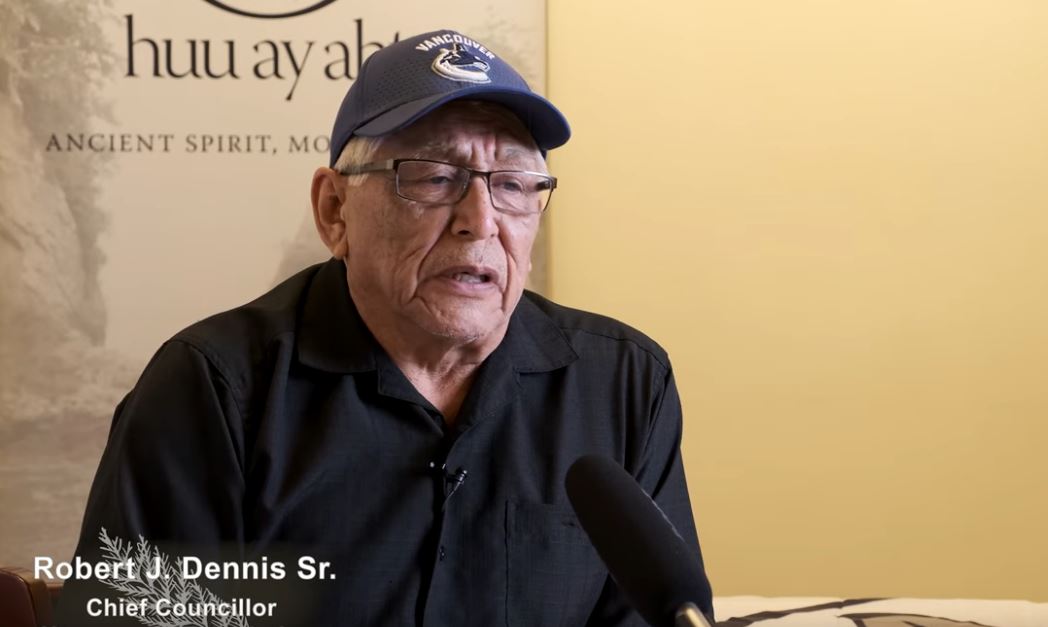
    Video statement from Chief Councillor Robert J. Dennis Sr.

    video image

    WFP/Huu-ay-aht Press Release
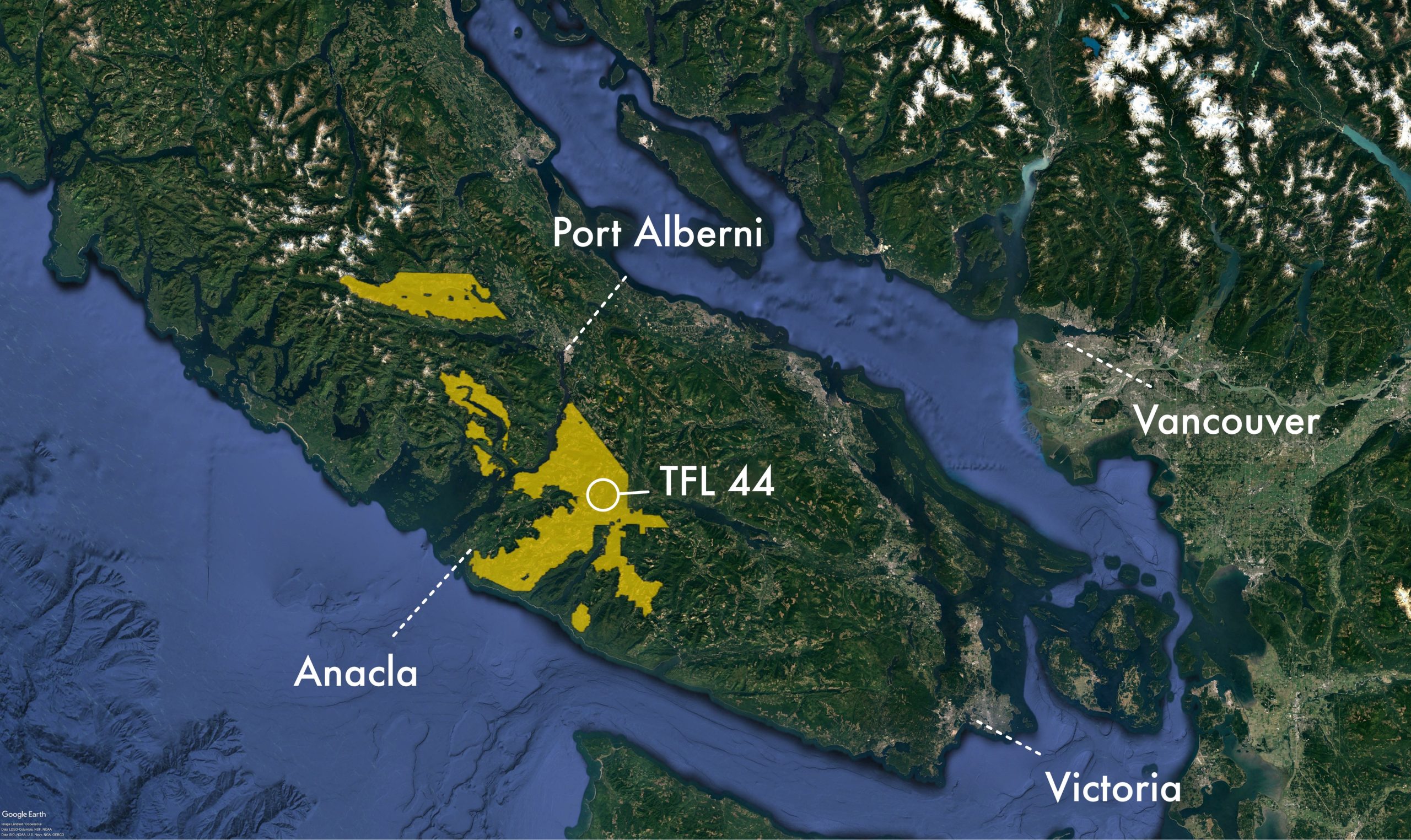
    TFL 44 Map

    Made with This by Tinrocket
    Vancouver | Port Alberni | Anacla | Victoria | TFL 44 |
  • MP Gord Johns commits to helping on housing efforts

    Huu-ay-aht leadership met with MP Gord Johns on Tuesday to
    discuss the Nations plans when it comes to housing in its territory.

    The meeting was in part an opportunity to reconnect with the
    Member of Parliament since his re-election in the fall, but also to chance to update
    him on the progress Huu-ay-aht is making in housing. Chief Councillor Robert J.
    Dennis Sr. updated Johns on the work of the Housing Panel. Johns received a
    copy of the final report of the Housing Panel prior to the meeting, so he was
    familiar with how much work has recently gone into planning the future of
    Huu-ay-aht housing.

    Chief Dennis explained that Huu-ay-aht is looking at ways to
    implement the 14 recommendations made by the Housing Panel. He also expressed
    his hope that Johns would help them make the right contacts to expediate their
    efforts to receive support and funding from the Federal Government.

    Johns gave the Nation his word that he would connect them
    with the people who hold portfolios relevant to housing and infrastructure. He
    said the fact that Huu-ay-aht is contributing a significant amount of money
    will be well received in Ottawa. He said it shows Huu-ay-aht is willing to make
    a significant investment, and it should make them more successful in obtaining
    funds from other levels of government. He offered a few tips on who to talk to
    and where to look for funding, as well.

    “You’re the best at presenting information, and I am always happy
    to advocate for Huu-ay-aht First Nations,” Johns said. “I can make sure you are
    talking to the right people and we just have to use the tools we have in Ottawa
    to move this forward.”

    He added that Huu-ay-aht is already known in Ottawa as a
    Nation who leads the way and gets things done, due in part to the Nation’s
    success with the Social Services Panel recommendations.

    The meeting wrapped up with a brief update on the work Johns
    has been doing in fisheries and an update on the Bamfield Road.

  • Huu-ay-aht and B.C. leaders form housing working group

    Huu-ay-aht First Nations and the B.C.
    Ministry of Municipal Affairs and Housing agreed to establish a housing working
    group to implement the 14 recommendations from the Huu-ay-aht Independent
    Housing Panel’s Final Report.
     
    Chief Councillor Robert J. Dennis Sr. and Executive Councillor Charlie Clappis
    met with B.C. Minister of Municipal Affairs and Housing Selina Robinson last
    week to discuss the critical housing needs on Huu-ay-aht’s ḥahuułi (traditional
    territory of the Huu-ay-aht ḥaw̓iiḥ).
     
    “Last week’s meeting went quite well as Minister Robinson committed to
    supporting the formation of a housing report implementation working group,” said
    Chief Councillor Robert J. Dennis Sr. “The establishment of the housing working
    group is really critical in terms of ensuring all 14 recommendations are
    actioned and have the support required to get them done.”
     
    In January 2019, Huu-ay-aht First Nations established an Independent Housing
    Panel to develop recommendations to make the ḥahuułi a safe, healthy,
    thriving community with a strong economy where half of Huu-ay-aht people choose
    to live. The Panel’s work was guided by Huu-ay-aht’s three sacred principles of
    ʔiisaak (utmost respect), ʔuuʔałuk (taking care of) and Hišuk ma c̕awak (everything is one), and recommendations were based on
    citizen feedback and input and expertise from the Panel.

    Huu-ay-aht Executive Council received the Panel’s Final Report in December 2019
    and unanimously adopted its 14 recommendations on February 6, 2020.
     
    “When you have a government-to-government meeting, you want to come out with a
    commitment to continue to work together, and that is what we left with,” said
    Chief Dennis. “Together we will be able to focus on what needs to get done
    in the next few months to ensure immediate implementation of the Panel’s
    recommendations. We thank the B.C. government and Minister Robinson for their
    strong reconciliation commitment to First Nations housing and infrastructure.”
     
    The Final Report of the Huu-ay-aht Independent Housing Panel can be found at: huuayaht.org/independent-housing-panel

     – 30 –
     

    For more information:
    Heather Thomson
    Communications Manager – Huu-ay-aht First Nations
    250-720-7776 or heather.t@huuayaht.org

    About Huu-ay-aht First Nations
    Huu-ay-aht First Nations is an indigenous community located on the west coast of Vancouver Island in British Columbia. It is a part of the Nuu-chah-nulth Nation, formerly called the Nootka. Huu-ay-aht is a party to the Maa-nulth Final Agreement, a modern treaty that grants its five member-nations constitutionally-protected, self-government as well as ownership, control, and law-making authority over their lands and resources. For more information, visit huuayaht.org.

  • Huu-ay-aht and Tseshaht sign protocol agreement

    Huu-ay-aht and Tseshaht First Nations made history on
    Friday, February 7, 2020 when they signed a Protocol on Economic Development
    within Tseshaht Hahoulthee.

    The agreement between the two nations is the first of its
    kind in the Alberni Valley, and it is a way of recognizing deep family
    connections and a strong relationship. The two nations are used to doing
    business together, as they have previously signed the Resource Management
    Agreement.

    The protocol agreement is rooted in the sacred principles of
    ʔiisaak (Utmost Respect), ʔuuʔałuk (Taking Care of….), and Hišuk ma c̕awak
    (Everything is One).

    “This is about doing business in the right way,” explained
    Wahmeesh (Ken Watts), elected councillor for Tseshaht First Nations. “We
    appreciate the steps that were taken after we raised concerns, and we see this
    as a commitment to work together in a good way.”

    To start things off right, the protocol was signed in the
    presence of both elected and hereditary leadership from both Nations, as well
    as respected elders to witness the event.

    “Our two nations have always been close. Our elders held
    that relationship close to their hearts, but we were letting that drift away.” said
    Huu-ay-aht Chief Councillor Robert J. Dennis Sr., explaining that the
    connection is still important. He said in the past elders would have done
    business through hosting and attending potlatches. “Now we have to look at
    things differently in a modern world. Instead of potlatches we use paper, but
    we cannot forget our connections and our traditional ways of working together
    for the best of both nations.”

    The agreement acknowledges that both Nations intend to
    explore ways to work together economically in Tseshaht ḥahuułi and outlines
    how that will take place in the future. It says that they will keep lines of
    communication open when it comes to potential partnerships, including business
    opportunities and investments within the ḥahuułi. This includes early
    communication on potential planned developments within Tseshaht ḥahuułi.

    Both nations commit to holding annual reviews of the
    agreement and quarterly meetings to explore potential partnership
    opportunities. Huu-ay-aht will ensure that their businesses acknowledge that
    they are operating on Tseshaht territory and include appropriate signage.

    “I am proud of what we are doing. It is a little step, but
    it shows we appreciate each other and our relationship,” explained Huu-ay-aht Hereditary
    Chief Jeff Cook. “I see a vision where all nations move forward together like
    this, and we’d all be successful. It’s about making a better life for our
    people and trying to improve all of our lives.”

    Wahmeesh added that he too hopes that other nations will
    follow Huu-ay-aht’s lead and sign similar protocol agreements.

    “This is important business that we are doing,” said Cynthia
    Dick, Elected Chief Councillor for Tseshaht. “It is a reminder that we are
    walking in both worlds, and it is amazing to see our nations put things aside
    to look for better ways to work together in the future.”

    Huu-ay-aht Tayii Ḥaw̓ił ƛiišin (Derek Peters) said it is
    important to keep Tseshaht and Huu-ay-aht ties strong because they have always
    existed through family connections, pointing out the links his family has to
    Tseshaht’s hereditary leaders. Tseshaht’s Hereditary Chief Kʷaacaapi (Josh
    Goodwill) and Tayii Ḥaw̓ił E. Darlene Taylor were both at the signing. ƛiišin
    daughter Olivia Peters was also present to witness the historic event.

    “This is an important step to demonstrate strengthening the ties
    of our Nations,” ƛiišin said. “As we move forward with our modern work, we
    cannot forget these ties, and I look forward to building a strong
    relationship.”

  • Maa-nulth Nations gathered in Ucluelet for the second annual Government-to-Government Forum

    The Maa-nulth First Nations and British Columbia Leaders Forum was created as a result of a commitment made when the treaty was implemented on April 1, 2011 to stand with the Nations as a partner on a new path under the treaty. Last year was the first meeting of the two levels of government, and this year was even more successful than the inaugural meeting. In attendance were leaders from the Maa-nulth Nations – Councillor Wilfred Cootes (Uchucklesaht), President Chuck McCarthy (Yuulu?il?ath?), Chief Anne Mack (Toquaht), Chief Robert J. Dennis Sr. (Huu-ay-aht), and Legislative Chief Kevin Jules and Hereditary Chief Francis Gillette (Ka:’yu:’k’t’h’/Chek’tles7et’h’) – and representative from the Provincial Government – Minister of Indigenous Relations and Reconciliation Scott Fraser, Finance Minister Carol James, Minister of Transportation and Infrastructure Claire Trevena, Minister of Environment and Climate Change Strategy George Heyman, and Craig Sutherland, Assistant Deputy Minister for the Ministry of Forests, Lands, Natural Resource Operations and Rural Development.

    The
    discussion started with a traditional welcoming and prayer, followed by a
    welcome to the territory from Anne Mack. She said it’s encouraging to have so
    many ministers present around the table and that shows the province is taking
    their government-to-government meetings serious. Mack acknowledged the progress
    the province has made recently in adopting the UNDRIP legislation. Although
    this is a monumental act, the Maa-nulth nations are still dealing with several
    challenges since implementation of the treaty.

    The biggest
    of these challenges is financial, Mack explained. She pointed out that the
    colonial mind is still alive and well and this means both parties at the table
    must work harder to educate front-line workers on how to eliminate this from
    their belief system.

    “We
    acknowledge that there is lots of hard work ahead if us,” she said. “I look
    forward to working on this together.”

    Scott Fraser
    also offered a welcoming. He used the Nuu-chah-nulth principle of Hišuk ma
    c̕awak, explaining that he believes everything is connected and one, and that
    by working together they will be stronger. He shared his believe that the
    government-to-government forums will continue to get better year after year.

    Climate
    Change

    Since
    Minister Heyman could not stay for the whole day, climate change began the
    official discussions of the day. He talked about the importance of including
    indigenous knowledge when the Province draws up climate change initiatives. He
    acknowledged that CleanBC could have consulted First Nations more in Phase One,
    but that they will learn from this and reach out more to the communities. He
    also stressed the importance of creating economic opportunities for First
    Nation communities.

    Robert
    Dennis brought up how much removing First Nations people from the land has
    changed the ecosystem where they traditionally lived. The example he offered
    was that when the seal hunt stopped sea urchins became more plentiful, and now
    they are harming the kelp beds, which are important for overall health of the
    ocean. He said there are many more examples of where the balance was disrupted
    when First Nations left their land. He stressed the importance of returning the
    balance by bringing Indigenous People back to their land. Scott Fraser
    supported this idea stating that forestry and tourism could bring people home.

    New
    Fiscal Relationship

    Wilfred
    Cootes presented on the fiscal relationship. He said one big obstacle they must
    overcome is the collaborative Fiscal Financing Agreement. He indicated that
    during the negotiations in 2018/19 provincial negotiators repeatedly stated
    that BC was committed to renewing its fiscal relationship with Maa-nulth
    Nations. After lengthy negotiations, it is the belief of the Maa-nulth Nations
    that BC’s offer of status quo funding would equal 0.3 to 0.6% of federal
    funding for each year under the FFA. This offer was accepted under protest, but
    the Maa-nulth Nations are still waiting for BC to negotiate more appropriate
    funding.

    Cootes said
    this is a defining moment in the relationship between Maa-nulth Nations and the
    Province. He asked on behalf of the other Nations that the Province:

    • Contribute
      to some of the cost associated with participating in the provincial
      collaborative fiscal financing process
    • They
      empower their team with a strong mandate to deliver on the work we are doing
      together
    • Create
      a realistic and clear timeline to complete the work.

    He wrapped
    up by stating that it is the hope of the Maa-nulth Nations that the relationship
    they have with the province be repaired, because when First Nations succeeds
    everyone succeeds.

    Fraser and
    Carol James were both supportive of this statement, adding that it’s not just
    about giving money but about creating opportunities to build a strong economy
    with benefits for all.

    Roads

    Kevin Jules
    explained to the ministers gathered that road access to the Treaty Settlement
    Land needs significant upgrades in order to allow the Nations to fully utilize
    the rights and benefits of the treaty. He pointed out that safety concerns mean
    that the discussion needs to be how the safety improvements will be made. It
    can no longer be about whether or not it can be done.

    Given that
    the primary route to Maa-nulth lands are forest service roads, they are maintained
    with heavy industry in mind and are often unsafe for residents. Citizens and
    other people who travel the road deserve a safe, reliable way to get supplies
    and services, as well as offering a corridor that will open up their regions to
    tourism opportunities. Instead, the roads are prone to eroded corners and
    edges, flooding, washouts, and poor visibility.

    The Nations
    asked that B.C. commit in writing the co-development of a work plan to:

    • Chip
      seal the Bamfield Road
    • Increase
      the reliability and safety of the Fair Harbour Road
    • Increase
      road safety including:

      • Funding
        to support consultation, engineering reporting, work plan development, and
        implementation of road improvements
      • Set
        timelines for the co-development work plan, funding, and completion of
        improvements
      • Feasibility
        study to consider alternate routes to the communities.

    They also
    recommended creating written standards and criteria for road maintenance,
    increase the budget for maintenance and improvements, implement safety measures,
    and ensure all improvements take into consideration the wet conditions on the
    West Coast.

    Minister
    Claire Trevena said they are aware of the issues raised and are not ignoring
    them. She said the ministry is interested in working on relationship building
    and possible partnerships with the Nations to help address the road concerns.

    Groundwater

    Maa-nulth
    natural resources consultant Ron Frank brought groundwater to the table,
    pointing out that the Maa-nulth Treaty makes provisions for addressing
    groundwater that requires BC to negotiate and attempt to reach agreement with
    Maa-nulth as the Province was regulating groundwater in February 2016. Despite
    this, the Province came to the table in 2018 unprepared to negotiate.

    The
    Maa-nulth Nations are concerned because they are the most underfunded
    self-government in Canada, and yet they are expected to address groundwater on
    their own now. The Province has:

    • Shown
      little commitment to resolving this vital issue
    • Been
      unwilling to provide a mandate, an experienced negotiator, or a senior official
      to take the lead
    • Failed
      to adequately fund the acquisition of scientific and technical groundwater data
      that would facilitate or adequately fund the negotiation.

    Therefore,
    Maa-nulth Nations are asking for BC to:

    • Establish
      that the resolution of groundwater issues is a critical policy objective in the
      reconciliation construct that guides provincial relations with FN and recognize
      that the Maa-nulth-BC table will be provide a template for future relations
      with other First Nations.
    • Find
      the person best qualified to successfully negotiate groundwater
    • Be
      prepared to make a reasonable financial commitment for scientific work and
      negotiations
    • Do
      the above in a timely fashion.

    Sutherland
    said he is more than aware of the challenges facing the group, but together
    they can find money to meet treaty obligations. Fraser also reassured the
    Nations that he will advocate for more funding.

    Implementation
    of the Treaty Wildlife Chapter and Wildlife Population Management

    Frank
    pointed out that when it comes to wildlife, the treaty nations have many common
    struggles, and the key is to work collaboratively to find ways that everyone
    will benefit. It is essential that everyone be engaged when it comes to the
    importance of wildlife. He said the Maa-nulth Nations are doing what they need
    to be doing, and the Ministry needs to focus on the priorities that would
    support that work.

    The report
    each member at the table received had a detailed list of 11 specific
    recommendations, but the key is that an increase in human, financial, and
    infrastructural resources is needed. After some discussion, the everyone agreed
    to work on the 11 recommendations and bring a report back to the next
    government-to-government forum in 2020 to see what progress has been made.

    Closing

    At the end
    of the meeting each representative was given a chance to offer closing
    statements. The common thread in all their comments was the desire to work
    together to ensure the best interest of the Maa-nulth Nations is the focus.
    Most people spoke of coming up with creative ways to make things work for
    everyone involved and the desire to continue to meet on a regular basis. Several
    people spoke of the importance of building relationships and the effectiveness
    of the Maa-nulth Treaty in negotiations.
  • Premier outlines a path for Bamfield Road upgrades

    Premier John Horgan lived up to a promise made in September and travelled the Bamfield Main road to Anacla on Thursday to discuss the province’s report and future upgrades. Along the way, he stopped at the crash site to pay his respects to the two students who lost their lives along this highway almost two months ago.

    Horgan
    said he was pleased to see all of the stakeholders at the table, including Western
    Forest Products, Mosaic, the Ministry of Transportation and Infrastructure, Port
    Alberni Mayor Sharie Minions, Bamfield director for Alberni-Clayoquot Regional District
    Bob Beckett, and MLA Scott Fraser.   

    “Together
    we have the tools we need to make significant upgrades to the road. We have met
    in a respectful way, and it is clear we are all committed to take the necessary
    steps to reach our Nation’s top goal of chip sealing the Bamfield road,”
    explains Chief Councillor Robert J. Dennis Sr. “By visiting our community, the
    Premier has a better understanding of how important it is to ensure this vital
    link is safe for all who travel the road.”

    Huu-ay-aht
    First Nations is pleased that the Premier took the time to travel to the Nation’s
    main village and is optimistic it will lead to significant upgrades to the
    road. The Premier directed the representatives from the Ministry of
    Transportation and Infrastructure present at the meeting to form an action
    group with Huu-ay-aht and other key stakeholders to create a plan to upgrade
    the road.

    Chief
    Dennis says the engineering report on the road carried out by the province does
    not dispute that there is an urgent need for upgrades, but focuses on what
    approach to take. He says this offers him hope that the Province and Huu-ay-aht
    can find a timely, creative solution that works for everyone.

    Huu-ay-aht
    has been working diligently for decades to chipseal the Bamfield road, but the
    fatal bus crash that claimed the lives of two University of Victoria students
    recently highlighted the urgency of the safety concerns. Since the Bamfield
    road opened in the 1970s, Huu-ay-aht has lost eight citizens and witnessed
    countless accidents along this dangerous 78-kilometre logging road.

    Tayii
    Ḥaw̓ił ƛiišin (Derek Peters) says by committing to find a solution to this
    issue the Premier is honouring our elders and the Nation’s sacred principles of
    ʔiisaak (Utmost Respect), ʔuuʔałuk (Taking Care of….), and Hišuk ma c̕awak (Everything
    is One), which guide us as we do business.

    Chief
    Dennis is excited to work with the Province on this important issue as
    reconciliation is about moving forward together.

    Huu-ay-aht showed their appreciation to the Premier by presenting him with a traditional name – Yas̓uk ma tašii (Yatsuk ma tashii), which means “he who walks the path.”

    In photo above: Bamfield ACRD Director Bob Beckett, Port Alberni Mayor Sharie Minions, Huu-ay-aht Chief Councillor Robert Dennis, Premier John Horgan, Head Hereditary Chief Derek Peters, and MLA Scott Fraser take a moment to remember the lives lost on the Bamfield Road almost two months ago. Huu-ay-aht Councillor Edward R. Johnson and Hereditary Chief Jeff Cook do a prayer on Thursday.

  • Annual People’s Assembly a success in homeland

    This year the annual People’s Assembly was held in Anacla at
    the House of Huu-ay-aht for the first time in many years, and it was a huge
    success.

    Some citizens chose to stay in Bamfield for the event, but
    the majority stayed in Port Alberni and travelled by bus to Anacla. Many
    decided to stay Saturday night in Bamfield to participate in the cultural event
    once business was closed for the day.

    When the bus arrived from Port Alberni quorum was achieved
    and the official business of the day began. Prior to that Chief Councillor
    Robert J. Dennis Sr. reviewed the progress of the previous year’s citizen
    motions. Below is a summary of these.

    Citizen Motions: Executive
    Council Discussion 
    Status
    of Motion
    Motion:
    The People’s Assembly hereby recommends that Executive Council directs the
    Huu-ay-aht administration to investigate and study the possibility of
    increasing the post-secondary living allowance provided to Huu-ay-aht
    students by at least $250 per month; and that Executive Council considers the
    matter of approving a minimum $250 increase in monthly funding for all
    Huu-ay-aht post-secondary students, effective no later than August 2019, as
    part of the 2018-2019 budgeting process.
      The
    Post-Secondary Support Program has been updated and has incorporated the
    increases
    Motion:
    The People’s Assembly hereby recommends that Executive Council directs the
    Huu-ay-aht administration to investigate allowing Post-Secondary students to
    claim technology as part of their regular textbook budget; and
    that
    Executive Council considers the matter of increasing students’ “textbook”
    allowance to $900/school year, effective no later than August 2019 as part of
    the 2018-2019 budgeting process.
     
      The
    Post-Secondary Support Program has been updated and has incorporated the
    funds for citizens to purchase a computer
    Motion:
    The People’s Assembly hereby recommends that Executive Council address the
    matter of rectifying the inequity between elected officials running for
    re-election and Huu-ay-aht employees who wish to stand for elected office by
    either: a) ceasing to provide remuneration for elected officials running for
    re-election during the
    campaign
    period; or b) rescinding the policy of requiring Huu-ay-aht employees running
    for office to take unpaid leave during the campaign period, so that a
    solution is in place before April 30, 2019.
      Executive
    Council is having a closer look at the Elections act
    Motion:
    The People’s Assembly hereby recommends that Executive Council directs the
    Huu-ay-aht administration to undertake a study of the Huu-ay-aht Constitution
    with the goal of finding ways to make the government structure more
    accountable and cost efficient through Constitutional amendments; and
    further, that Executive Council directs that the study referred to in the
    previous paragraph be informed by community engagement and questionnaires
    mailed out to citizens and that it be completed prior to the next election.
     
    Executive
    Council deferred this to the Law and Policy Development Committee
     
    Motion:
    The People’s Assembly hereby recommends that Executive Council make public
    the remuneration paid to members of Executive Council and Ḥaw̓iiḥ Council
    and the
    expenses paid by the government for each Councillor.
      This
    has been implemented and will show on the audit.
    Motion:
    The People’s Assembly hereby recommends that: 1) Executive Council create a
    policy regarding the provision of firewood to Elders (the “Elders Firewood
    Policy”); and
    2) the
    Elders Firewood Policy include a requirement that the firewood to be stacked
    and accessible to Elders and that, where needed, infrastructure be put in
    place to keep the wood dry.
      Policy
    is currently being drafted. The Infrastructure Department is working on
    ensuring elders have the appropriate storage is created for elders.
    Be it
    resolved that the People’s Assembly hereby recommends that:
    Executive
    Council reinstate distributions to Huu-ay-aht citizens on their 60th
    Birthdays and provide $10,000 distributions to all citizens who have turned
    60 since the distributions were stopped.
      Executive
    Council decided to keep the increase to the elder’s monthly benefits cheque
    Be it
    resolved that the People’s Assembly hereby recommends that:
    Executive
    Council amend the Distribution Policy so that teenagers are given immediate
    access to distributions that are less than $500, rather than having those
    funds placed in trust.
    This
    was deferred to the Law and Policy Development Committee
     

    The Chief Councillor also presented this year’s Annual
    Report, which included the audited financial statements and committee reports.
    This brought about a number of questions, including concerns about education
    and training, proper use of Nation assets such as vehicles, wages and expenses
    of elected officials, management of the Nation’s resources, hiring policies,
    and much more.

    The first order of business to be voted on was the
    Appointment of the Auditor. Some citizens expressed concerns that the firm that
    was appointed was the same firm who did not attend this year’s annual People’s
    Assembly. Councillor Connie Waddell explained that there would be stipulations
    added to their contract requiring them to attend the People’s Assembly. With
    the addition of that information the People’s Assembly approve the appointment
    of BDO as the Nation’s auditor for another year.

    The proposed amendments to the Government Act were also
    approved. This included some changes that were approved during the spring
    sitting of legislature.

    Citizens also heard from the Tribunal, Queen’s University,
    and the Huu-ay-aht Group of Businesses.

    This year the Assembly addressed four citizen motions. They
    included the following motions:

    • Executive
      Council suggest that the HGB administrative offices be located on Huu-ay-aht
      treaty lands or, at a minimum, require that key HGB management and human
      resources personnel work on Huu-ay-aht treaty lands.
    • Executive Council direct that an independent
      auditor conduct a full review of all honoraria paid to Executive Council in
      relation to all meetings of government and all travel expenses for members of
      Executive Council paid by the Huu-ay-aht over the past two years and prepare a
      report, including recommendations and findings, to be made available to all Huu-ay-aht
      citizens.
    • Approves amending section 77(e) of the Government
      Act
      to reduce the quorum requirement for the People’s Assembly to 15% of
      eligible voters.
    • Executive Council require that $5 per cubic
      metre of any timber harvest from Huu-ay-aht First Nations traditional territory
      be contributed to a watershed restoration fund.

    All motions were approved by Citizens, with the exception of
    the quorum requirements, which failed as citizens voted to leave the
    requirements at the current 20% of the population. The motion on council travel
    and honoraria for Executive Council was amended to ask that it be reviewed back
    four years instead of two.

    Executive Council will review these motions, make
    recommendations, and report back to citizen within 90 days of the assembly.

    Huu-ay-aht recognized several citizens at the assembly.
    These included Elders of the Year Simon and Sylvia Dennis and Zelta Clappis.
    This year’s Citizens of the Year were Duane Nookemis, Kristen Young, Tracey
    Gilmour, and Colleen Peters. Andrew Clappis was recognized at the Youth of the
    Year. Thank you to everyone who submitted a nomination this year.

    The assembly concluded with a culture night lead by
    Councillor Edward R. Johnson and Chief Councillor Robert Dennis. The evening
    event was well attended and allowed people to share and celebrate their culture
    and traditions.

  • Huu-ay-aht optimistic following meeting with Premier Horgan

    Huu-ay-aht
    First Nations walked away from their meeting with Premier John Horgan feeling optimistic
    following a productive discussion about the Bamfield Main logging road.

    Although
    disappointed that Horgan’s government is not taking immediate action to upgrade
    the road, Huu-ay-aht was pleased the premier is committing to first steps in
    making incremental improvements. The premier also shared with Huu-ay-aht that
    the ministry has been working for approximately a month on an engineering
    report on the road. Horgan committed to meeting with the Nation in October to
    review this study.

    “We
    have been diligent for many years trying to get action on this, with upgrades
    to the road as our top priority as a nation,” explains Chief Councillor Robert
    J. Dennis Sr, following a meeting with the Premier and Minister of
    Transportation and Infrastructure today. “We are saddened that it took a
    tragedy to highlight the need to chipseal the road. We want the Premier to
    understand that we are not going to rest until our vital link is safe for all
    who travel the road.”

    Chief
    Dennis was pleased to hear the ministry was already working on the report prior
    to the death of two young UVic students on September 13, 2019. He also looks
    forward to taking Horgan down the road in November, as the premier committed to
    making the trip.

    Although
    the recent deaths highlight why this is so important to our Nation, this is
    something Huu-ay-aht has been dealing with for decades. Since the Bamfield road
    opened in the 1970s, Huu-ay-aht has lost eight citizens and witnessed countless
    accidents along this dangerous 78-kilometre logging road. We honour our
    hereditary chiefs and the memory of our lost citizens by continuing to press
    this important issue.

    “Our
    lives were forever changed when our Tayii Ḥaw̓ił Art Peters, my grandfather,
    was killed on that road,” says Tayii Ḥaw̓ił ƛiišin Derek Peters. “Our sacred
    principles of ʔiisaak (Utmost Respect), ʔuuʔałuk (Taking Care of….), and Hišuk
    ma c̕awak (Everything is One) guide us as we do business, and the discussion today
    honours these principles.”

    “I
    feel optimistic moving forward,” explains Port Alberni Mayor Sharie Minions. “We
    support and appreciate the dedication Huu-ay-aht has made as they continue to push
    this issue forward. As a city, we are making this our transportation priority.”

    Alberni-Clayoquot
    Regional District director Bob Beckett said the Bamfield community appreciates
    the efforts Huu-ay-aht as continues to work on this important issue.

    “I
    am a little frustrated because I was hoping for a better outcome, but I remain
    optimistic because the Premier is committed to working together with everyone
    involved to come up with a solution,” Beckett says.

    Horgan
    raised questions about the ownership of the road, but Chief Dennis firmly
    believes the ownership of the road is not going to be an issue, and he is
    looking forward to working with the Province to chipseal the Bamfield road. He appreciates
    that Horgan is the first premier willing to sit down with Huu-ay-aht and says
    it is time to work together to get this done.

  • Huu-ay-aht ready to work with Premier to improve safety of road

    Huu-ay-aht
    First Nations is pleased that their call for action following a fatal crash on
    the Bamfield Main road has been answered by the premier.

    “We
    called for an immediate meeting to discuss what can be done to ensure there is
    a safe route for everyone travelling this road, and that meeting is going to
    happen next week,” says Huu-ay-aht Chief Councillor Robert J. Dennis Sr. “It is
    unfortunate that it took a tragedy like we witnessed last Friday to bring about
    action, but we are pleased that yesterday Premier John Horgan vowed to upgrade
    the logging road that connects our community to Port Alberni.”

    Bamfield
    Main is an 85-kilometre gravel logging road connecting the West Coast communities
    of Bamfield and Anacla to Port Alberni. It can be dangerous due to potholes, industrial
    truck traffic, poor driving conditions, steep embankments, slippery conditions
    in the winter, and dry summers that causes dust and limited visibility.
    Huu-ay-aht has been actively looking for support in their efforts to improve
    this vital link, but only recently have they seen success on a provincial
    level.   

    In
    the spring, Port Alberni Mayor Sharie Minions raised concerns over the road, on
    behalf of Port Alberni City Council. She said her council is thrilled to hear
    Premier Horgan has committed to working with the leaders in the area to address
    the safety concerns on the Bamfield road.

    “The tragedy that occurred last weekend has left hearts broken and
    families devastated, and we are committed to working with the provincial
    government to ensure an accident like this never happens again,” she says. “We
    would like to extend our greatest thanks to Chief Dennis and the Huu-ay-aht
    community for recognizing and continually advocating for the critical need for
    improvements to this road.”

    Huu-ay-aht
    also received support in its continued effort for improvements from the
    Alberni-Clayoquot Regional District, the Nuu-chah-nulth Tribal Council, MLA
    Scott Fraser, and MP Gord Johns all prior to and since the bus accident.

    “This
    kind of support is important because the condition of the road to Bamfield is
    key to ensuring safe passage to our community, and also to achieve
    reconciliation, economic sustainability, and our social goal of bringing our
    people home,” points out the Chief Councillor. “We are saddened by the loss of
    two young students, and we will honour them by doing everything we can to
    ensure it never happens again.”

    Prior to the incident on Friday, September 13, Huu-ay-aht was meeting with Transportation Minister Claire Trevena at next week’s Union of B.C. Municipalities in Vancouver. Huu-ay-aht will now also meet with the Premier at UBCM.

    Chief
    Dennis says their discussions will shift from whether the province will support
    Huu-ay-aht’s proposed upgrades to how can everyone involved work together to
    make these changes happen in a timely fashion.

  • MP Gord Johns meets with Huu-ay-aht

    Wednesday, August 21, 2019 Huu-ay-aht Executive Council, administrative
    staff and fishers met with Gord Johns, Member of Parliament for
    Courtenay-Alberni.

    Huu-ay-aht took the opportunity to focus on fisheries issues
    such as working with the Department of Fisheries and Oceans on policy changes
    that will enable Huu-ay-aht fishers to fish and make a reasonable living,
    enacting the “me too” clause and agreement (see August Uyaqḥmis), salmon renewal and enhancement
    and creating new opportunities. Elected Chief Councillor Robert J. Dennis Sr.  also shared stories of Huu-ay-aht’s strong
    history of boat building, and acknowledged present fishers and recognized the
    fishers unable to attend.

    Gord Johns followed the comments by Chief Robert J. Dennis
    Sr. and our fishers by discussing how he values the relationship with
    Huu-ay-aht and the other Nuu-chah-nulth and First Nations. The MP acknowledged
    British Columbia is experiencing a Salmon crisis. He would like to see a full
    salmon crisis campaign to support salmon fisheries including restoration and
    seeing licences in the hands of fishers, and a conclusion to the Ahousaht et.
    al case.

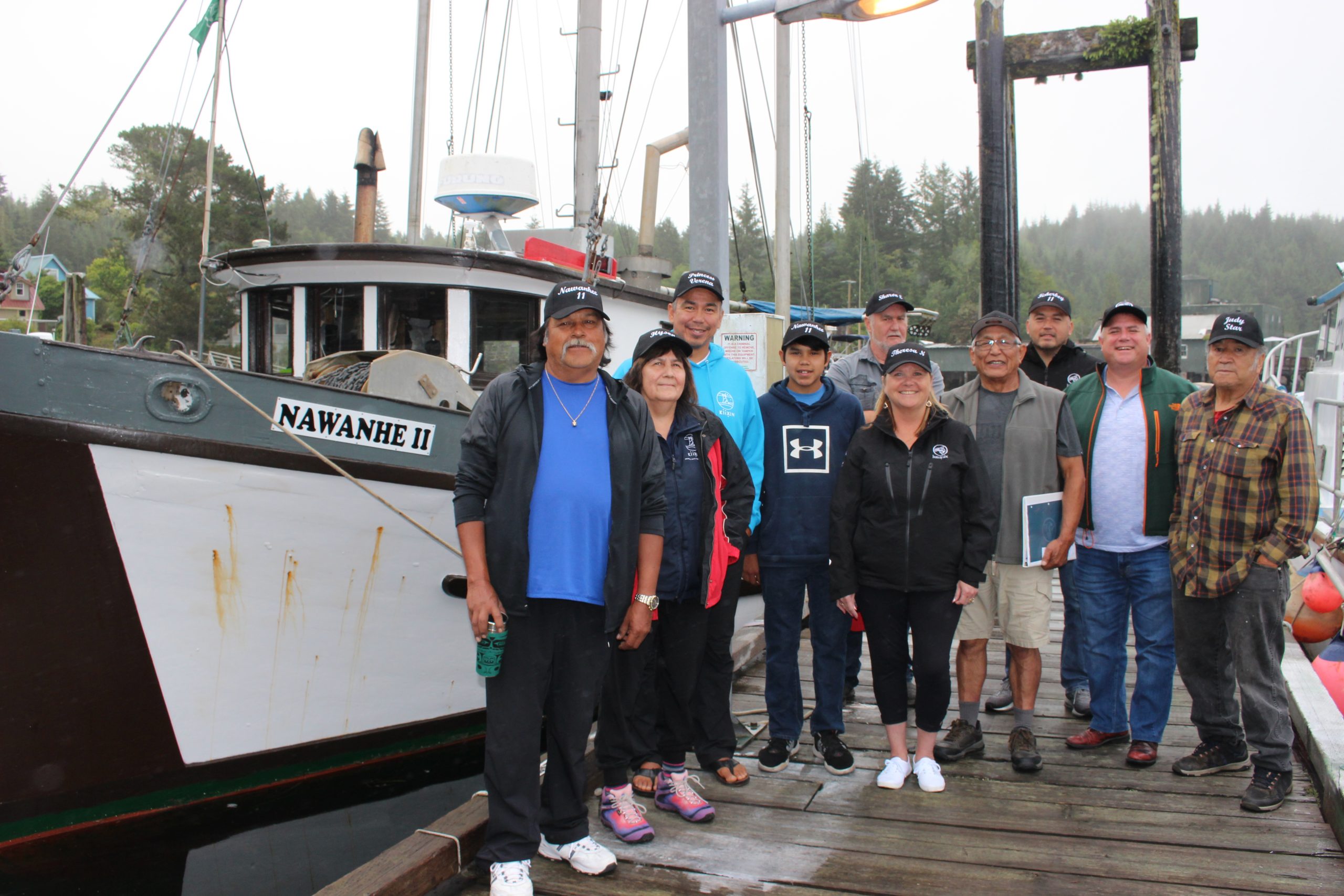
    After the meeting, the group headed down to the Bamfield
    dock to look at James Nookemus’ boat, Nawanhe II and gather for the Kiix̣in Tour. The tour was led
    by Stella Peters with additional comments and stories from Robert J. Dennis Sr.,
    Ed Johnson Sr., Councillor Edward R. Johnson, and Councillor Connie Waddell.
    This tour allowed Huu-ay-aht to give our MP a glimpse of Huu-ay-aht’s
    connection to the land and sea, and why fisheries and ocean resource harvesting
    are a central piece of Huu-ay-aht culture.