| Huu-ay-aht First Nations (Huu-ay-aht) is seeking leave to intervene in an appeal from the recent decision in Teal Cedar Products Ltd. v. Rainforest Flying Squad, 2021 BCSC 1903 where the Court refused to extend an injunction against interference with Teal Jones forestry operations in the Fairy Creek watershed and surrounding areas. Huu-ay-aht’s lands are not directly implicated in the Fairy Creek protests, however Huu-ay-aht has an interest in ensuring it is able to effectively manage and meaningfully participate in decision making about lands and forests in which it has Treaty rights and interests. Whether the Court restores the injunction or not, First Nations need to be able to rely upon the Courts in situations where First Nations want to enforce their laws or rights with respect to land and resource use within their Territories. In this regard, Huu-ay-aht, as a Treaty First Nation, can provide a unique perspective to assist the court in its decision. “As a Modern Treaty Nation, Huu-ay-aht will decide what is best for our people. We will manage the lands and resources the way our ancestors did – guided by our sacred principles of ʔiisaak (utmost respect), ʔuuʔałuk (taking care of), and hišuk ma c̕awak (everything is one),” says Tayii Ḥaw̓ił ƛiišin (Head Hereditary Chief Derek Peters). “To inform our forestry and resource decisions, Huu-ay-aht has commenced a thorough two-year integrated resource management process. And, in the future, we may look to the Courts to protect and enforce our interests.” Huu-ay-aht’s request to intervene in the appeal is not to support any particular side. It is to ensure the Court is aware of this unique position and the associated concerns of B.C. First Nations when attempting to exercise decision-making authority over forests and other resources within their Territories. “I have a duty and responsibility as Chief Councillor of Huu-ay-aht First Nations to uphold and protect our Treaty rights, title, and interest across our ḥahuułi (traditional territory),” says Chief Councillor Robert J. Dennis Sr. “We believe we can assist the Court to understand the impact this decision may have for Huu-ay-aht’s ability to manage its lands and resources for the benefit of future generations.” |
News Categories: Lands & Natural Resources
-
Huu-ay-aht seeks leave to intervene in Teal Cedar Products injunction appeal
-
Quick response keeps Poett Nook wildfire from getting out of control
A 10-square metre wildfire near Poett Nook is being monitored and is now a low risk according to officials at Western Forest Products.
The fire watch crew spotted the fire yesterday, but crews were quick to respond to the smouldering ground fire. Approximately 1,200 gallons of water was applied to the fire and stumps and debris stumps and debris were dug down to mineral soil. The crew watched the fire location Thursday evening to ensure it did not re-ignite, with 1,000 gallons of water on site, if needed. The site is still under observation.
The wildfire occurred on the Treaty Settlement Lands that are under a Standing Timber Purchase Agreement with Western.
The fire came on day three of a class four fire danger warning. As of Friday, the fire risk has increased to class five. The operation was on early shift and is now shut down.
For more information on the fire risk in British Columbia, go to https://tinyurl.com/4xjutbuz. To report a smoke or a wildfire, call *5555 or 1-800-663-5555.
-
Assembly of First Nations National Chief Visits Huu-ay-aht

From left: Councillor Edward R. Johnson, Chief Councillor Robert J. Dennis, NTC Vice-President Mariah Charleson, RoseAnne Archibald, Tayii ḥaw̓iił ƛiišin, Councillor Trevor Cootes, Councillor Duane Nookemis, AFN Advisor Valerie Richer. On June 22, 2021, Huu-ay-aht was honoured with a visit from Assembly of First Nations (AFN) National Chief RoseAnne Archibald. Archibald was recently elected to her role as National Chief on July 8, 2021. Archibald hails from the Taykw Tagamou Nation of Ontario and is the first woman National Chief of the Assembly of First Nations. Also in attendance was Nuu-chah-nulth Vice-President Mariah Charleson of Hesquiaht.
The National Chief arrived during an elder’s community engagement session where she had kind words and gifts for Huu-ay-aht. She presented Tayii ḥaw̓iił ƛiišin and Chief Executive Councillor Robert J. Dennis Sr. with a gift of medicines from her home including sweet grass, sage, and tobacco. Archibald went on to say she gives medicine because it is about healing.
Huu-ay-aht Executive Councillor Robert J. Dennis Sr. utilized the visit of the national chief to table important issues facing Huu-ay-aht. Robert spoke passionately about his desire for Huu-ay-aht to gain and utilize its fair share of the fishery economy. He stated that one of his priorities was to get Huu-ay-aht citizens back on the waters and to make fishing a viable industry for Huu-ay-aht citizens. He stressed how the AFN leadership could help advocate federally for Huu-ay-aht on this issue to influence policy to create more opportunities for Huu-ay-aht fishers.
Archibald said that she would support Huu-ay-aht in its goals surrounding fisheries federally. Emphatically she spoke on how she understands what salmon and fishing mean to Huu-ay-aht both economically and culturally. She further stated that she will work hard for Huu-ay-aht’s inherent rights, treaty rights, and constitutional rights.
Executive councillor Edward R. Johnson also took time to speak on the needs of his portfolio of citizenship and citizen development, as well as the health. Johnson presented Archibald with a copy of the Huu-ay-aht Social Services Project: Safe, Healthy and Connected, Bringing Huu-ay-aht Children Home and its subsequent progress report. Edward spoke on how current federal policy is creating barriers for Huu-ay-aht’s social services project. Johnson said “The Ministry of Child and Family Development (MCFD) refuses to take part in reconciliation” by creating these barriers. He asked for Archibald and the AFN’s assistance in breaking down these barriers and gaining a stronger voice in Ottawa with the Ministry of Child and Family Development.
In closing, Huu-ay-aht executive councillors presented Archibald with a gift of a cedar box of canned salmon from St. Jean’s Cannery. Archibald was thankful saying:
“Thank you to everyone, it is my honour to be here as well. I have travelled through many territories, and I want to raise my two hands to your communities and your ancestors acknowledging the spirits the lands and the waters as I travel through this land.”
She went on the mention that she wanted to connect with Huu-ay-aht and other Nuu-chah-nulth nations more in the future.
-
Huu-ay-aht, Pacheedaht, Ditidaht First Nations take back decision-making responsibilities over ḥahahuułi
Since time immemorial, Huu-ay-aht, Ditidaht, and Pacheedaht First Nations have been stewards of the forest, fisheries, and all resources within their ḥahahuułi (traditional territories).
On June 4, 2021, the three Nations signed the Hišuk ma c̕awak Declaration to take back their power over their ḥahahuułi. For more than 150 years they have watched as others decided what was best for their lands, water, and people. This declaration brings this practice to an immediate end.
“We have made a commitment to our people to manage the resources on our ḥahahuułi the way our ancestors did – guided by our sacred principles of ʔiisaak (utmost respect), ʔuuʔałuk (taking care of), and Hišuk ma c̕awak (everything is one),” explained Huu-ay-aht Tayii Ḥaw̓ił ƛiišin (Head Hereditary Chief Derek Peters), Ditidaht Chabut Satiixub (Hereditary Chief Paul Tate), and Pacheedaht’s Hereditary Chief Frank Queesto Jones. “We are in a place of reconciliation now and relationships have evolved to include First Nations. It is time for us to learn from the mistakes that have been made and take back our authority over our ḥahahuułi.”
This Declaration acknowledges that three sacred principles are often ignored, and the Nations are the last to benefit from what is taken out of the territory and the last to be asked what must be put back.
The three Nations are already engaged in extensive stewardship efforts on their territories to repair damage done in the past and to plan for future generations, drawing on sound data and information, best practices and science, and as always, guided by traditional values. On Saturday, June 5, 2021, Ditidaht, Huu-ay-aht, and Pacheedaht formally gave notice to the Province of B.C. to defer old-growth logging for two years in the Fairy Creek and the Central Walbran areas while the Nations prepare their plans. This is in addition to the decision of Huu-ay-aht First Nations to defer logging of its treaty lands.
“Our three Nations look forward to building a future based on respectful nation-to-nation relationships with other governments that are informed by Indigenous history, Indigenous knowledge, Indigenous rights, and Indigenous priorities,” said Chief Councillor of the Pacheedaht First Nation Jeff Jones. “We ask that all peoples both Indigenous and non-Indigenous learn and move forward together and that by working together we can realize a future that is fair, just, and equitable.”
The Declaration states that in accordance with the traditional laws and constitutionally protected Aboriginal Title, Aboriginal Rights, and Treaty Rights, the governance and stewardship responsibilities in the ḥahahuułi of the three Nations must be acknowledged and respected. Third parties – whether they are companies, organizations, other governments, or individuals – have no right to speak on behalf of the Nations. Moreover, for third parties to be welcome in their ḥahahuułi, they must respect their governance and stewardship, sacred principles, and right to economically benefit from the resources within the ḥahahuułi.
Pacheedaht, Ditidaht, and Huu-ay-aht have committed to developing and implementing world-class integrated resource management plans. These plans will draw on the teachings of their ancestors, wisdom of elders, input from citizens and valued partners, and the best forestry, fishery, and integrated resource management advice available. The process will be open and transparent, and the leaders of the three nations commit to offering opportunities for input as long as it takes place through the process outlined by the Nations.
“It is our responsibility to take care of our land for future generations – we are the decision makers,” explained Huu-ay-aht Chief Councillor Robert J. Dennis Sr. “We follow the guidance of our elders and citizens to make the decisions we think are right – we are asking others to respect that process and follow our direction on our territory. Our citizens have a constitutionally protected right to manage and benefit from our lands, waters, and resources.”
The Nations ask that while work is underway everyone allow forestry operations in other parts of their Territories, approved by the Nations and the province, to continue without disruption. Anyone who requests permission to enter our ḥahahuułi is welcome provided they conduct themselves in accordance with our sacred principles. That includes safe, peaceful, and lawful protest that does not interfere with legally authorized forestry operations.
The Nations are also engaged in extensive stewardship efforts on our ḥahahuułi to repair damage done during the colonial past and plan a sustainable future for generations to come. They do this work with the sacred principle Hišuk ma c̕awak (Everything is one) in mind. It is this belief that guides their decision making on their ḥahahuułi.
Monumental cedar has always been important to our Nations for its cultural, spiritual, economic, habitat, and biodiversity values. Decisions on monumental cedar protection and forest management must be led by the people who have held the rights and title and looked after this land for thousands of years.
“Everything we need comes from our forests and our marine habitats in our traditional territory,” explained Ditidaht Elected Chief Brian Tate. “It is time for the people who come to our territory to respect that and to recognize the rights we have to what happens in our ḥahahuułi. What we take out must be put back in.” Leaders of the three Nations, guided by their members and citizens, know that if their authority over their land is acknowledged and respected it will be a win-win for everyone. In time, it will lead to economic opportunities for all and stewardship practices that will heal the lands and water.
-
Huu-ay-aht First Nations launches Hišuk ma c̕awak Integrated Resource Management Plan
Following extensive consultation with its citizens, Huu-ay-aht First Nations is pleased to announce the upcoming development of its Hišuk ma c̕awak Integrated Resource Management Plan (HIRMP).
The HIRMP is a coordinated plan for forest and environmental management in the Nation’s entire ḥahuułi (traditional territory of the hereditary chiefs). It represents the present and future needs of the ecosystem and the Nation. Its namesake sacred principle, Hišuk ma c̕awak, acknowledges the many interconnected aspects considered and incorporated into the plan.
“This has been a long time coming and is shaped by the input we heard from our citizens and Ḥaw̓iiḥ Council (hereditary leadership) that showed us there is a deep need for this work,” explains Tayii Ḥaw̓ił ƛiišin (Head Hereditary Chief Derek Peters). “We are not waiting for others to look after our territory. We have created a path for this plan that honours our values and our sacred principles of ʔiisaak (Utmost Respect), ʔuuʔałuk (Taking Care of), and Hišuk ma c̕awak (Everything is One).”
The Huu-ay-aht have been stewards of their territory since time immemorial. They manage the resources that sustain their people based on their utmost respect for the ḥahuułi. The sacred principles will guide the direction and implementation of the plan.
The HIRMP is Huu-ay-aht’s commitment to do all they can to balance the economic benefits from use of the resource land base with sound management that supports other aspects of the Nation’s interconnected resources and livelihoods.
“We want to do this the way we would have done it all along, following the principle that what one takes out, one must put back,” says Chief Councillor Robert J. Dennis Sr. “We will consult and rely on experts in order to merge our Ancient Spirit and Modern Minds, but this plan is made in Huu-ay-aht, for Huu-ay-aht, by Huu-ay-aht.”
Over many years, the Nation has had the benefit of expert forestry and resource advisors including Chris Niziolomski of Forest Ecosystems Solutions, Bruce Blackwell of BA Blackwell and Associates, Bob Bocking of LGL Ltd., and Bryce Bancroft of Symmetree Consulting Group. These experts will continue to support the work on the HIRMP.
The planning process Huu-ay-aht is embarking on will not only help Huu-ay-aht manage its own Treaty Lands and forest tenures, it will also be working collaboratively with other forest companies on our ḥahuułi to extend Huu-ay-aht values to forest management in the entire territory.
Forest ecosystems are complex with many integrated components and past histories. Creating and implementing the HIRMP will not be a fast process. Huu-ay-aht will take as long as is needed to get it right and find balance so it pays off for present and future generations.
Some highlights of the HIRMP are:
- Developing a harvesting, reserve, and silviculture strategy.
- Setting appropriate annual allowable cuts (AAC).
- Setting aside culturally important forests as protected areas for citizen enjoyment and use.
- Developing a strategy that continues to value existence of old-growth forests and monumental cedar.
- Continued support to Huu-ay-aht’s ʔuuʔałuk Watershed Renewal Program.
- Aligning Forest Stewardship Plan renewal, forest management systems, and monitoring across all tenures, while allowing economic opportunities for Huu-ay-aht.
- No timber harvesting on Treaty Lands in the calendar year 2021
- Developing objectives for good stewardship of fish and water, riparian areas, wildlife and their habitat, biodiversity, cultural heritage, visual quality, and minimizing windthrow/blowdown.
- Ensuring that these critical objectives are appropriately balanced with the economic benefits that come from the forestry and resource economy, all in accordance with Huu-ay-aht values.
“Our main driving force behind this is to look after the land the way our ancestors taught us,” says Huu-ay-aht Councillor Duane Nookemis. “Up until about 150 years ago we managed our own lands and resources in a sustainable way. Our hereditary and elected leadership draw on the teachings of our ancestors and the wisdom of our elders, as well as input from citizens when we make stewardship decisions like this plan. We use this knowledge and input from our partners to determine best practices for forestry, fishery, and other natural resources. The HIRMP will allow us to regain decision-making powers in our ḥahuułi.”
Huu-ay-aht will be hosting Community Engagement Sessions for its citizens and residents of the neighbouring community of Bamfield in June. Huu-ay-aht will provide an overview of the HIRMP process and two-year timetable and will provide answers to questions regarding the process.
For more information, watch the HIRMP video, download the HIRMP info sheet and read our expert biographies.
This document is in the Citizen Portal, available to Huu-ay-aht citizens. Sign in to the Citizen Portal to open it.
-
Huu-ay-aht sets up checkpoint on Ḥahuułi (Territory) asking visitors to respect Sacred Principles
Huu-ay-aht First Nations set up two check points today at the entrances of the ḥahuułi (territory) of the Huu-ay-aht Ḥaw̓iiḥ Chiefs (hereditary chiefs). Travellers were stopped and offered updates on the access restrictions and safety measures within the ḥahuułi that were announced on May 7, 2021 and came into effect as of today.
Drivers were told why they were being stopped and were given a handout that explains what is expected of them if they enter the ḥahuułi. The purpose is to ensure continued safe forestry operations within Huu-ay-aht lands following a forestry operations safety incident on March 6, 2021 involving an Huu-ay-aht-owned forestry cutblock. For more information on the incident and measures put into place, please go to this link.
Generally, drivers were supportive and understanding of Huu-ay-aht’s approach to addressing safety concerns on their land.
“We want people to access our ḥahuułi, but they must do so in a respectful way that does not put anyone’s safety at risk,” Huu-ay-aht Chief Councillor Robert J. Dennis Sr. said.
The notice informed people of the three sacred principles that guide Huu-ay-aht First Nations – ʔiisaak (Utmost Respect), ʔuuʔałuk (Taking Care of), and Hišuk ma c̕awak (Everything is Connected). It asked people to use these principles to “guide yourself, without fail, toward people, lands, waters, and resources.” It later pointed out that “the safety and wellbeing of all indigenous and non-indigenous people on our ḥahuułi must never be put at risk.”
“People who violate our sacred principles are not welcome in our ḥahuułi,” said Huu-ay-aht Tayii Ḥaw̓ił ƛiišin (Head Hereditary Chief Derek Peters). “We expect people to respect what we are asking of them as this is our land and it is our responsibility to ensure people here are safe.”
Huu-ay-aht will continue the checkpoints for the rest of the week. People who violate the sacred principles are no longer welcome on the territory, and violators will be dealt with to the full extent of the traditional laws of the Huu-ay-aht Ḥaw̓iiḥ and Canadian laws. Violations can be reported to the Nation’s Executive Director at 250-723-0100.
-
Huu-ay-aht Announces Access Restrictions and Safety Measures to Protect Forestry Operations on Huu-ay-aht Ḥahuułi (Territory)
Huu-ay-aht First Nations will be implementing access restrictions and safety measures within Huu-ay-aht ḥahuułi (Territory), effective on Monday, May 10, 2021. The purpose is to ensure continued safe forestry operations within Huu-ay-aht lands.
This step is being taken in response to a forestry operations safety incident on Thursday, May 6, 2021 involving a Huu-ay-aht-owned forestry cutblock. Eye-witness accounts confirm a forestry protester drove through safety barriers into an active logging area, putting the safety of the driver and the forestry workers at risk. This is similar to recent incidents on the ḥahuułi of the Pacheedaht and Ditidaht First Nations, where individuals associated with environmental non-government groups (ENGOs) disrupted logging operations by putting safety at risk.
“Any protest activity that puts human life at risk is completely unacceptable. While we support the right to peaceful and legal protest, it must not disrupt safe forestry operations,” Huu-ay-aht Chief Councillor Robert J. Dennis Sr. said. “Equally, Huu-ay-aht First Nations strongly condemns the use of racist language, intimidation, or other acts of violence directed at protestors who are peacefully and legally protesting.”
“Protesters, forest workers, companies, other governments, or indigenous or non-indigenous individuals who do not conduct themselves in accordance with our Nation’s three sacred principles – ʔiisaak (Utmost Respect), ʔuuʔałuk (Taking Care of), and Hišuk ma c̕awak (Everything is Connected) – are not welcome in our ḥahuułi (Territory),” said Huu-ay-aht Tayii Ḥaw̓ił ƛiišin (Head Hereditary Chief Derek Peters).
Yesterday, respected conflict prevention and resolution specialist Dan Johnston was engaged by TFL 44 LP. His role is to prepare a report and recommendations on how to ensure continued safe forestry operations, while also ensuring individuals are able to exercise their right to peaceful and legal protest – all in accordance with Huu-ay-aht’s three sacred principles.
ƛiišin and Chief Councillor Dennis stressed that the Nation is doing its part to maintain a respectful and safe community and workplace while Dan Johnston conducts this important work.
“We ask everyone – forest companies, forest workers, environmental groups, indigenous and non-indigenous protesters, the RCMP, the BC government, the USW, Worksafe BC, First Nations and their citizens and members – to do your part as well,” Chief Councillor Dennis concluded. Huu-ay-aht First Nations will provide further details regarding the access restrictions and safety measures it will be implementing within Huu-ay-aht ḥahuułi (Territory) on Monday, May 10, 2021. Huu-ay-aht will meet with Ditidaht and Pacheedaht First Nations and TFL 44 LP. Huu-ay-aht will also be meeting with the Provincial Government.
-
TFL 44 LP sets strong 2021 trajectory despite challenging past year
Tree Farm Licence 44 Limited Partnership (TFL 44 LP) announced today positive safety and financial results for fiscal 2020. TFL 44 LP is a partnership between Western Forest Products Inc. (Western) and Huumiis Ventures Limited Partnership (Huumiis). The 2020 financial and safety results were a remarkable achievement given TFL 44 LP only fully operated for seven months during fiscal 2020 and faced unprecedented challenges from the ongoing COVID-19 pandemic.
“When we formed this partnership in 2019 with Western, we did so with the intention of advancing our shared vision of forestry revitalization, reconciliation, and creating a brighter future for present and future generations,” said Tayii Ḥawił ƛiišin, Huu-ay-aht First Nations Head Hereditary Chief, Derek Peters, and TFL 44 LP Board Member. “In order to accomplish this, we have focused on employment and training, strengthening the relationship with USW and long-term resource management planning. Now one year in, we are pleased with the positive financial performance, and we are making great steps toward our broader goals.”
TFL 44 LP is committed to fostering a strong relationship with United Steelworkers Local 1-1937 (USW) and the local workforce. It is focused on creating opportunities for employees and supporting increased jobs and training for Huu-ay-aht citizens, their family members, and other local First Nations, as positions become available. Huumiis has recently hired a new full-time Employment and Training Manager to ensure the success of its employment and training efforts.
“In light of the many challenges we faced in 2020, the progress that has been made is encouraging,” said Dallyn Willis, Western Vice President, Finance, and TFL 44 LP Board Member. “Western congratulates Huu-ay-aht First Nations and USW on their recent agreement and looks forward to all parties’ continued collaboration to foster the economic revitalization of the Alberni Valley forest sector.”
In addition to their focus on jobs and training, TFL 44 LP and Western have been invited to participate in the Huu-ay-aht-led hišuk ma c̕awak Integrated Resource Management Plan (IRMP). The IRMP is a coordinated plan for forest and environmental management on the Ḥahuułi of the Huu-ay-aht ḥaw̓iiḥ (Huu-ay-aht traditional territory) that respects the present and future needs of the Nation. It considers the entire ecosystem including watersheds, salmon, and other aquatic life, wildlife, and ancient trees. The plan will be guided by the Nation’s three sacred principles: ʔiisaak (greater respect), ʔuuʔałuk (taking care of), and hišuk ma c̕awak (everything is one). It will consider ways to advance the already industry-leading biodiversity and old-forest management practices employed by Western and TFL 44 LP, including retention, silviculture systems and big tree protections. “The commitment to collaboration with Western and TFL 44 LP on the development and implementation of the IRMP is very promising, and we are excited about the future of this relationship,” said John Jack, Huumiis Chair. “As we expand our collective vision of reconciliation and revitalization of the forest sector, we will contribute to the long-term stability of the Alberni Valley for all.”
-
Bamfield Main Road Surfacing Project – February 2021
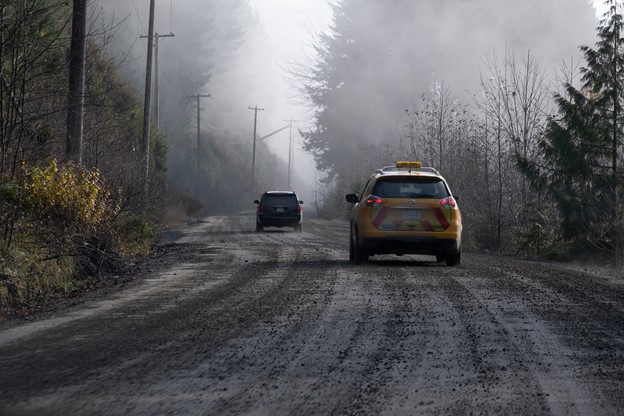
Bamfield Main is an 85-kilometre logging road that connects the residents and businesses located on the traditional territory of the Huu-ay-aht First Nations and communities of Anacla, Bamfield to Port Alberni, BC. Currently, 76 kilometres of the road is unpaved, and unfortunately, its condition led to countless accidents and deaths over decades, including the recent tragic death of 2 University students in 2019.
In September 2020, the government of B.C. announced a contribution of $25.7 million out of $30.7 million total cost to upgrade the road with Huu-ay-aht First Nations contributing the remaining $5 million.
Progress Status Report to November 2021
Construction Update – September 2021:
Bamfield Main Road Surfacing Project Update
Work Completed to date:
- Field survey of the 76 km of road, culverts, bridges, legal property boundaries, waterline at Fredrick Lake, water courses, and related infrastructure completed. This data is utilized for 3D modeling by the road and drainage design team.
- The geotechnical investigation was carried out with over 180 drill holes and nearly 200 test pits. The samples collected were sent to labs for testing and evaluation. All the data has been processed and the geotechnical team is finalizing the design requirements to achieve the best roadbed construction for the seal coat application. The stronger the roadbed the longer the seal coat will last.
- An Environmental study of the 76-km corridor to provide a baseline overview of the existing environmental conditions has been completed. Two reports have been generated by the consultant LGL Environmental that include the Environmental Overview Assessment and the Construction Environmental Management Plan.
- The Road and Drainage design team has developed the design for the complete corridor and is working to finalize the contract documents, quantities requirements, signage, drawings, and contracts for tendering of the road construction.
- HGB Gravel LP has been working since October of 2020 to identify, investigate, acquire permits, test, and develop eight to ten pit locations along the road corridor. These pits will supply all the gravel needs for the project. Having the pits located along the corridor minimizes the costs for hauling and reduces the risks to the project budget. The gravel production will run through the winter. Citizens can expect to see gravel piles appearing along the corridor shortly.
- The team has been working with Barb Beasley PhD, of the Association of Wetland Stewards for Clayoquot & Barkley Sounds on the Western Toad crossings at Fredrick Lake. The toadlets have a high mortality as they head to the forest from Fredrick Lake. Culverts designed for their crossing are going to be placed along strategic locations at Fredrick Lake to provide safe crossing locations.
The project is currently is on schedule and budget. The project team has worked hard to reduce risks to the project and it’s budget. As a result of their continued review of the project the schedule has been revised on numerous occasions.
Work to be completed through 2022:
- The road will be constructed in three sections of approximately 25 kilometers each with contracts being issued for each section. These contracts will be tendered in January 2022 with work to begin in April 2022 and completed by mid-September. These contracts will carry out the gravel placement, compaction, drainage requirements, and signage.
- One seal coat contract covering the complete 76 km will be tendered in March 2022. The seal coating should take about a month to complete and will be expected to be completed by the end of September which allows for weather and other delays. This contract will apply two layers of seal coat and place required barriers.
In March 2023, a paving contract will be tendered, this contract will pave the required sections over the previously laid seal coat. The pavement is to be placed on all steep hills, major intersections and bridge approaches.
Project Overview
Location
Bamfield Main runs southwest from Port Alberni to the traditional territory of Huu-ay-aht First Nations, including the communities of Bamfield and Anacla.
Ownership and Maintenance Responsibility
The Province owns most of the Bamfield Main right-of-way. TFL 44 LP is responsible for the maintenance of the road as it holds the principal permit to use the road for forestry operations.
Bamfield Road Improvement Project Budget
Surface & Condition
Bamfield Main used to follow the industrial standard with a native soil surface, which is the appropriate surface for industrial vehicles, but not for light vehicles. Currently, 76 kilometres of the road is unpaved, which causes travel time between Port Alberni and Bamfield to be around 2.5 hours.
Project Phases
- Phase 1: Gravel Pit Development (November 2020 – Ongoing)
- The process involves the identification of numerous possible sites, permitting, testing of the sites, pit development and gravel production. This will require ongoing gravel pit development to support construction requirements for the road.
- Phase 2: Geotechnical Investigation (February & March 2021)
- This process involves drilling holes along the corridor to take samples of the road structure and underlying conditions. Test pits will be dug in areas to allow the geotechnical engineers to visually examine the soils and their related conditions.
- Phase 3: Road and Drainage Design (March 2021 – March 2022)
- This phase involves 3D modelling of the road and design of the road structure for the pavement and seal coating placement.
- Phase 4: Road Construction (Anticipated start in June 2021 – Fall 2023)
- All aspects of road construction including clearing of roadside trees and vegetation, stripping of overburden soil, excavation of ditches and road surface in areas, installation of culverts, placement and compaction of gravels, placement of asphalt pavement and seal coating, signing and barrier placement.
Project History
Since the early 2000s, Huu-ay-aht First Nations has brought the road and its condition to the attention of local and provincial governments.
It became one of the Nation’s top priorities in 2016, when an engineering review was commissioned to provide a preliminary version of an improvement plan for the road, including estimated costs to upgrade the road. In 2019, Huu-ay-aht First Nations commissioned a business case to revise the project costs and after numerous meetings with the Province, in September 2020 the government of B.C. announced a contribution of $25.7 million out of $30.7 million total costs.
Released February 11, 2021
For questions about the Bamfield Main Road Surfacing Project, please contact communications@huuayaht.org.
-
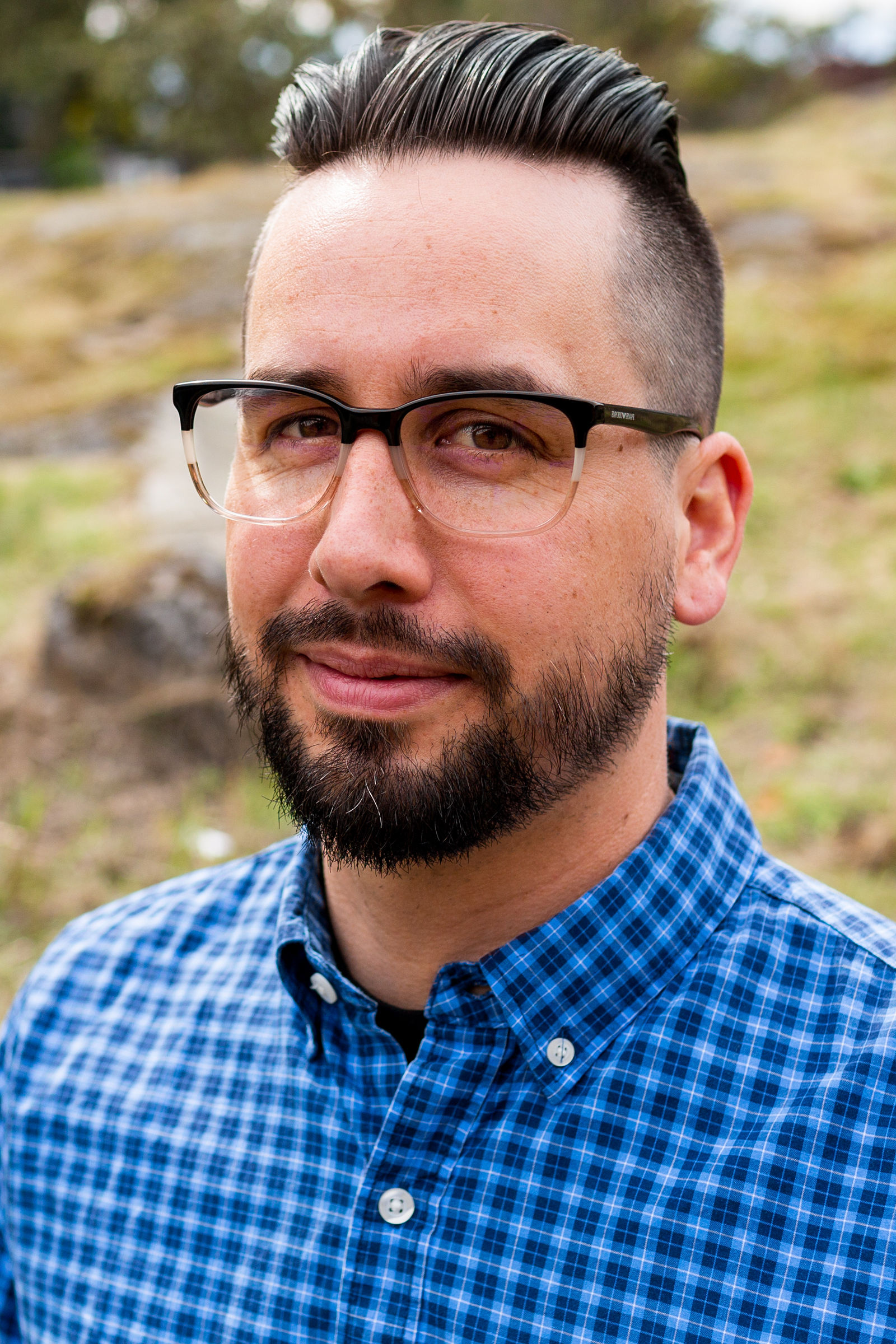
Tommy Happynook Jr. reconnecting with traditions
Tommy Happynook Jr. Letter from Tommy Happynook Jr.
Good day,
My name is hii-ni-nah-sim, Tommy Happynook Jr. I come from the House of Caa-caa-tsii-as. I am an anthropology doctoral student at the University of Victoria. I am writing today to share some information about my doctoral research, tentatively titled: “Waatlasheeutlin uuaathluk Caa-caa-tsii-as” – Picking up my responsibilities: a project of (re)connecting with traditional lands, waters, knowledge and identity.
The last time anyone in my family lived in Caa-caa-tsii-as was about 1860. My family, like many others, were swept up and aside in the widespread and systemic colonial project of assimilation. In 1970, Caa-caa-tsii-as, known by then as Carnation Creek, was the subject of an experiment conducted, in partnership, by the Federal government, forest industry and Department of Fisheries and Oceans. (DFO). The experiment saw the complete clearcutting of one third of the watershed. The second third was cleared of underbrush and the last third left as is. This experiment was formed with the intent of understanding what would happen if a watershed was completely clear-cut. The experiment became a long-term and influential study of the effects of logging practices on watershed processes and continues today.
The objective of my research is to document my own (re)connection to the lands, waters, and resources in Caa-caa-tsii-as. I will conduct this research by focusing on my own experience of reconnecting, revitalizing, and restoring my family’s knowledge, presence, and traditional responsibilities in and to Caa-caa-tsii-as. Specifically, I will be reintroducing family practices and ceremonies during my time in Caa-caa-tsii-as. I will also be walking/swimming on the land, river, and bay as a way of refamiliarizing myself with Caa-caa-tsii-as.
My research is important because it will ensure that my son grows up connected to Caa-caa-tsii-as, its knowledge and teachings, and understand where those teachings come from through the experience of having a deep land-based connection to Caa-caa-tsii-as.
I believe that my work will benefit Huu-ay-aht citizens and other Indigenous people/nations looking to develop processes and understandings of territorial revitalization/reconnection and inspire reconnection with traditional territories outside of a colonial context.
Thank you for your time and should you have any questions please contact me. I am happy to discuss my research further. And, if COVID-19 restrictions ease, maybe I will see you when I am out in the territory.
Hii-ni-nah-sim, Tommy Happynook
tommyh@uvic.ca
778-676-4251